
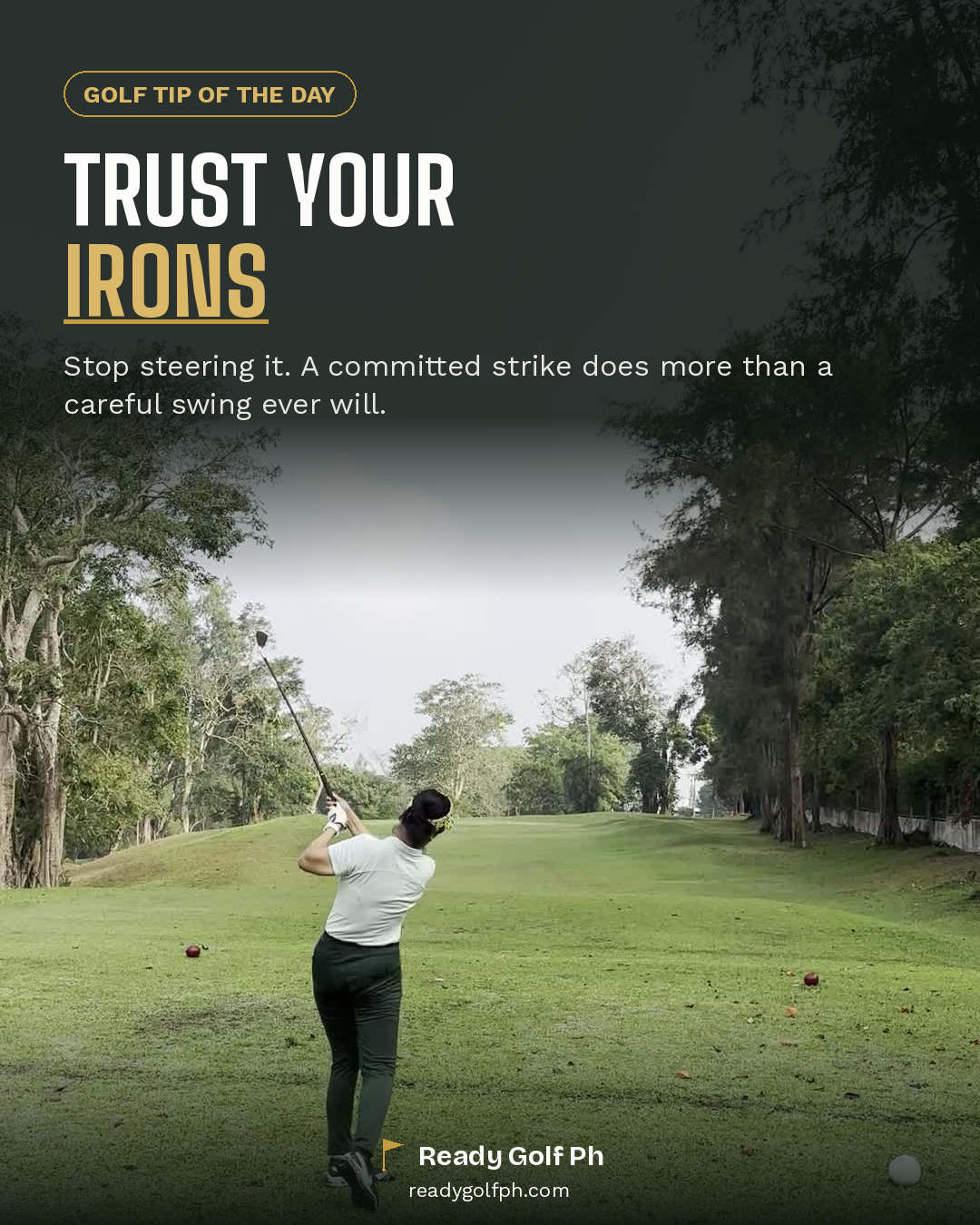
Every golfer knows the feeling. You stand over an iron shot, tell yourself to “help it up,” and the result is a thin dart that skips across the green or a fat chunk that dies twenty yards short. The swing felt careful, even gentle, and yet the contact was terrible. That is not bad luck. That is steering, and it is one of the most common ways golfers sabotage a perfectly good golf club.
Why Irons Punish a Careful Swing
A driver rewards a sweeping, level strike. An iron does not work that way. Every iron in your bag is built with loft engineered into the clubface specifically so you do not have to lift the ball into the air yourself. The moment you try to scoop, help, or steer an iron shot, you change the angle of attack the club was designed around, and the strike suffers for it. Careful, tentative swings are almost always the worst-struck iron shots of the round, while a committed, aggressive strike through the ball produces the cleanest contact.
What a Solid Iron Strike Actually Looks Like
A well-struck iron shot compresses the ball against the clubface before the club ever touches the ground. The low point of the swing happens just after impact, which means the ball is struck first and the turf is taken second, in that order. That small sliver of divot after the ball is not an accident or a flaw. It is proof that the strike was descending and committed, exactly the way the club was designed to be used. Golfers who take no divot, or who take one before the ball, are almost always scooping instead of striking.
The Fix: Three Keys to Crisp Iron Strikes
Ball position: center to slightly forward, not back. Playing the ball too far back in your stance encourages a steep, digging strike or an early, thin contact. For most irons, a position from the center of your stance to just forward of center gives the club room to bottom out at the right point, just after the ball. This one adjustment alone fixes a surprising number of chronic thin and fat shots.
Hit down – strike ball first, then take your divot. This feels backwards to golfers who are used to thinking about “lifting” the ball, but it is the entire secret to iron play. Trust that the loft on the face will send the ball into the air. Your job is simply to deliver the clubhead down and through the ball, letting the divot happen after impact, not before it.
Commit to the shot, don’t steer or decelerate. Hesitation is the enemy of good contact. A swing that slows down or changes direction in the final foot before impact almost always produces a mishit, regardless of how good the setup looked. Pick your target, commit to the strike, and swing through the ball with the same speed and intent all the way to the finish.
Why Trusting the Club Matters More Than Trying Harder
Golfers who struggle with irons often respond by trying harder, gripping tighter, or swinging more carefully, and all three make the problem worse. The clubs in your bag are engineered by people who understand launch angle and loft far better than any golfer standing over the ball. Your job is not to out-think the club. It is to deliver a committed, descending strike and let the equipment do the rest. Confidence in the strike produces better contact than caution ever will.
Common Mistakes Golfers Make With Irons
A common mistake is playing the ball too far forward in the stance, which flattens the angle of attack and leads to thin, low shots that never get airborne properly. Another mistake is trying to add loft with the hands or wrists at impact, which almost always produces a weak, high shot with little distance. A third mistake is decelerating into impact out of fear of a bad result, which becomes a self-fulfilling prophecy every time.
Building Trust in Your Irons Over Time
Solid iron contact is a habit built on the range, not something you can force into existence mid-round. Spend practice time checking ball position, feeling the divot happen after the ball rather than before it, and swinging through impact at full commitment instead of easing into it. Golfers who build this habit consistently see thin and fat shots become rare instead of routine, and their confidence with every iron in the bag grows along with it.
FAQ
Why do I keep hitting my irons thin?
Thin shots usually come from the ball being played too far back, from trying to lift the ball with the hands, or from the swing bottoming out before it reaches the ball. Checking ball position and trusting a descending strike fixes most thin shots.
Should I try to help the ball into the air with my irons?
No. The loft built into the clubface is designed to launch the ball for you. Trying to help it into the air with your hands or wrists almost always adds loft at the wrong moment and produces a weak, high shot instead of a solid one.
How do I know if I’m hitting down on the ball correctly?
Look at your divot. A proper descending strike takes its divot just after the ball, in front of where the ball was resting, not behind it. If you are taking no divot at all, or one before the ball, you are likely scooping instead of striking down.
Key Takeaways
- Steering and careful swings are usually why iron shots come out thin or fat, not bad luck.
- A solid strike compresses the ball first and takes its divot just after impact, not before.
- Play the ball from the center of your stance to slightly forward for most irons.
- Trust the loft on the clubface to launch the ball – don’t try to lift it with your hands.
- Commit fully through impact; decelerating or steering ruins contact more than any setup flaw.
Ready Golf Ph — daily tips to help you play smarter and score better, one round at a time.