
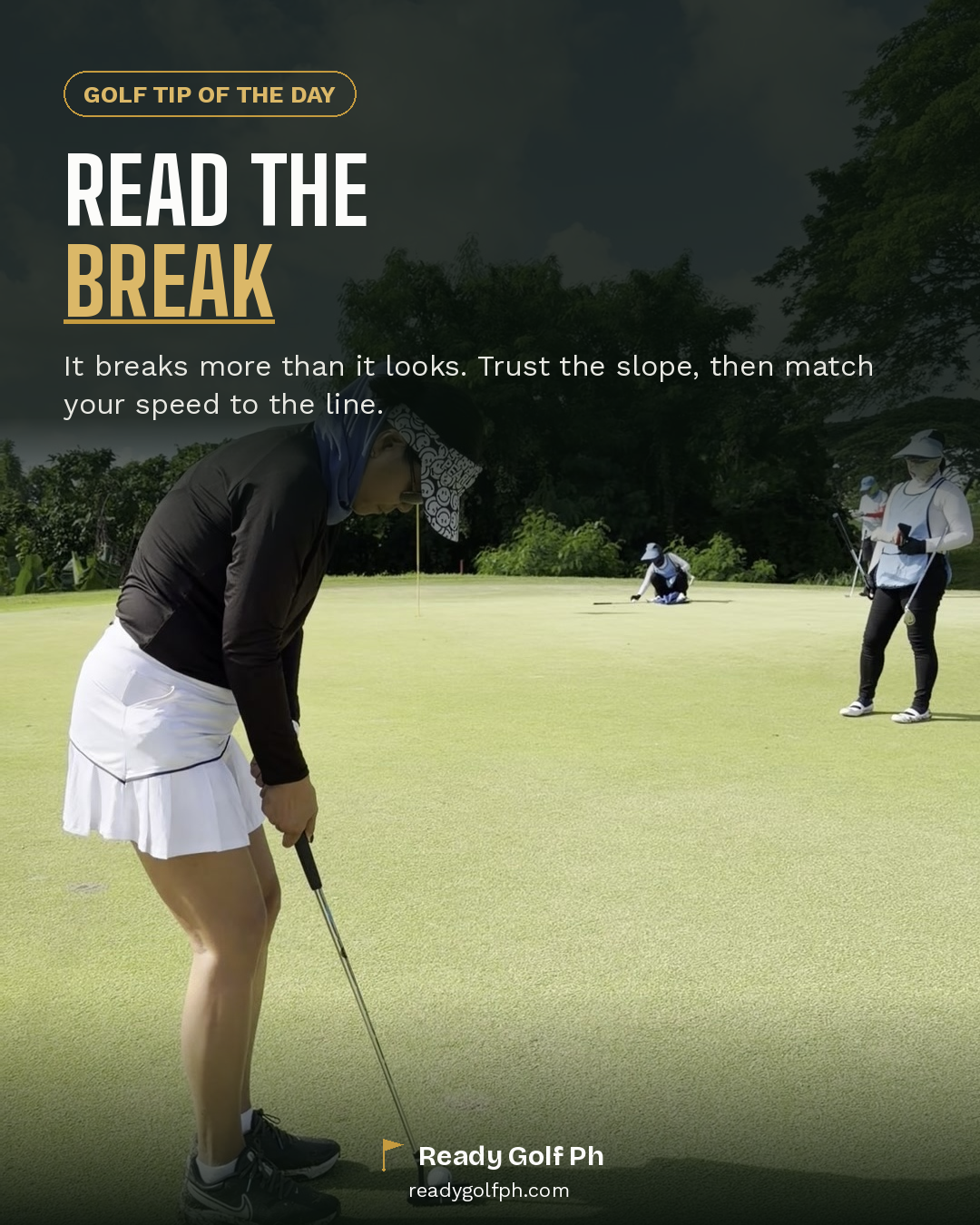
You line up what looks like a straight putt, strike it well, and watch it slide past the right edge of the cup anyway. The stroke felt fine. The speed felt fine. And yet the ball never had a chance, because the read was wrong before you ever took the putter back. That is the quiet truth about most missed putts: they are lost on the read, not on the stroke.
Why Golfers Misread Left-to-Right Breaks
The eye is a poor judge of slope, especially on a putt that breaks left to right. Standing behind the ball, a gentle slope can look almost flat, and golfers instinctively aim closer to the hole than the break actually requires. The result is a putt that starts on line and then drifts wide in the final few feet, right past the edge instead of catching it. This is not bad luck. It is a systematic underestimation of break that happens to nearly every golfer who only reads a putt from one angle.
What a Properly Read Putt Actually Looks Like
A well-read putt starts outside the hole on the amateur side and curves back into the cup, not the other way around. That means the intended starting line is often further from the hole than feels comfortable, because the ball is expected to travel a curved path, not a straight one. Golfers who read greens well are not guessing at more break out of caution. They are trusting a specific, deliberate starting line and letting the slope do the rest of the work on its way to the hole.
The Fix: Three Keys to Reading Break Correctly
Read from behind the ball AND behind the hole. A single look from behind the ball only shows half the picture. Walking around to view the putt from behind the hole reveals slope that is often invisible from the other direction, especially subtle tilts that build up over the second half of the putt. Combining both views gives a far more accurate picture of the total break than either angle alone.
Trust the slope – it breaks more than it looks. Once you have identified the break, resist the urge to play it safe by aiming closer to the hole than your read suggests. The single most common reading mistake is under-playing the break out of disbelief. If your read says a ball-and-a-half of break, commit to a ball-and-a-half of break, even when it feels like too much.
Match your speed to the line you pick. Break and speed are connected, not separate decisions. A firmer putt holds its line longer and breaks less, while a softer, dying putt breaks more as it loses speed near the hole. Once you have chosen a line, your speed has to match the read you made, or the same correct line will still miss.
Why the Read Matters More Than the Stroke
Golfers spend far more practice time working on their putting stroke than on reading greens, yet the read decides where the ball is aimed before the stroke ever happens. A technically perfect stroke sent down the wrong line will still miss. A slightly imperfect stroke sent down the right line, at the right speed, has a real chance to go in. Improving your green reading is often the fastest way to see fewer three-putts and more putts finding the hole, without changing anything about your mechanics.
Common Mistakes Golfers Make Reading Break
A common mistake is reading the putt only from behind the ball, missing slope that only becomes visible from behind the hole. Another mistake is under-committing to the read at the last second, nudging the aim back toward the hole because the intended line feels uncomfortably wide. A third mistake is picking the correct line but then hitting the putt too firmly, which straightens out the break and sends the ball past the edge exactly like a bad read would.
Building Better Green Reading Over Time
Green reading is a skill built through repetition, not instinct. Every time you putt, whether on the course or the practice green, take the extra few seconds to look from both behind the ball and behind the hole, and pay attention to whether your putts break more or less than you expected. Over time, your eyes calibrate to slope the way they calibrate to distance, and reads that once felt like guesses become confident, repeatable decisions.
FAQ
Why do my putts keep missing on the low side?
Missing on the low, or amateur, side of the hole almost always means you underestimated the break. The fix is not a different stroke. It is trusting more break on your next read and starting the ball further outside the hole than feels natural.
How much break should I actually play?
There is no universal number, since break depends on slope, speed, and green firmness. The reliable method is reading from both behind the ball and behind the hole, then committing fully to whatever amount of break that combined read suggests, rather than adjusting it down out of doubt.
Does putting speed really change how much a putt breaks?
Yes. A firmer putt travels a straighter, more direct path and breaks less, while a softer putt is more affected by slope and breaks more, especially as it slows down near the hole. Your line and your speed have to be picked together, not separately.
Key Takeaways
- Most missed putts come from misreading the break, not from a flawed stroke.
- Read every putt from behind the ball and behind the hole for the full picture.
- Trust your read even when the break looks bigger than feels comfortable.
- Speed and line work together – a firmer putt breaks less than a soft one.
- Green reading improves with deliberate practice, just like any other golf skill.
Ready Golf Ph — daily tips to help you play smarter and score better, one round at a time.