
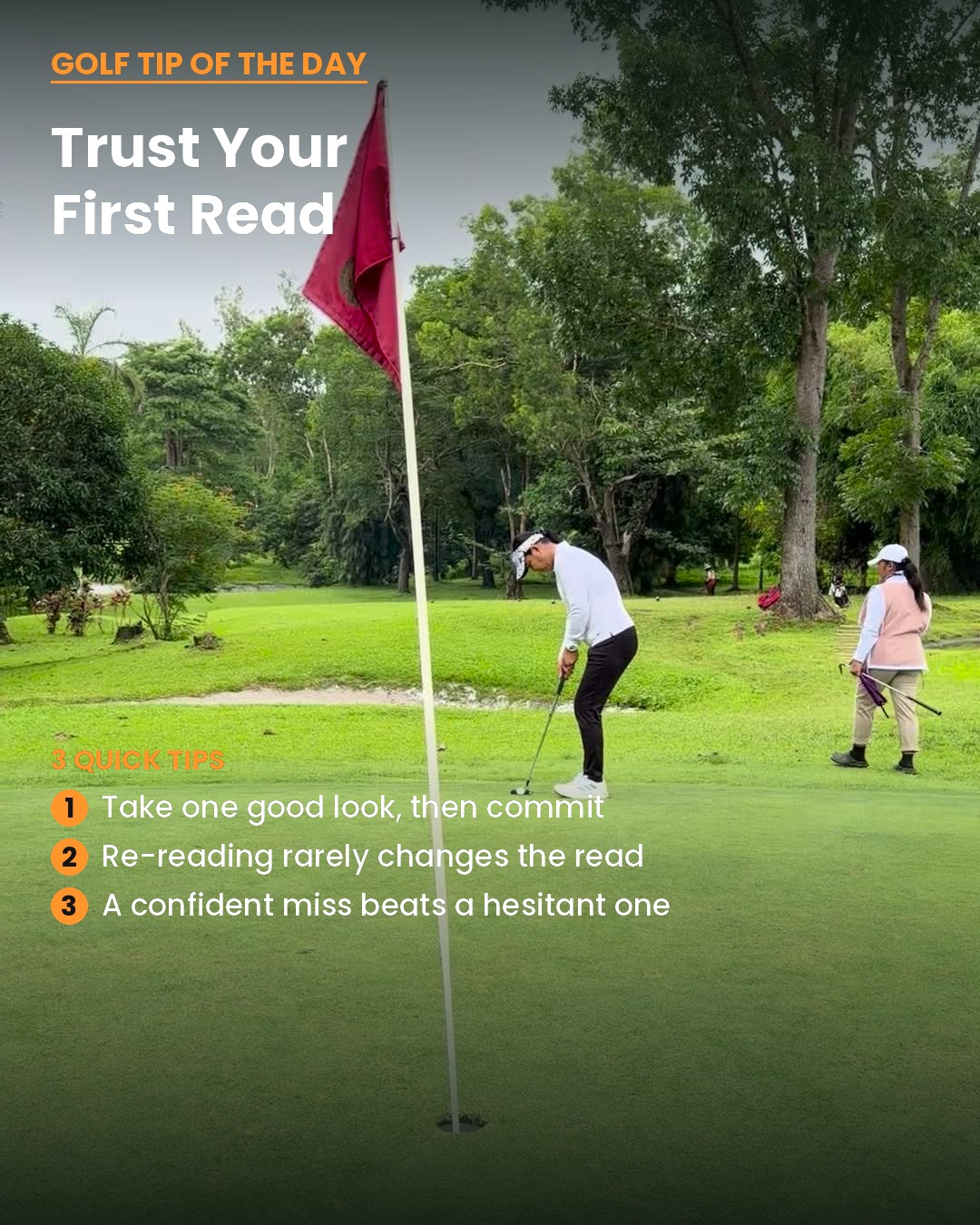
Watch a beginner over a mid-length putt and you’ll often see the same pattern: walk around the hole, crouch behind the ball, walk to the other side, crouch again, ask a playing partner what they see, then step up and putt with a completely different picture in their head than the one they started with. The strange part is that first look, the very first instinct before any of that second-guessing, is usually the one that was right.
Green reading isn’t a science you get more accurate the longer you stare at it. It’s a skill built on a quick, trained instinct, and that instinct tends to get worse, not better, the more you pile doubt on top of it.
Why It Matters
Every extra look at a putt isn’t neutral. It’s an opportunity to talk yourself out of a good read and into a worse one. Nerves, a comment from a playing partner, or just overthinking can all quietly override an accurate first impression with a manufactured one, and manufactured reads are the ones that miss.
There’s also a physical cost. A stroke hit with full commitment to a line, even the wrong line, rolls smoother and more true than a stroke hit while your brain is still arguing with itself. Hesitation shows up in the putter face and the tempo, not just in your head. A confidently-struck putt on a slightly wrong line often finishes closer to the hole than a hesitant, decelerating stroke on the “correct” one.
And there’s a pace-of-play side to this too. Long, repeated reads slow down your group and add pressure that makes the putt harder, not easier. Trusting your first read isn’t just about better putts. It’s about playing looser, faster golf.
The Fix
Do your read once, properly, then stop. Walk behind the ball, take in the slope from that angle, glance at the hole from the low side if you can, and form a picture. Give yourself one real look, not five partial ones.
Set a mental timer. Give yourself roughly 10-15 seconds of actual reading time. Once that window closes, you’re committing to whatever picture you have, not starting over.
Notice when you’re re-reading out of doubt, not new information. A second look that’s genuinely gathering new information, like checking the low side after your first look from behind the ball, is different from circling the hole a third time because you’re nervous. Learn to tell them apart.
Be careful with outside opinions. Asking a caddie or playing partner for a read is fine, but if their read conflicts with yours, don’t automatically abandon your own. Weigh it, but remember: you’re the one who has to commit to the stroke.
Commit to the stroke, not just the read. Once you’ve picked a line, the last thing to trust is your speed and your swing. A good read paired with a tentative stroke still misses. Step up, take your stance, and hit it like you believe it.
Drill to Practice
On the practice green, putt to 5 different holes, but give yourself a strict “one look” rule: walk up, take a single read from behind the ball, and putt within 10 seconds of stepping up. No second looks, no crouching down twice.
Then compare those results to your usual routine on 5 more putts where you read as long as you want. Most golfers are surprised to find their one-look putts aren’t any less accurate, and often roll better because the stroke itself is more decisive.
A second version for practice with a partner: have them call out a line based on their own quick look, and putt to it without adding your own extended read on top. This builds trust in a fast, instinctive read rather than a labored one.
Common Mistakes
Treating more looks as more information. Past a certain point, extra looks are just noise, not signal. Your eyes gave you the read in the first pass.
Letting a playing partner’s comment override a clear first read. Other opinions are useful input, not automatic upgrades. If your gut and their comment disagree, at least stick with your read half the time and see how it goes.
Reading the putt confidently, then flinching in the stroke. A great read paired with a decelerating, tentative stroke still misses short and offline. The commitment has to carry all the way through impact.
Rushing the one look you do get. Trusting your first read doesn’t mean rushing it. Take a real, focused look, just don’t repeat it five times.
Blaming the read after every miss. Sometimes a good read still produces a miss because putting has variance. Don’t let one miss talk you into distrusting your instincts on the next putt.
FAQ
Isn’t more information always better when reading a green? Not really. Past your first solid look, additional looks tend to introduce doubt rather than new, useful information.
What if my first read and my playing partner’s read genuinely disagree? Weigh it, but don’t automatically switch. If you consistently find their reads are better than yours, that’s useful long-term feedback, but for that one putt, a decisive stroke on your own read often beats a hesitant stroke on a borrowed one.
How long should I actually spend reading a putt? Somewhere around 10-15 seconds of active reading is plenty for most recreational putts. Longer than that usually means you’re circling, not reading.
Does this apply to long putts too, or just short ones? It applies to both, though longer putts deserve a slightly longer look since there’s more break and more distance to judge. The rule against circling and second-guessing still holds.
Can trusting my first read actually make me a better putter? For a lot of golfers, yes. A confident stroke on a slightly imperfect read often outperforms a hesitant stroke on a “perfect” one, since speed and stroke quality matter as much as the line itself.
Key Takeaways
Your first read is usually your best read. Give every putt one real, focused look, set a mental limit on how long you’ll spend over it, and commit fully to the stroke once you’ve picked a line. A confident miss beats a hesitant one every time, and trusting your instincts is a skill that gets stronger the more you actually use it.
Follow us for your daily golf tips!
#ReadyGolfPH #GolfTips #Putting #GreenReading #MentalGame #BeginnerGolfer #GolfPhilippines