
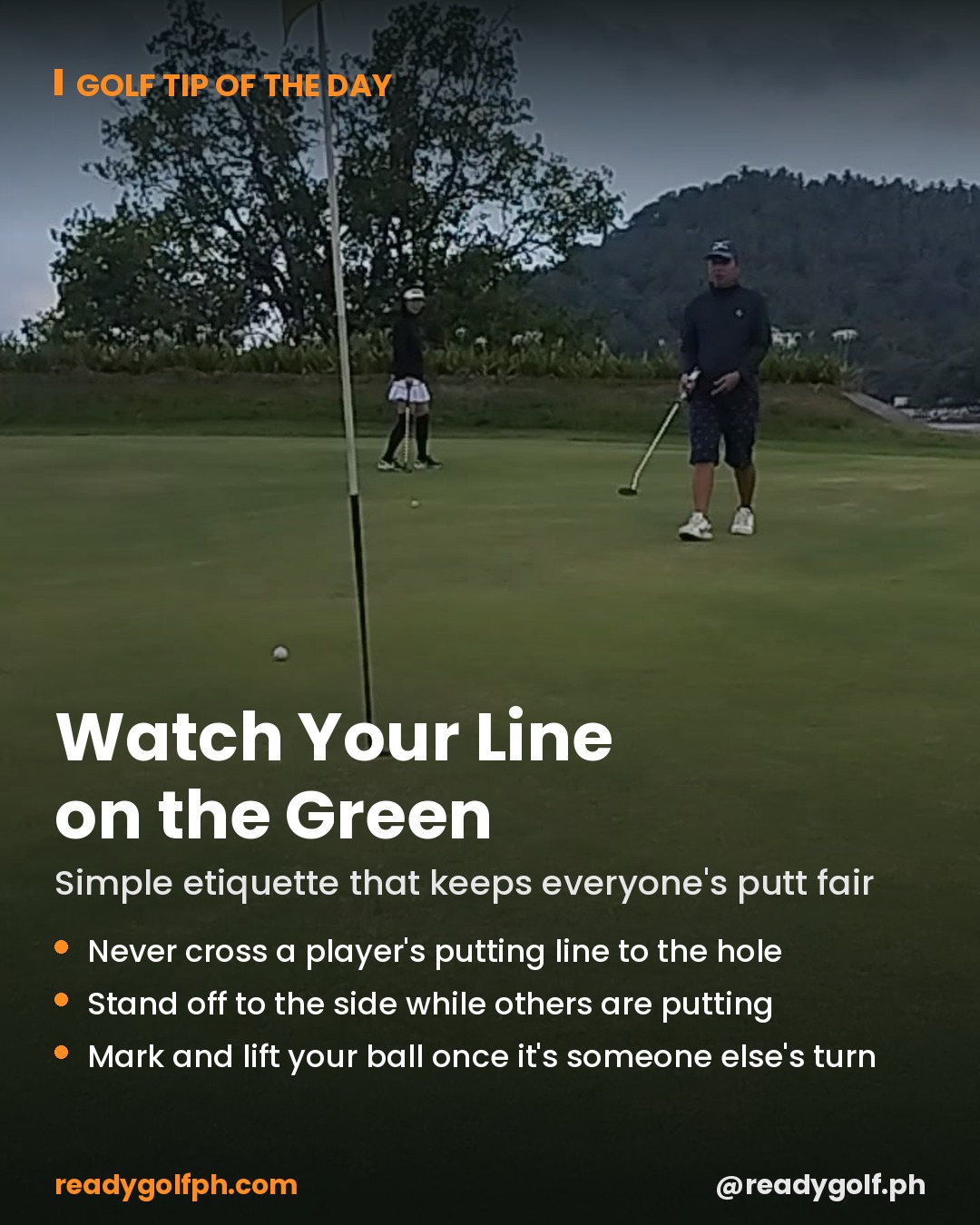
Picture this: you’re on the green with your group, everyone’s ball is down, and it’s not your turn yet. Where do you stand? Where do you walk to get there? If you’ve never really thought about it, you’re not alone, and you’re also not the only one whose footsteps might be quietly costing someone else a putt. The space between a golfer’s ball and the hole isn’t just empty grass. It’s called “the line,” and respecting it is one of the smallest, easiest habits in golf, and also one of the most overlooked.
This isn’t a rule you’ll find written in bold anywhere on the scorecard, but every good player learns it early, usually because someone politely (or not so politely) asked them to walk around instead of through. Once you know it, you’ll never unlearn it, and your playing partners will notice the difference immediately.
Why It Matters
A “line” in putting is the path the ball is expected to travel from where it sits to the hole, including any break it takes along the way. Walking across that line, especially close to the ball or close to the hole, presses down tiny footprints and disturbs the grass just enough to change how the ball rolls over that spot. On a smooth, true green, that’s a small dent in someone’s read. On a fast or heavily played green late in the day, it can be the difference between a putt that drops and one that catches a spike mark and slides past.
It matters even more than most golfers realize because putts are where rounds are actually decided. A flushed drive and a great approach shot can still end in a bogey if the last six feet don’t cooperate, and nobody wants their line disturbed on a putt that matters. Respecting this space is a small act, but it’s one that shows you understand the game is shared, not just played.
There’s also a pace-of-play benefit here that often gets missed. Golfers who know where to stand and where to walk move around the green efficiently, without doubling back or waiting for someone to reposition. A group that’s comfortable with green etiquette plays noticeably faster than one where everyone is unsure where they’re allowed to stand, and faster play is something every golfer, and every group behind you, appreciates.
Finally, it matters because it’s one of the clearest signals of a considerate playing partner. Golfers remember who paid attention to their line and who didn’t. It costs nothing to walk the long way around, and it earns you a reputation as someone people enjoy sharing a tee time with.
The Fix
Know where the line actually is before you move. As soon as your ball and your partners’ balls are all on the green, take a second to mentally trace each ball’s path to the hole, including any obvious slope. That mental map tells you which parts of the green to avoid walking across for the rest of that hole.
Walk around, not through. The habit to build is simple: when in doubt, take the long way. Circle behind the hole or well around the edge of the green rather than cutting straight across the middle. It adds a few steps, never a few strokes, and it becomes automatic after a handful of rounds.
Stand off to the side while someone else putts. Beyond just avoiding their line, avoid standing directly behind the hole in their eyeline or anywhere in their peripheral vision while they’re over the ball. Give the player putting a clear, distraction-free look at their line, the same courtesy you’d want when it’s your turn.
Mark your ball promptly once it’s not your turn. If your ball is sitting on or near someone else’s line, mark it and lift it as soon as it’s clear you’re not putting next. This is standard practice even in casual rounds, and it removes any question about whether your ball itself is in the way.
Repair what you can, ignore what isn’t yours to fix. If you do accidentally step somewhere you shouldn’t have, a light, honest word to your group goes a long way. Most golfers are understanding about a genuine accident. What they’ll remember is whether you noticed and cared.
Drill to Practice
The best way to build this habit is to make it part of your pre-putt routine, the same way you’d rehearse a stance or check your grip. Next time you’re on the practice green with a partner, place two balls on opposite sides of the same hole and deliberately practice walking the long way around to mark, read, and putt each one, narrating out loud where the line is and where you’re choosing to walk. It feels slow and overly careful at first. After a few reps, it becomes second nature, and you’ll find yourself doing it automatically on the course without thinking twice.
A second version of this drill works well during a casual practice round: before every putt on every hole, point to the spot where you plan to walk to mark your ball, and check that it doesn’t cross anyone’s line. This single-question habit, “does my path cross a line,” is the entire skill. Once it’s automatic, you’ll never have to think about it again.
Common Mistakes
The most common mistake is simply not looking. Golfers walk onto the green focused on their own ball and their own read, and never register where anyone else’s line actually is. The fix isn’t complicated skill, it’s just a moment of awareness before you start moving.
A second mistake is cutting across the green to save a few steps, especially when a group is trying to play faster. Ironically, this often slows things down more than it saves, because a disturbed line can mean a missed putt, a re-read, or an awkward moment where someone has to ask you to move.
A third mistake is standing too close to the hole while someone else putts, even off to the side. Being near the cup, shuffling feet, or casting a shadow across the line can be just as distracting as standing directly on it. Give the putter the same open, quiet space you’d want for your own putt.
Finally, some golfers assume this only matters in competitive or formal rounds. It matters just as much in a relaxed weekend game with friends. Good habits on the green don’t switch on and off depending on the stakes, and building them into every round is what makes them automatic when it counts.
FAQ
How far away from someone’s line is considered safe?
There’s no strict number, but a good rule is to stay at least a few feet clear of the ball-to-hole path and avoid the area directly behind the hole. When in doubt, walk further around rather than cutting it close.
What if I genuinely don’t know where someone’s line is?
Ask. It takes two seconds, and most players are happy to point it out. It’s a far better option than guessing and walking across it by accident.
Does this apply on the practice green too?
Yes, and it’s actually the best place to build the habit, since there’s no pressure and plenty of repetition. Treat the practice green with the same etiquette as the course, and it will carry over naturally.
Is this rule the same as not stepping in someone’s line right before they putt, or is it broader?
It’s broader. Most golfers know not to walk across the line the moment before a putt. The full habit means being aware of every line on the green from the moment everyone’s ball lands, not just in the final seconds before a stroke.
Key Takeaways
The space between a ball and the hole isn’t empty grass, it’s a line that deserves respect. Know where each line is before you move, walk around instead of through, stand off to the side while others putt, and mark your ball promptly when it isn’t your turn. It’s a small habit that costs nothing and says everything about how you play with others.
#ReadyGolfPH #GolfTips #GolfEtiquette #BeginnerGolfer #GolfPhilippines #Putting