
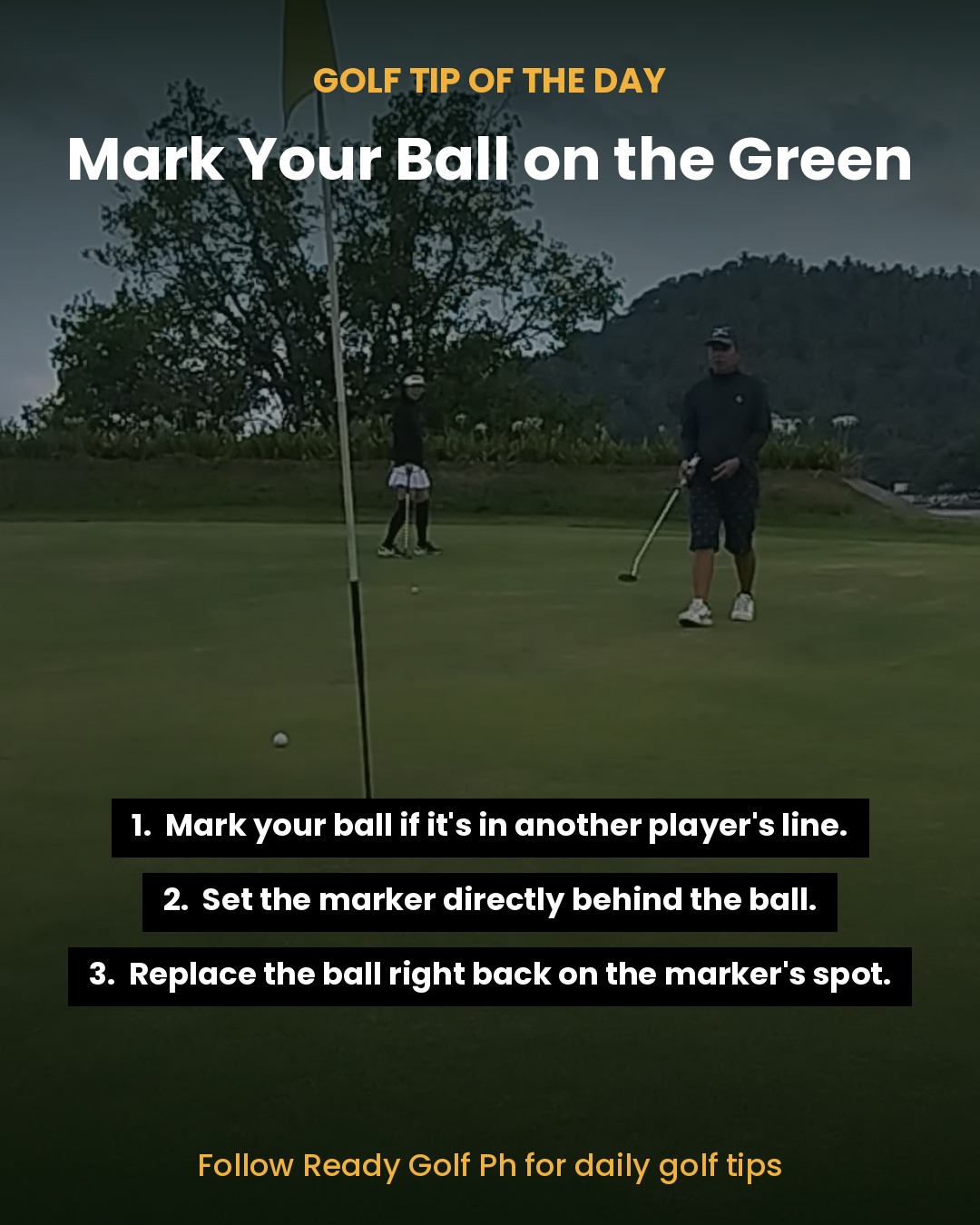
Picture this: you and a playing partner both reach the green, and your ball happens to sit right between their ball and the hole. Do you leave it there? Pick it up and walk away? Most beginners freeze for a second, unsure what’s actually expected of them. The answer is simple once you know it, and it’s one of the clearest signals of a golfer who understands the game beyond just hitting the ball.
Marking your ball on the green isn’t a rule reserved for tournament play. It’s everyday etiquette that keeps rounds fair, keeps greens in good shape, and keeps play moving. Once it becomes a habit, you won’t even think about it, you’ll just do it automatically every time your ball could get in someone else’s way.
Why It Matters
A golf ball sitting on the green is an obstacle. If it’s anywhere near another player’s line to the hole, even slightly, it can physically deflect their putt or simply distract them while they’re trying to read the break. Leaving it there isn’t just inconsiderate, in most forms of play it can actually be a rules violation if it interferes with another player’s stroke.
There’s also a course-care angle. A ball left sitting on the green, especially one with any spin left on it, can shift slightly under its own weight on a sloped green, or get bumped by a foot or a trailing golf bag. Marking it removes that risk entirely and keeps the putting surface exactly as the group left it.
Beyond the practical reasons, marking your ball is one of those small habits that experienced golfers notice immediately. It signals that you’re paying attention to the group, not just your own shot, and that you understand golf is played alongside other people, not in isolation. New golfers who pick up this habit early tend to feel more confident and welcome in group play, because it shows respect for the etiquette that holds the game together.
The Fix
The process is straightforward, but doing it consistently is what makes it a habit rather than something you remember only half the time.
As soon as you reach the green, take a quick look at where your ball sits relative to your playing partners’ lines to the hole. If there’s any chance it’s in someone’s way, whether it’s directly on their line or just close enough to be distracting, mark it before anyone else putts.
To mark, place a small, flat marker (a coin or a dedicated ball marker both work) directly behind your ball, right up against it, in line with the direction you’re looking at the hole. Once the marker is down, pick your ball up. Never mark in front of the ball or off to the side, since that changes exactly where the ball needs to go back.
When it’s your turn again, replace the ball by setting it down directly in front of the marker, touching it, then pick the marker back up. This puts the ball back in the exact spot it was in before, down to the inch. A small shift in either direction can change your read entirely, so take the extra second to line it up properly.
If your marker itself ends up in another player’s line, you can move it. Use a putter head-length or a clubhead as a reference to shift it a set distance to the side, remember the reference point you used, and move it back the same distance before you putt.
Drill to Practice
This isn’t a swing mechanic, so there’s no physical drill, but there is a habit drill worth running. For your next few rounds, make it a personal rule that every single time you’re on a green with another player, you check your ball’s position before anyone hits, out loud if you need to, asking yourself: “Is this in anyone’s way?”
Do this even on greens where it obviously isn’t necessary, like when you’re the only one near the hole. The goal isn’t to overthink every putt, it’s to build the automatic scan into your pre-putt routine so it becomes second nature, the same way you’d automatically check your grip or your stance.
After a handful of rounds of consciously running this check, most golfers find they no longer have to think about it, they just glance and mark without any hesitation, the same way they’d naturally step aside when someone else is about to putt.
Common Mistakes
The most common mistake is simply not checking at all, assuming that because your ball is “close enough” to the hole, it’s not really in anyone’s way. Lines to the hole aren’t always obvious, especially on breaking putts, so it’s better to mark when in doubt than to leave it and find out it was actually a problem.
Another frequent mistake is marking correctly but placing the ball back carelessly, setting it down an inch or two off from where the marker sat. On a fast, sloping green, even that small a difference can change how a putt breaks, so take the extra second to replace it precisely.
Some golfers also forget to move their marker out of another player’s line, focusing only on their ball and not realizing the marker itself has become the obstacle. A flat coin is less disruptive than a ball, but it can still catch a putt or catch someone’s eye mid-stroke, so it’s worth checking both.
Finally, a small but real mistake: using an oversized or brightly reflective marker that draws attention or that other players’ balls could actually catch on. A simple, low-profile coin or standard ball marker avoids any of these issues.
FAQ
Am I required to mark my ball, or is it optional?
In most forms of play, if your ball could interfere with another player’s stroke, marking is required, not just polite. Even in casual rounds where the rules are relaxed, it’s considered standard etiquette to mark whenever there’s any doubt.
What should I use as a marker?
A dedicated ball marker or a small, flat coin both work well. Avoid anything with a thick profile or sharp edges that could catch another player’s ball as it rolls past.
Do I need to mark my ball everywhere on the green, or just near the hole?
Mark it any time it could be in another player’s line, which isn’t always right next to the hole. A long, breaking putt might pass near a ball sitting well off to the side, so it’s worth checking the actual line, not just the distance to the cup.
What happens if I forget to move my marker and it’s in someone’s line?
Simply move it before they putt, using a clubhead or putter length as a reference so you can return it to the exact spot afterward. It only takes a few seconds and is completely normal to do mid-round.
Key Takeaways
Marking your ball on the green is a small habit with an outsized impact on how a round feels for everyone playing. Check your ball’s position as soon as you’re on the green, mark directly behind it if there’s any chance it’s in someone’s way, and replace it precisely when it’s your turn. Move your marker if it becomes an obstacle too. It takes seconds, but it’s one of the clearest signs of a golfer who plays with the group in mind, not just their own scorecard.
#ReadyGolfPH #GolfTips #GolfEtiquette #PuttingGreen #BeginnerGolfer #GolfPhilippines