
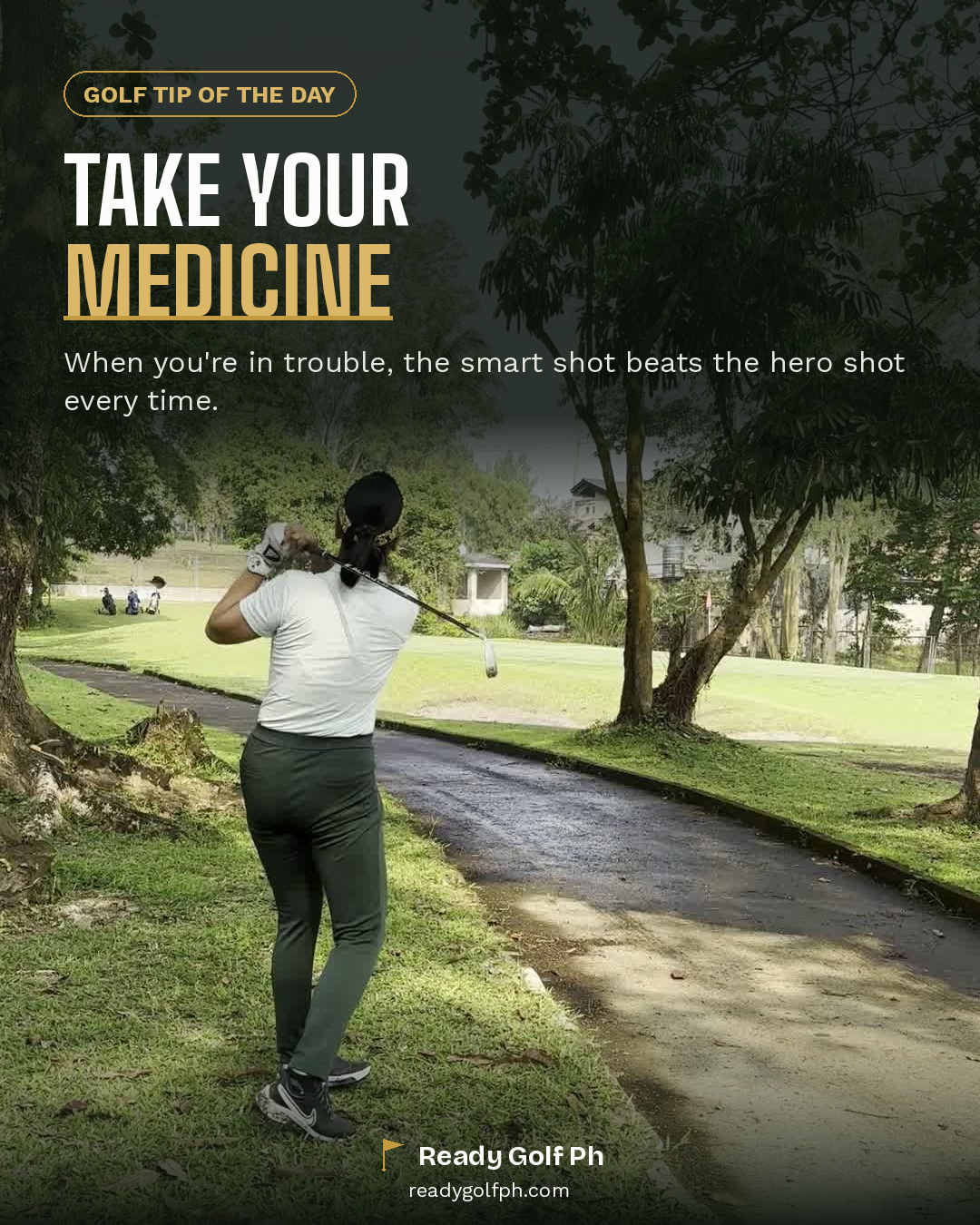
Your drive leaks right, kicks off a cart path, and comes to rest under a low tree branch with your ball sitting in thick grass and your view of the green almost completely blocked. Most golfers spend the next thirty seconds convincing themselves that a low, hooking 3-wood can somehow thread the gap in the branches and reach the green anyway. It almost never works, and when it doesn’t, one bad break turns into a disaster hole.
The players who protect their scores aren’t the ones who pull off the miracle recovery. They’re the ones who recognize trouble for what it is and take their medicine: a smart, unglamorous shot that gets the ball back into play. It costs you very little, and it’s one of the simplest ways to keep a bad break from turning into a blown-up hole.
Here are 3 keys to smart recovery shots the next time trouble finds your ball.
1. Take the Club That Gets You Back to the Fairway
The first decision in any trouble shot isn’t which club will get you closest to the green, it’s which club will reliably get you back into the fairway. That’s often a wedge or a short iron, not the fairway wood or hybrid your ego wants to reach for.
Ask yourself a simple question before you swing: if this shot goes exactly as planned, does it solve my problem? If the honest answer is “only if everything breaks perfectly,” it’s the wrong club. Choose the option with the highest chance of success, even if it means giving up significant distance.
2. Punch Out Low Under Branches, Not Over Them
When you’re under tree cover, the instinct is to try to climb the ball up and over the trouble. This is almost always the wrong instinct. A low, punched shot that stays under the branches has a far higher success rate than a shot that tries to clear them.
Play the ball back in your stance, take one or two extra clubs, and make a shorter, more controlled swing that keeps the ball flight low. The goal isn’t a full swing, it’s a controlled strike that gets the ball moving forward under the obstruction and back into a position where you can play a normal shot.
3. Aim for the Fairway, Not the Flag
Even once you’ve picked the safe club and the low trajectory, it’s tempting to still aim at the pin out of habit. Resist it. Aim for the widest, safest part of the fairway or the green, not the flag, especially when your lie or your angle makes real precision unlikely.
Removing the flag as a target for one shot doesn’t mean giving up on the hole. It means giving yourself the best realistic look at your next shot instead of compounding one mistake with another. Most big numbers on a scorecard come from a string of small bad decisions, not one bad shot alone.
Why the Smart Shot Beats the Hero Shot
Course management data backs up what good players already know instinctively: the guaranteed bogey almost always beats the low-percentage attempt at par. A hero shot that comes off saves you one stroke over a smart layup. The same hero shot, when it fails, can cost you three, four, or more strokes and completely change the character of your round.
Once you start thinking in terms of probabilities instead of best-case outcomes, the safe shot stops feeling like giving up and starts feeling like the obviously correct play. The golfers who score consistently well aren’t avoiding trouble entirely, they’re just far more disciplined about how they escape it.
How to Build This Into Your Practice
You can’t fully simulate trouble shots on the range, but you can build the skill and the mindset. Practice low punch shots with a mid iron, focusing on ball-back positioning, a shorter backswing, and a controlled, descending strike. Get comfortable hitting the ball low on command, not just high.
Just as important, practice the decision-making. Next time you’re on the course and end up in trouble, pause before you pull a club and ask the question from tip one: does this club realistically solve my problem? Making that pause a habit in low-stakes moments makes it far easier to stick to in the moments that actually matter for your score.
FAQ
Why do I keep making big numbers on holes where I’m not even that far off line?
Big numbers usually come from a bad recovery decision, not the original mistake. Trying a low-percentage hero shot from trouble is the most common cause.
Should I always punch out sideways from trouble?
Not always, but you should always ask whether your intended shot has a realistic chance of working. If it doesn’t, punching back into the fairway is almost always the better play.
Is it worth giving up distance to guarantee I’m back in the fairway?
Yes. A shorter shot that reliably finds the fairway sets up your next shot far better than a longer shot that has a high chance of finding more trouble.
Key Takeaways
- Choose the club most likely to actually solve your problem, not the one that could reach the green
- Play low, punched shots under branches instead of trying to fly over them
- Aim for the fairway or the widest part of the green, not the flag, when your lie is bad
- A guaranteed bogey almost always beats a low-percentage attempt at par
- Big scores usually come from a string of decisions, not one single bad shot
- Practice low punch shots and the pause-before-you-swing habit, not just full swings
Ready Golf Ph — daily tips to help you play smarter and score better, one round at a time.