
Every golfer has stood over a ball, looked up, and found a big trunk sitting right where the shot wanted to go. There is usually a tiny gap to the left or a bit of open sky above, and a little voice saying, “You can fit it through there.” Sometimes you can. Most of the time, that thought is how a bogey becomes a triple.
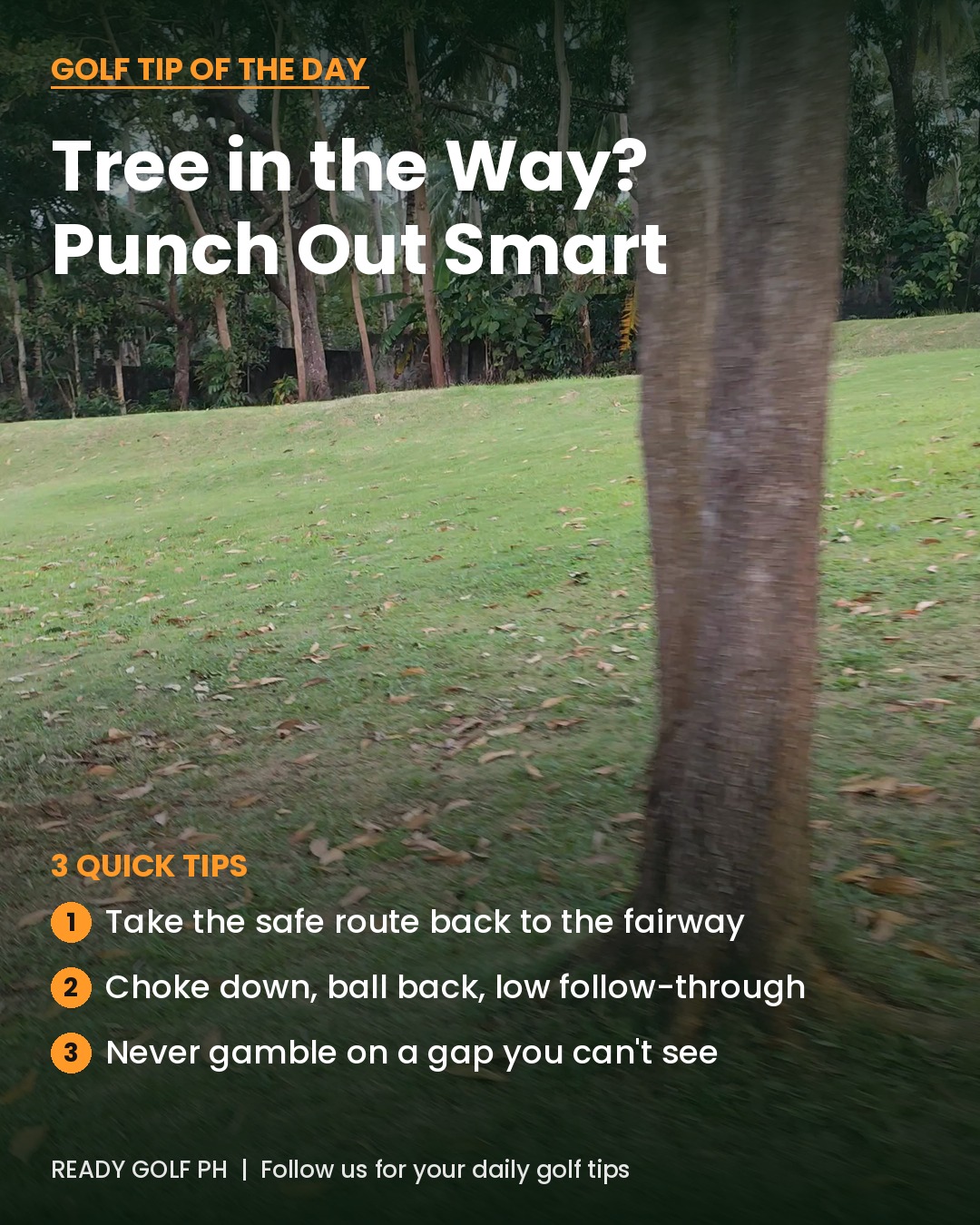
The photo we’re using for this tip shows exactly that situation: a tall, two-trunk tree planted between the player and the open fairway, with the course sloping away behind it. It is a normal spot on a normal course, and the best players handle it in the least exciting way possible. They punch out.
Why It Matters
Trees are unforgiving. A ball that hits a trunk or a low branch doesn’t just lose distance, it can bounce backward, sideways, or into something worse than where you started. One greedy attempt often leaves you in the same spot with an extra stroke on the card.
Beginners tend to make this mistake more than anyone, and it isn’t about ability. It’s about how the situation feels. When you’re ten yards from the fairway and the green is still far away, giving up distance feels like a defeat. In reality, taking the sure shot back to open grass is a scoring decision, not a weak one. You are trading one stroke for control of the hole.
Think about the numbers. If a risky shot through a gap works once in five tries, the other four tries cost you at least a stroke each, sometimes two. A safe punch-out costs one stroke almost every time and puts you back in play. That’s simple math, and it beats hope.
The Fix
Take the safe route back to the fairway. Before you pick a club, look for the widest, easiest opening back to short grass, even if it points slightly away from the green. Your job on this shot is to get the ball out, not to hit the hero shot. Choose your landing area first, then work backward to the club.
Use a lower-lofted club. A 7-iron or 8-iron is usually enough. Long clubs are harder to control from a tight lie, and a very lofted club sends the ball up into the branches you’re trying to avoid.
Choke down and move the ball back. Grip a couple of inches down the handle and play the ball slightly back of center in your stance, with a little more weight on your front foot. This delofts the club and keeps the ball flight low.
Shorten the swing, and keep the follow-through low. Think of a three-quarter swing at most, ending with your hands low rather than finishing high over your shoulder. A low finish keeps the ball under the branches and stops you from flipping your wrists and hooking it into the trunk.
Never gamble on a gap you can’t see. If you can’t clearly picture the ball’s path from your ball to your landing area, the answer is no. Pick the other option. A gap that looks big from a few steps behind the ball often looks much smaller from address.
Drill to Practice
On the range or practice area, set up an alignment stick or a bag about ten steps in front of you to act as your “tree.” Use your 7-iron and hit twenty low punch shots with the ball back in your stance and a short, low finish. Aim to have the ball clear the stick by no more than the height of a golf bag and roll out along the ground.
Once you’re comfortable, add a target about thirty yards out. Count how many of ten shots finish within a club length or two of it. You’re building a reliable escape shot, and it’s one of the most useful skills you can own on a course with lots of trees.
Common Mistakes
Trying to hit the green from behind a tree. Unless the opening is huge, the risk isn’t worth it. Getting back into play costs you one stroke. A failed attempt costs you at least two.
Using a long iron or a wood. Longer clubs are harder to hit cleanly from awkward lies, and the low trajectory you need is easier to produce with a shorter, less lofted iron.
Swinging too hard. A punch-out is a control shot. Full power tends to send the ball too far, right through the fairway and into more trouble on the other side.
Finishing high. A tall follow-through sends the ball up. Keep the hands low and your finish controlled.
Skipping the walk-around. Before you commit, take a few steps to look at the shot from behind and from the side. It takes ten seconds and often shows you an easier exit than you first saw.
FAQ
What is a punch shot in golf?
A punch shot is a low, controlled shot played with a shortened swing, the ball back in your stance, and a low finish. It’s used to keep the ball under branches or out of the wind.
Which club should I use for a punch-out?
Most beginners do well with a 7-iron or 8-iron. It has enough loft to get the ball moving forward without launching it high into the trees.
Is it okay to just chip out sideways?
Yes, absolutely. If the only safe route is sideways, take it. The goal is to get back on short grass with a clear next shot.
Should I always punch out when there’s a tree in front of me?
Not always. If the opening is wide and the ball sits well, you may have a real shot. But if you have any doubt about the path, play it safe.
How do I know if the gap is really big enough?
Look from behind your ball along the line to your target. If you have to ask the question, the gap is probably too tight for the shot.
Key Takeaways
A tree in your way is a decision point, not a challenge to your pride. Choose the safest route back to the fairway, use a shorter iron, choke down, put the ball back, and keep the follow-through low. Skip any gap you can’t clearly see. One smart punch-out will save you far more strokes over a season than one lucky shot through the trees.
Follow us for your daily golf tips!
#ReadyGolfPH #GolfTips #CourseManagement #PunchShot #BeginnerGolfer #GolfPhilippines