
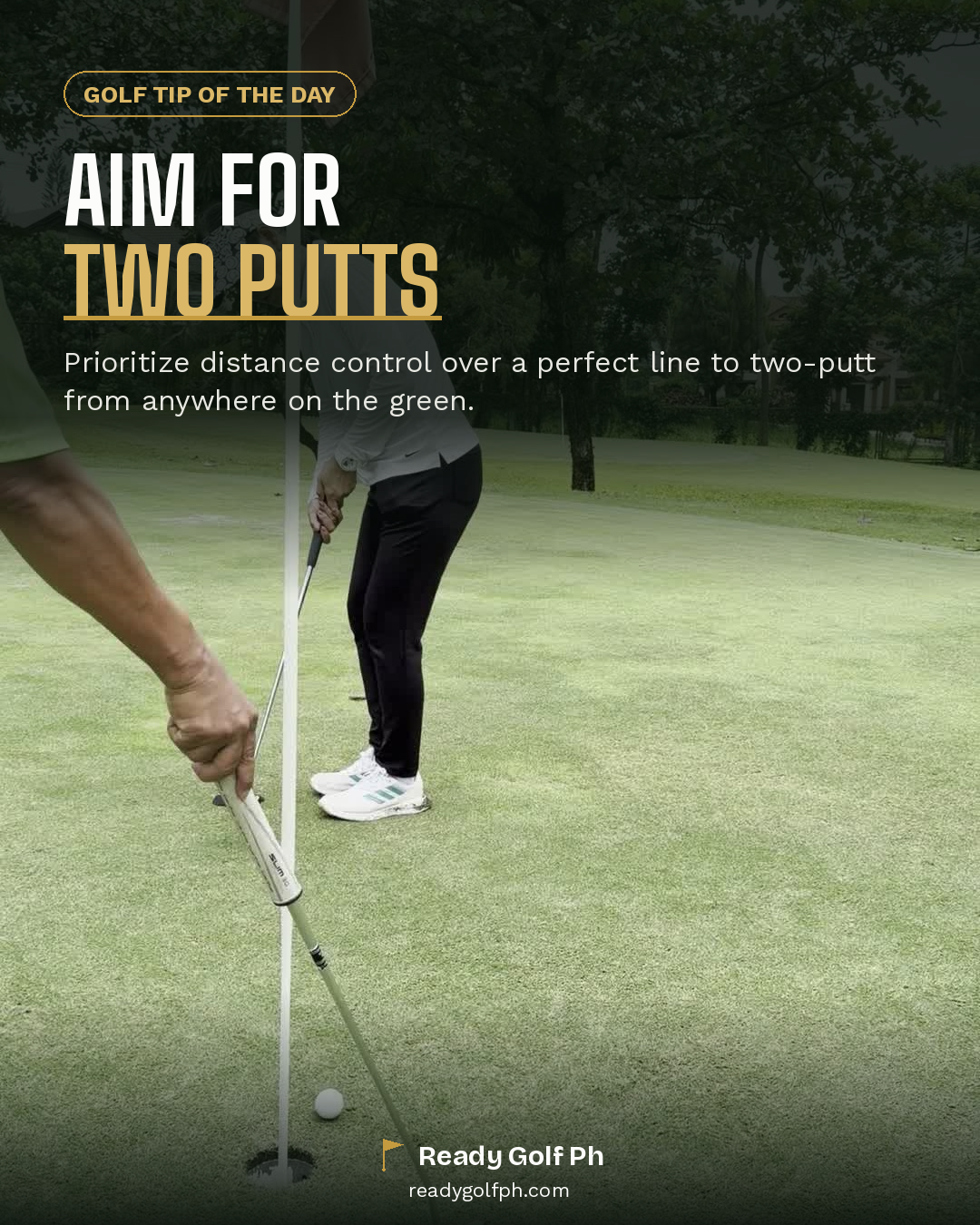
You hit a great approach shot and you’re standing on the green forty feet from the hole, already thinking about the birdie putt. Ninety seconds later you’re marking your ball after a three-putt, and that great approach shot just turned into a bogey. Sound familiar? The problem usually isn’t your stroke. It’s your expectations.
Most amateur golfers lose more strokes to three-putts than to almost any other single mistake on the course, and the fix has very little to do with a better putting stroke. It has to do with playing the right game from long range: aiming for two putts instead of chasing one.
Here are 3 keys to two-putting every green you’re not going to one-putt.
1. Focus on Speed First, Line Second
From outside 20 feet, distance control matters far more than the exact line. A putt that’s on line but rolls eight feet past the hole is a much bigger problem than a putt that’s slightly off line but stops two feet short. The first putt is about controlling how hard you hit it, not about making it.
Before you even look at the line, take a few practice strokes while looking at the hole, not the ball. This trains your hands and arms to feel the right length of stroke for the distance instead of a generic, one-size-fits-all putt. Golfers who prioritize speed on long putts leave themselves easy, makeable second putts far more often than golfers who prioritize a perfect line.
2. Leave Uphill Putts Below the Hole
Where you miss matters just as much as how close you get. A putt left below the hole gives you an uphill comebacker, which is far easier to judge and far less likely to slide past. A putt left above the hole gives you a fast, breaking downhill putt that can easily turn one manageable miss into two.
When you’re reading a long putt, pick a target that favors the low side rather than aiming dead at the pin. This is especially important on sloped greens where a downhill second putt can be genuinely difficult to stop near the hole. Giving yourself the uphill look, even if it means playing a foot or two safe, is one of the simplest ways to protect your score.
3. Two Putts from Anywhere Is a Win
This is as much a mental shift as a technical one. Golfers who feel like every long putt is a missed opportunity unless it goes in tend to get tense over the ball and rush their speed control. Golfers who accept that two putts from 40 or 50 feet is a good result tend to relax, take their time on the read, and actually roll it closer more often.
Give yourself credit for a solid two-putt the same way you would for a good par save. That mental permission takes the pressure off the first putt, and paradoxically, it’s often when golfers make more of those long ones. Chasing every putt like it has to go in is a fast way to turn one bad read into a three-putt.
Why Lag Putting Deserves More Practice Time
Most golfers spend the bulk of their practice time on short putts inside five feet, which matters, but it isn’t where most strokes are actually lost. Three-putts almost always start with a poor first putt from well outside makeable range, not a missed two-footer.
Improving your speed control on 30, 40, and 50-foot putts has an outsized effect on your scoring average because it directly reduces the number of three-putts per round. If you’re only going to add one thing to your practice routine, long lag putts deliver more strokes saved per minute of practice than almost anything else you can work on.
How to Build This Into Your Practice
Find a practice green with some length and pick a spot 30 to 40 feet away. Instead of trying to make putts, place three tees in a circle about three feet around the hole and try to get every putt to stop inside that circle. This trains distance control directly instead of rewarding lucky makes.
Once you’re consistently stopping putts inside the circle, add the low-side rule from tip two by deliberately picking a target that favors the uphill miss. Finally, keep score differently in practice: count a putt that finishes inside the circle as a success, not just a putt that goes in. This reinforces the two-putt mindset before you ever get to the course.
FAQ
Why do I three-putt so often even when my short putts are solid?
Three-putts almost always start with a poor first putt from long range, not a missed short one. Weak speed control on long putts is the most common cause.
Should I aim directly at the hole on long putts?
Not always. On sloped greens, favoring the low side of the hole leaves an easier uphill second putt instead of a fast, breaking downhill one.
Is it bad to think of a long putt as “just” a two-putt?
No. Treating two putts from long range as a good result, not a failure, actually helps you relax and roll the ball closer more consistently.
Key Takeaways
- Prioritize speed control over a perfect line on putts outside 20 feet
- Take practice strokes while looking at the hole to feel the right distance
- Favor the low side of the hole so your second putt is uphill, not downhill
- Two putts from long range is a good result, not a missed opportunity
- Three-putts are usually caused by a poor first putt, not a missed short one
- Practice lag putting into a circle around the hole to build real distance control
Ready Golf Ph — daily tips to help you play smarter and score better, one round at a time.