
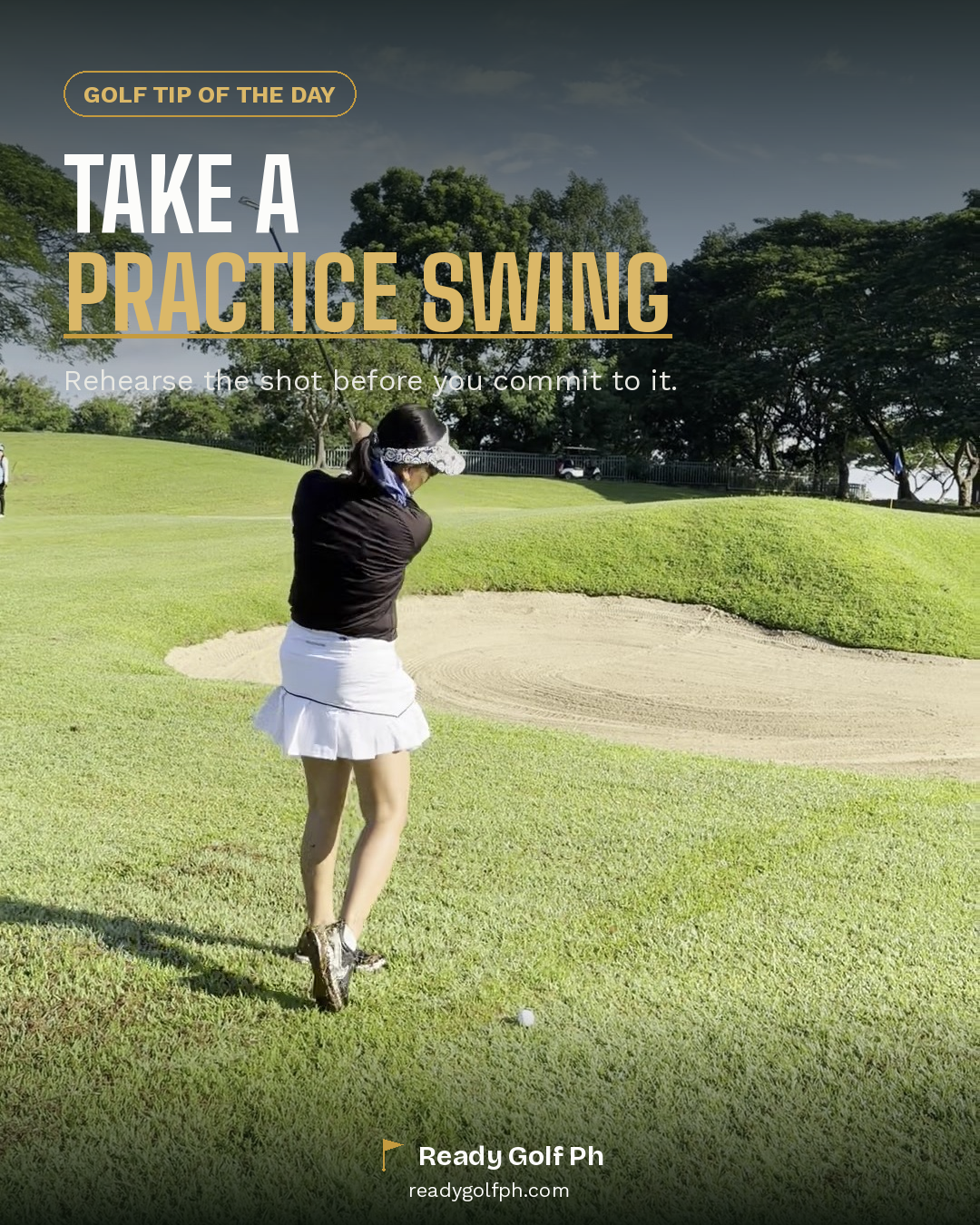
Watch golfers on the range and you’ll see two very different versions of the same habit. Some take a practice swing that looks almost identical to the shot they’re about to hit, smooth, deliberate, aimed at a specific outcome. Others take a quick, loose waggle that barely resembles a golf swing at all, more of a nervous tic than a rehearsal. Only one of those actually helps.
What a Practice Swing Is Actually For
A practice swing isn’t just a way to loosen up or kill time before you hit. Done right, it’s a rehearsal of the exact shot in front of you: the same tempo, the same length of swing, the same feel you’re about to take to the ball. Done wrong, it’s just motion, a habit with no connection to what happens next. The difference between those two versions is the difference between a practice swing that actually lowers your scores and one that’s just for show.
Why Most Practice Swings Don’t Help
The most common mistake is taking a generic, full-effort practice swing regardless of the shot at hand, then stepping up to hit something completely different, a soft pitch, a punch under a branch, a smooth three-quarter shot. When your rehearsal doesn’t match your actual shot, it isn’t preparing you for anything. Your body has no idea what you actually planned to do, so it defaults to whatever feels most familiar, which is often not what the shot calls for.
The Fix: Three Keys to a Useful Practice Swing
Rehearse the exact shot, not just a generic swing. Before you take your practice swing, decide exactly what shot you’re hitting: full swing, punch, soft pitch, whatever it is. Then swing at that speed and length, not your default motion. The practice swing should look like a preview of the real thing, not a warm-up for something else.
Feel your tempo and ground contact before it counts. Pay attention to where the club brushes the grass and how fast your tempo feels. This is your one free look at what the turf and lie are going to do to your swing. If the practice swing catches the ground early or feels rushed, that’s information you can use before you’re committed to a real shot.
Take one, then commit, don’t overthink the shot. One good practice swing is worth more than three hesitant ones. Repeating it over and over usually means you’re stalling, not preparing. Take the rehearsal, trust the feel it gave you, and step in to hit the shot without a long pause in between.
The Timing Problem: Rehearsal Versus Reset
There’s an important difference between a practice swing that primes you and one that resets you. A single, purposeful practice swing keeps your mind locked onto the shot you just rehearsed. Multiple practice swings, especially with a pause to reconsider between each one, tend to invite second-guessing. You start adjusting your plan mid-routine, which means you step up to the ball less certain than when you started. If you find yourself needing three or four practice swings before every shot, that’s usually a sign of indecision, not preparation.
How to Build a Practice Swing You Can Trust
The best way to make your practice swing useful is to treat it as part of a consistent routine, not a separate step you add or skip depending on how you feel. Decide on your shot first, take one rehearsal swing that matches it, then move directly into your setup and swing. Practicing this sequence on the range, not just on the course, helps make it automatic, so under pressure you default to a useful rehearsal instead of a nervous waggle.
Common Mistakes Golfers Make With Their Practice Swing
A common mistake is taking a practice swing that’s faster or slower than the actual shot, which teaches your body the wrong tempo right before you need the correct one. Another mistake is practicing in a different spot than your ball, on flatter ground or better grass, which means the feel you rehearsed doesn’t match the lie you’re actually playing from. A third mistake is skipping the practice swing entirely on shots that feel routine, which are often exactly the shots where a moment of rehearsal would catch a mistake before it happens.
FAQ
Does a practice swing really make a difference, or is it just a habit?
It makes a real difference when it matches the shot you’re about to hit. A practice swing that rehearses the correct tempo and length gives your body a preview to draw on, which tends to produce more consistent contact than skipping straight to the real swing.
Where should I take my practice swing if I can’t stand next to my ball?
Get as close to the actual lie as you safely can, ideally within a foot or two, so the grass and slope closely match what you’re about to play. A practice swing taken from very different turf won’t teach you much about the shot ahead.
How many practice swings should I take before a shot?
One is usually enough if it’s deliberate and matches the shot. Taking several in a row is more often a sign of hesitation than helpful preparation, and it can invite second-guessing right before you commit.
Key Takeaways
- A practice swing should rehearse the exact shot in front of you, not just loosen up your arms with a generic motion.
- Feel your tempo and where the club meets the ground during the rehearsal; it’s free information about the lie.
- Take one purposeful practice swing, then commit; repeating it usually signals hesitation, not preparation.
- Practice swings taken far from your actual ball or on different turf don’t teach you much about the shot ahead.
- Building a consistent routine, shot decision, one rehearsal, then setup, helps you default to a useful practice swing under pressure.
Ready Golf Ph — daily tips to help you play smarter and score better, one round at a time.