
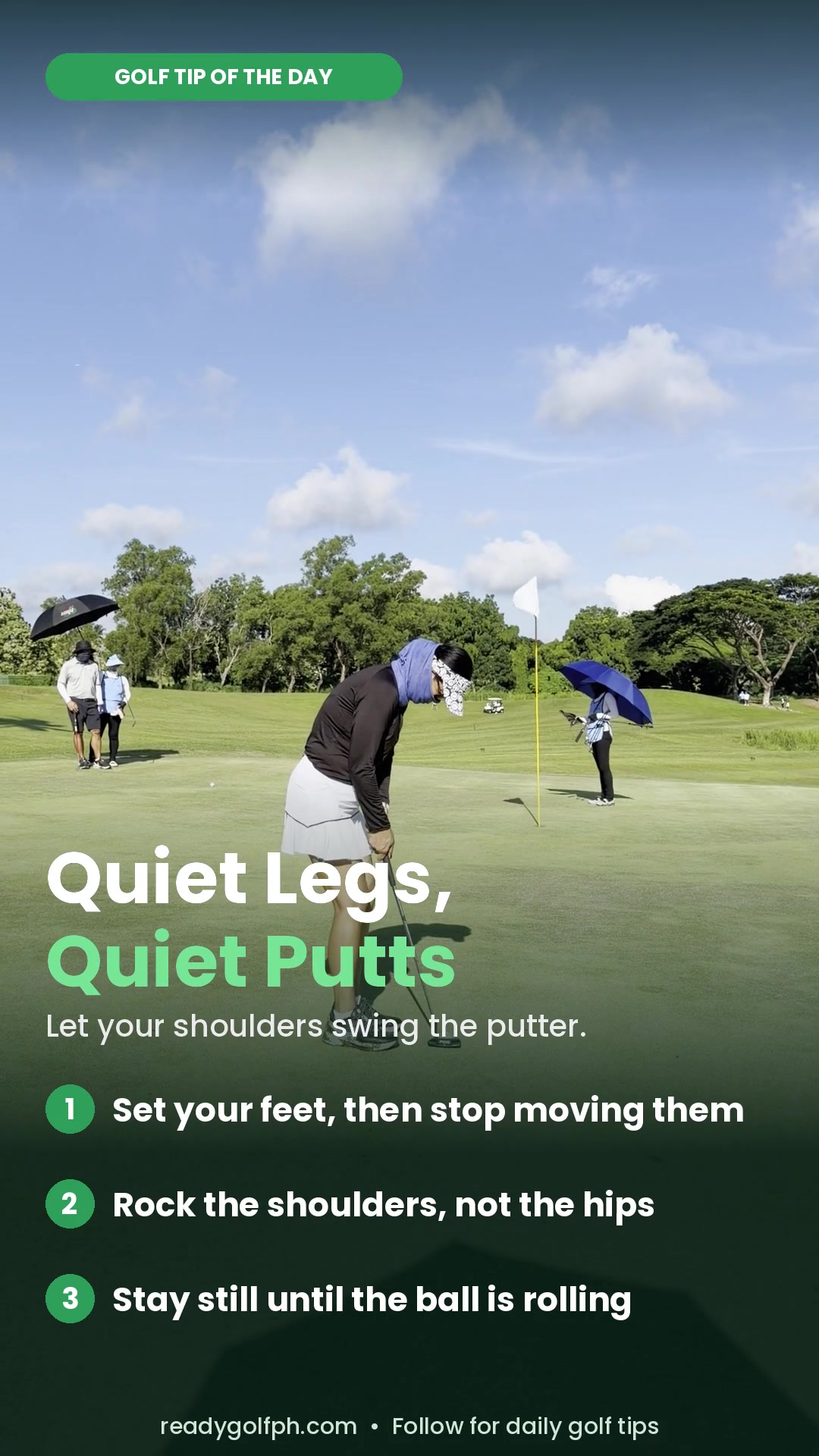
Watch a golfer who putts well and you’ll notice something odd: very little happens. The feet stay put. The knees don’t bounce. The hips don’t slide. The only thing moving is a gentle rocking of the shoulders and the putter swinging along with them, like a slow pendulum.
Now watch a weekend golfer who three-putts a lot. There’s usually more going on. A shuffle of the feet right before the stroke, a little sway toward the target, a knee that dips as the putter comes through. None of it looks dramatic, but every extra movement is one more thing that has to line up at the exact moment the putter meets the ball.
That’s the idea behind “quiet legs, quiet putts.” If your lower body is quiet, your stroke has fewer ways to go wrong.
Why a Quiet Lower Body Matters
A putt is a small stroke, and small strokes are easy to disturb. The putter face only needs to be a degree or two off to miss a short putt, and a little sway in your hips can do that without you ever feeling it.
Here is what usually happens when the lower body gets involved:
- The stroke path changes. If your hips slide toward the target on the way through, the putter tends to cut across the ball or arrive from a different angle than it left. The ball starts a bit left or right of where you aimed.
- The low point moves. Dipping or rising even half an inch changes where the putter bottoms out. You hit the ball thin, a touch heavy or off the toe, and your distance control disappears.
- Your eyes move. When your head follows your body, your view of the ball changes mid-stroke. It’s harder to stay on target when your reference point is drifting.
- Tension sneaks in. Gripping the ground with tense legs sounds like stability, but stiff, locked knees often make people sway more, not less.
A quiet base fixes all of this at once. When your lower body isn’t doing anything, your shoulders and arms can do one simple job: swing the putter back and through on the same line.
The Fix: Build a Calm, Stable Base
You don’t need a special technique. You need a setup you trust and the discipline to leave it alone.
1. Set your feet, then stop moving them. Take your stance, wiggle if you need to, and settle in. Once your feet are where you want them, treat them as glued to the green. Many golfers keep fidgeting right up until they start the stroke. Pick a moment, a last look at the hole for example, and let that be the signal that your feet are done.
2. Soften your knees, don’t lock them. A slight flex in the knees keeps you balanced and relaxed. Locked knees feel stiff and tend to wobble. Deeply bent knees tire you out. Aim for “athletic and comfortable.”
3. Let your shoulders do the work. Imagine a triangle made by your two shoulders and your arms. Rock that triangle back and through like a see-saw. The hips and legs just go along for the ride without moving on their own.
4. Stay still until the ball is rolling. After impact, hold your position for a moment. Don’t spin out to watch the ball or step toward the hole. Freezing for a second or two is a great check: if you can hold the pose comfortably, you were balanced.
A Simple Drill to Feel It
Try this on the practice green or even on a carpet at home.
The Wall-Stance Drill. Stand with your back or your rear end lightly touching a wall or a bag stand, and your feet in your normal putting stance. Make a few practice strokes. If your hips move during the stroke, you’ll feel yourself bump or lose contact with the wall. The goal is to keep the same light contact from start to finish.
Then take it to the green:
- Hit five putts from about 6 feet, holding your finish for two full seconds each time.
- Move back to 15 feet and hit five more, again holding the finish.
- If you can’t hold the finish, you moved. Try again with a slower, smoother stroke.
Don’t worry about the results at first. Pay attention to how still your legs feel. Make rates tend to improve on their own once the stroke becomes repeatable.
Common Mistakes to Avoid
- Shuffling right before you putt. A last-second adjustment of the feet usually changes your alignment. Make your final adjustments earlier, in your setup routine.
- Swaying toward the target. It feels like you’re helping the ball go forward. It’s actually pulling the putter off line.
- Bouncing on your toes. Staying light on your feet is fine for a tee shot, but for putting you want your weight centered and calm.
- Locking the knees. This looks still but feels tense. A soft, small flex works better.
- Looking up too early. Peeking at the ball often pulls the shoulders and then the hips along with it. Keep your eyes on the spot where the ball was until you hear it roll.
Make It Part of Your Pre-Putt Routine
The easiest way to keep your lower body quiet is to turn it into a habit. A short routine might look like this: read the line, take one or two smooth practice strokes with your shoulders, step in, set your feet, take a last look at the hole, and go.
By the time you’re standing over the ball, there should be nothing left to decide. Your feet are done, your knees are relaxed, and the only thing left to do is rock the shoulders. That calm is what you’re after. Even in the middle of a competitive match, a stable base gives you something steady to lean on when the nerves hit.
FAQ
Should my weight be on my toes or heels when I putt?
Aim for the middle of your feet, maybe a touch toward the balls of your feet. If you feel rocked back onto your heels or leaning toward your toes, you’ll probably sway during the stroke.
Is it okay to have a little movement in the legs on long putts?
A tiny amount of natural movement is fine, but the aim is to keep it minimal. On long putts, increase the length of your shoulder rock rather than adding body movement.
What if I feel stiff when I try to stay still?
Quiet doesn’t mean rigid. Keep your knees soft and your grip light. Stillness should feel relaxed, like standing in line, not like standing at attention.
Does this apply to chipping too?
Yes, to a degree. Chipping also benefits from a stable base, though the weight usually sits a little more toward the lead foot.
Key Takeaways
- Fewer moving parts means fewer ways for a putt to miss.
- Set your feet, then stop moving them.
- Rock the shoulders like a see-saw, and let the legs stay quiet.
- Hold your finish until the ball is rolling. It’s the quickest balance check there is.
- Practice with the wall-stance drill to feel what “still” really means.
Follow us for your daily golf tips.
#beginnergolfer #readygolf #readygolfph #golfforbeginners #golfer #puttingtips #golftips