
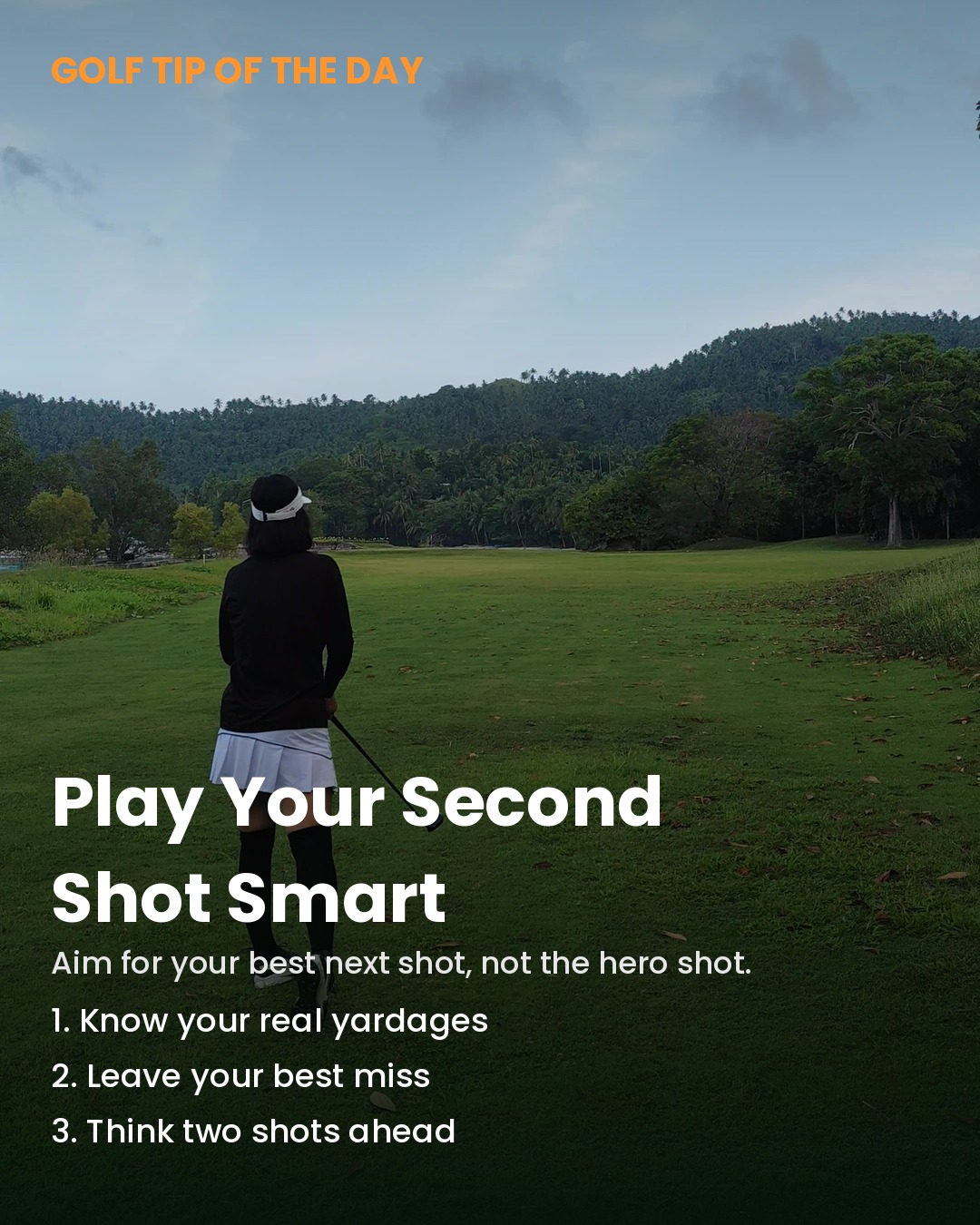
You just hit a decent tee shot. You’re walking up to your ball, and somewhere between the fairway and your bag, a plan starts forming in your head, usually something like “I’m going for it.” The green is sitting there, maybe 160 yards out, maybe guarded by a bunker or a stretch of rough, and the hero shot starts to feel like the obvious choice. It’s the shot you picture when you picture playing well.
Here’s the problem: that plan wasn’t built around your actual game. It was built around the shot you wish you could hit on command, every time, under pressure, with a club you don’t always trust. Good course management doesn’t start on the green. It starts right here, on your second shot, before you’ve even pulled a club.
Why It Matters
Most strokes lost by beginner and mid-level golfers don’t come from bad swings. They come from good swings applied to the wrong decision. You hit a clean 5-iron, it just happens to be the wrong club for the shot you actually needed, and now you’re chipping from a bunker instead of putting for par. The swing wasn’t the problem. The plan was.
This is where the idea of playing to your best next shot comes in. Instead of asking can I reach the green from here, the better question is what shot from here gives me the easiest possible next shot, even if I miss it. That single shift in thinking is one of the fastest ways to lower your scores without changing a single thing about your swing.
It also matters because golf rewards patience more than it rewards ambition. A player who consistently leaves themselves comfortable next shots, even short ones, will beat a player who occasionally pulls off the hero shot but more often ends up in trouble trying. Consistency beats brilliance in a game where you’re adding up every single stroke.
There’s a confidence piece here too. When you commit to the smart shot instead of the risky one, you swing at it freely, because there’s no fear attached to a slightly short or slightly off-line result. Fear is what turns a routine approach into a chunked or thinned shot. Removing the do-or-die pressure from your second shot often makes you swing better, not worse.
The Fix
Know your real yardages, not your best-ever yardages. Most golfers club themselves based on the one time they hit a 7-iron 150 yards, not the average of what actually happens most rounds. Be honest about your normal distance with each club, on a normal swing, and plan around that number instead of the outlier.
Ask where your miss goes, not just where your good shot goes. Before you commit to a shot, picture your miss. If you’re aiming at a pin tucked behind a bunker, where does a shot that’s 10 yards short or 10 yards long actually end up? Aim at the spot where even your miss is still playable, usually the fat, open part of the green or fairway, and let the good shots be a bonus rather than the plan.
Think two shots ahead, not one. The best players aren’t just thinking about getting to the green. They’re thinking about where they want to be putting from once they get there. A shot that lands you 20 feet from the pin with an uphill putt is often smarter than a shot that lands you 8 feet away with a fast, breaking downhill putt.
Give yourself permission to lay up. If the smart play from 180 yards over water is to hit a comfortable iron to 90 yards and pitch on from there, that is not a lesser round. Some of the best scores you’ll ever post will include a give-up shot that wasn’t a giveaway at all, it was the shot that avoided the big number.
Drill to Practice
Next time you’re on the range, play a full hole in your head before you hit. Pick a real hole from your home course, one with a hazard or tight pin position you know well. Before every shot, say out loud, or in your head, two things: where your target is, and where your miss goes if the shot isn’t perfect. Only then hit the ball. This builds the habit of thinking through the shot instead of just reacting to the yardage.
A second version of this drill works well on the course during a casual round: commit to never aiming directly at a flag that’s guarded by trouble on one side. Aim at the center of the green or the fat part of the fairway every single time for one full round, no exceptions, and track how many fewer big numbers show up on your card.
Common Mistakes
The most common mistake is clubbing based on ego instead of evidence. Golfers reach for a club that should get there instead of the club that actually gets there most of the time, and the shot comes up short into exactly the trouble they were trying to avoid.
A second mistake is aiming at the flag out of habit, regardless of where the trouble sits. The pin is not always the target. Sometimes the smartest target on the entire hole is 20 feet away from the flag, safely in the middle of the green.
A third mistake is treating every approach shot like it’s the shot that defines the round. It isn’t. A calm, average shot to the fat part of the green, followed by two solid putts, beats a spectacular near-miss that ends up in the water almost every time when you add up the score at the end of 18 holes.
Finally, some golfers make a smart decision on the club and target, and then undo it by second-guessing themselves mid-swing. Once you’ve committed to the safer shot, commit to it fully. A tentative swing at a smart target causes more problems than a confident swing at a slightly ambitious one.
FAQ
Isn’t playing safe just a way to avoid getting better? No. Elite players use course management constantly, they just make it look aggressive because they know exactly where their misses go. Playing smart is not the same as playing scared. It’s playing with information.
How do I know if a shot is actually within my range or if I’m being too conservative? Base it on your average result with that club over your last several rounds, not your one great shot. If you reach the target more often than not with a normal swing, it’s a fair target.
Does this apply on the tee box too, or just approach shots? The same thinking applies everywhere. Off the tee, it might mean hitting a hybrid instead of driver on a tight hole. The core idea works from the first swing of the hole to the last.
What if I’m playing a competitive round and need to take a risk? There’s a time for calculated risk, usually late in a round when the situation calls for it. But that should be the exception you choose deliberately, not the default plan on every single approach shot.
Key Takeaways
Your second shot isn’t about reaching the green, it’s about setting up the easiest version of your next shot. Know your real yardages, plan around where your miss lands, think two shots ahead, and give yourself permission to lay up when the smart play calls for it. Golfers who play this way quietly card better scores than golfers chasing the hero shot, one comfortable decision at a time.
#ReadyGolfPH #GolfTips #CourseManagement #BeginnerGolfer #GolfPhilippines #GolfStrategy