
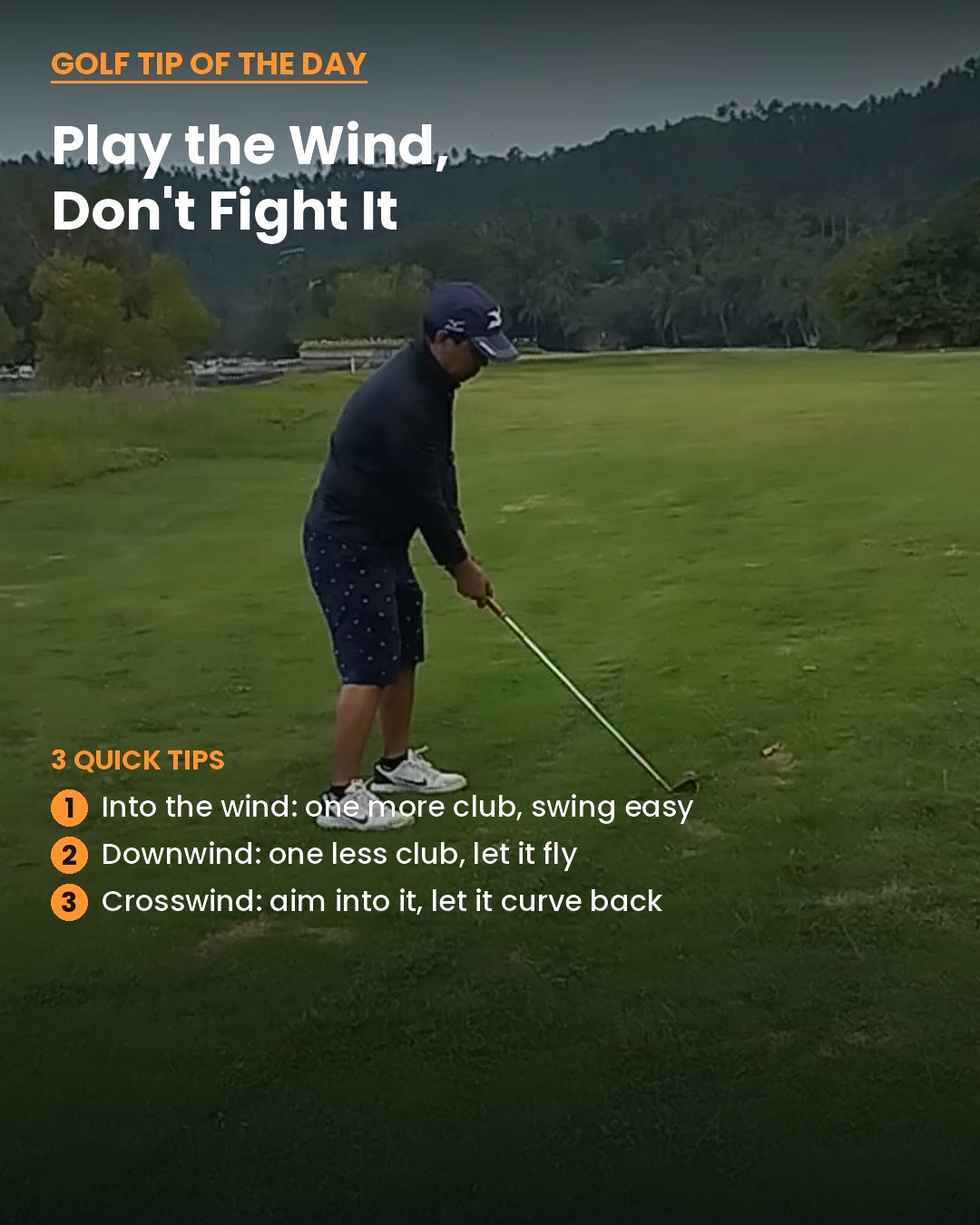
The moment a round gets breezy, a lot of golfers start swinging harder. It feels like the obvious answer: the wind is taking something away, so muscle it back. It’s also exactly backwards. Wind doesn’t punish golfers who adjust for it. It punishes golfers who try to overpower it.
Wind is one of the few conditions on a golf course you can’t practice away. You can groove a swing on the range for years and still get surprised by a two-club wind the first time you feel it on the first tee. The good news is that playing well in the wind has very little to do with swinging harder, and a lot to do with a few simple, repeatable adjustments.
Why It Matters
A shot swung harder into the wind doesn’t just fail to go farther, it usually goes shorter and more crooked. Extra swing speed adds extra spin, and extra spin is exactly what wind grabs onto. A ball hit hard into a headwind balloons up into the air where the wind has the most time to work on it, which is the opposite of what you want.
Downwind has its own trap. Golfers often keep their normal club and swing, then watch the ball sail well past their target because the wind added yards they didn’t plan for. And crosswinds are where the biggest score-wrecking mistakes happen: aim straight at the flag in a crosswind with no adjustment, and the wind simply carries the ball into the rough, a bunker, or worse.
None of this is really about ball-striking talent. It’s about having a plan before you swing instead of reacting to where the last shot ended up.
The Fix
Into the wind: take one more club and swing at your normal, easy pace. More club means you don’t have to swing harder to reach your target, which keeps spin down and trajectory lower, both of which fight wind better than raw power ever will. The extra club does the work; your swing should feel identical to a calm-day shot.
Downwind: take one less club and commit to the swing. The wind is adding distance for you, so let it. Trying to “help” the ball by swinging soft doesn’t work well either. Pick the shorter club, make your normal committed swing, and trust the wind to carry it the rest of the way.
Crosswind: aim into the wind, not at the target. If the wind is blowing left to right, aim left of your target and let the wind move the ball back toward it. Aiming straight at the flag and hoping the wind doesn’t affect it is how a routine shot ends up in trouble. The stronger the crosswind, the more room you give it.
Keep the ball flight lower into the wind. A lower trajectory spends less time exposed to the wind, which means less time for the wind to push it around. Playing the ball slightly back in your stance and choking down slightly on the grip are simple ways to knock down your normal trajectory without changing your swing.
Trust the plan over the moment. Once you’ve picked your club and your line for the wind, commit to that shot the same way you’d commit on a calm day. Second-guessing mid-swing because a gust just came through is how good adjustments turn into bad swings.
Drill to Practice
Next time you’re at the range on a breezy day, hit the same club into the wind and downwind, five balls each way, and watch how differently they behave with an identical swing. This builds a real feel for how much wind actually changes ball flight, instead of guessing on the course.
A second version: on the course, before every shot in the wind, say your plan out loud before you swing. “One more club, easy swing” or “aim ten yards left, let it drift back.” Committing to the plan verbally makes it much easier to actually stick to it once you’re over the ball.
Common Mistakes
Swinging harder into the wind. This adds spin and height, which is the worst combination for fighting a headwind. More club and an easy swing beats more effort every time.
Keeping the same club downwind and being surprised by the distance. The wind is doing real work for you. Plan for it instead of finding out the hard way.
Aiming straight at the target in a crosswind. By the time you notice the wind pushed the ball offline, the shot is already gone. Build the adjustment into your aim before you swing, not after you see the result.
Ballooning the ball with too much loft into the wind. A high, soft shot is the shot wind affects the most. Keep the trajectory down when the wind is up.
Forgetting wind affects putts too. On an exposed green in strong wind, a light putt can genuinely drift off line. It’s a small effect, but worth a thought on breezy days, especially on longer putts.
FAQ
How much extra club should I take into the wind? A common rule of thumb is one extra club for every noticeable increase in wind strength, roughly one club for a moderate breeze and two for strong wind, adjusted by feel as you get more experience with your own distances.
Does wind really affect putting, or just full shots? It mostly affects full shots, but a strong, sustained wind on an exposed green can nudge a putt, especially a slow, breaking one. It’s a minor factor compared to full shots, but not zero.
Why does swinging harder into the wind make things worse? A harder swing typically adds backspin and launches the ball higher, and both of those give the wind more time and more surface to act on, which shortens and often curves the shot more than a smooth, lower-flighted swing would.
Should I always aim into a crosswind, even a light one? For a light crosswind, a small aim adjustment is usually enough. The stronger the wind, the more aim adjustment you need, so scale the amount by how much the wind is actually blowing that day.
Is there a shot that’s basically wind-proof? Not entirely, but a lower, more controlled trajectory hit with a smooth tempo holds up best in wind of any kind. That’s why taking more club and swinging easy works better than muscling a shorter club into the wind.
Key Takeaways
Wind rewards a plan, not extra effort. Take more club and swing easy into the wind, take less club and commit downwind, and aim into a crosswind instead of straight at your target. Keep your trajectory lower when it’s breezy, and trust your adjustment once you’ve made it. Playing smart in the wind is a course management skill anyone can learn, no extra power required.
Follow us for your daily golf tips!
#ReadyGolfPH #GolfTips #CourseManagement #ClubSelection #BeginnerGolfer #GolfPhilippines