
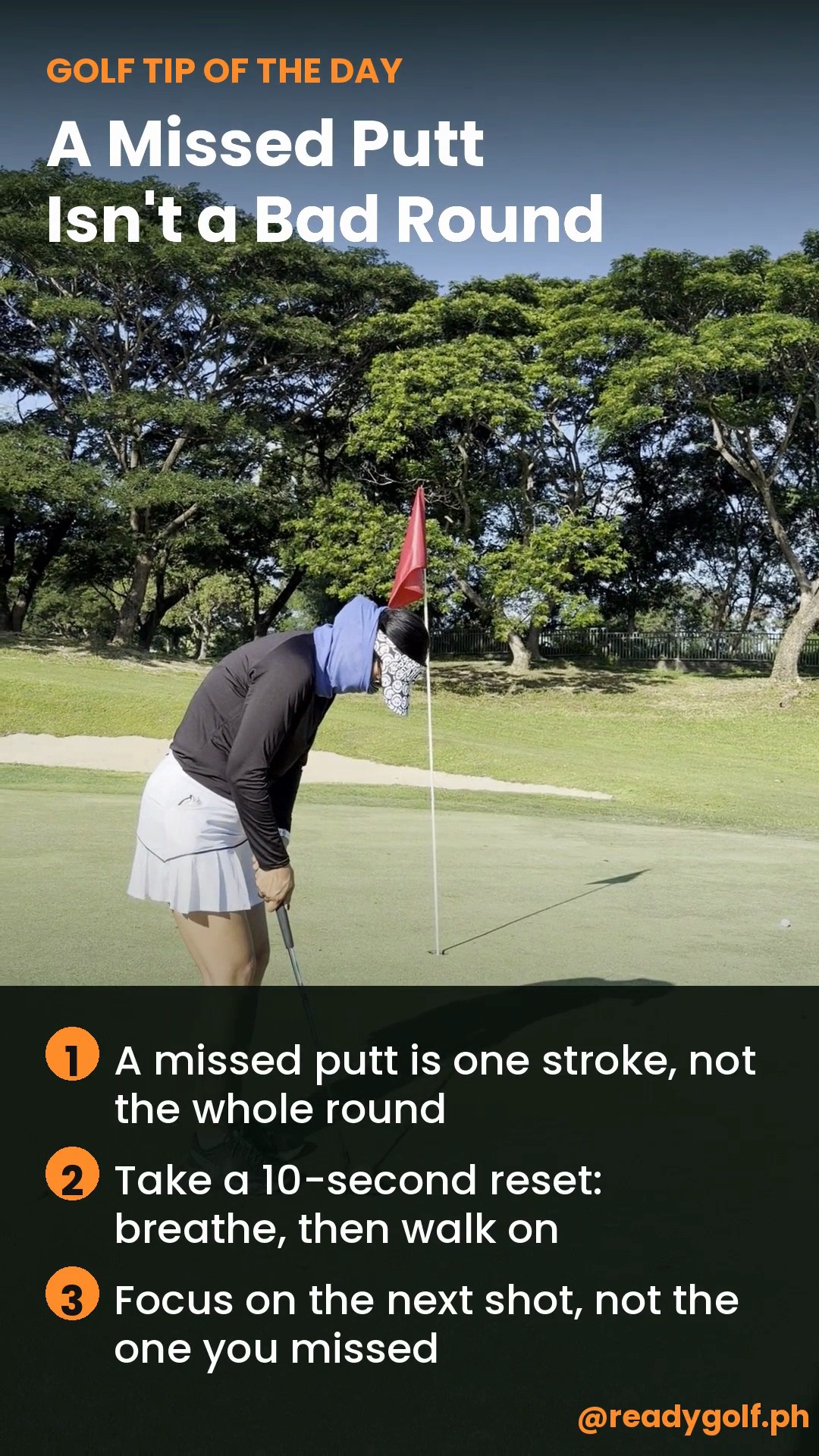
You line it up, take your time, and the ball slides right past the edge of the cup. It happens to every golfer, at every level, on nearly every round. What separates a good scorecard from a bad one usually isn’t whether you miss a putt, it’s what happens in the sixty seconds after you miss it.
Most beginners don’t lose strokes to the missed putt itself. They lose strokes to what comes next: the rushed tap-in, the tense grip on the following tee shot, the mental replay that follows them for three more holes. The putt that actually hurts your score is rarely the one that lips out, it’s the one you three-putt afterward because you’re still frustrated from the last hole.
Why It Matters
Golf is unusual among sports in how much time it gives you to think between shots. A missed putt isn’t followed immediately by another swing, it’s followed by a walk to the next tee, a cart ride, a few minutes of silence. That gap is exactly where a small miss can quietly turn into a bad hole, then a bad front nine, if you let it.
The players who post steady scores aren’t the ones who never miss putts, they’re the ones who’ve trained themselves to let a miss be just one stroke. Beginners often haven’t built that skill yet, so a missed 3-footer can spiral into tension that shows up in the very next shot, usually as a rushed swing or a death grip on the club.
Understanding this is what separates score management from just ball-striking. You can have a technically sound stroke and still bleed strokes if your mental reset after a miss is weak. The good news is that the reset is a skill like any other, and it’s one of the fastest ones to actually improve.
The Fix
Let the miss be one stroke, not a verdict. A missed putt adds exactly one stroke to your score, nothing more, unless you let your reaction add more. Say it to yourself plainly if you need to: that’s one shot, the round isn’t over. This sounds simple, but naming it out loud or in your head keeps it from quietly growing into something bigger in your mind.
Use a ten-second physical reset before your next shot. Take a breath, roll your shoulders, or simply step away from the ball for a moment before continuing. This isn’t about dwelling, it’s the opposite: a brief, deliberate pause signals to your body that the last shot is over and gives you a clean start for the next one, rather than carrying tension straight into your following swing.
Direct your focus forward, not backward. As you walk to your next shot, actively think about what you want to do next rather than replaying the miss. Pick your next target, visualize the shot you want, and let that become the thing occupying your mind instead of the putt that just slid by.
Put these three together, name the miss for what it is, reset physically, and redirect your focus forward, and a missed putt stops being something that follows you around the course.
Drill to Practice
On the practice green, deliberately miss a few putts on purpose, short ones you’d normally make, and practice your reset routine immediately afterward. Say “one stroke” to yourself, take your breath, and step into your next putt as if nothing happened. Rehearsing the reset without real stakes makes it far more automatic when a miss actually costs you something on the course.
Also practice noticing your body language after a miss. Do you slump your shoulders, sigh loudly, or grip your putter harder walking off the green? Becoming aware of these small tells is often the first step to interrupting them, since most players carry tension physically before they even realize they’re doing it mentally.
Finally, if you play practice rounds with friends, try narrating your reset out loud once or twice. Saying “okay, next one” after a miss, even quietly, reinforces the habit and helps it stick faster than doing it silently in your head alone.
Common Mistakes
The most common mistake is rushing the very next shot after a miss, whether that’s a tap-in or a tee shot on the next hole. Frustration speeds up your tempo without you noticing, and a fast, tense swing right after a miss is one of the most common sources of a follow-up mistake.
A close second is replaying the miss instead of moving forward. Some players spend the walk to the next tee mentally re-running what went wrong, which keeps the frustration alive instead of letting it fade. The putt is already over, analysis can wait until after the round if it’s useful at all.
Many golfers also let one missed putt change their read or feel for the rest of the round, second-guessing greens they’d normally read confidently. A single miss is rarely useful data about your stroke or the greens, it’s usually just a miss. Trust your process rather than overhauling it after one putt.
Finally, some players punish themselves verbally or physically, slamming a club or muttering harsh self-talk. Beyond course etiquette, this kind of reaction reinforces exactly the tension you’re trying to reset. A calm, neutral response is not just more pleasant to play with, it’s genuinely better for your next shot.
FAQ
Is it normal to feel frustrated after missing an easy putt?
Yes, completely normal, even for experienced players. The goal isn’t to feel nothing, it’s to have a quick, reliable way to move past the frustration before it affects your next shot.
How long should my reset actually take?
Ten seconds is a useful target, long enough to take a breath and reset your body, short enough that it doesn’t slow down pace of play or give the frustration more time to build.
What if I miss several putts in a row?
Use the same reset after each one, individually. Resist the urge to treat a bad stretch as a trend for the whole round, plenty of rounds turn around after a rough patch of holes once the tension is broken.
Does this apply to other missed shots too, not just putts?
Yes, the same one-shot, reset, refocus approach works after a bad drive or a chunked chip. Putting is where beginners notice it most because the shots feel like they should have gone in, but the mental skill transfers to the whole round.
Key Takeaways
A missed putt only costs you one stroke unless your reaction to it costs you more. Name the miss for what it is, take a brief physical reset before your next shot, and redirect your focus toward what’s ahead rather than what just happened. This is a trainable skill, not a personality trait, and practicing it on the green before you need it on the course is what makes it actually work when a putt slides by in a real round.
#ReadyGolfPH #GolfTips #MentalGame #Putting #BeginnerGolfer #GolfPhilippines