
Introduction
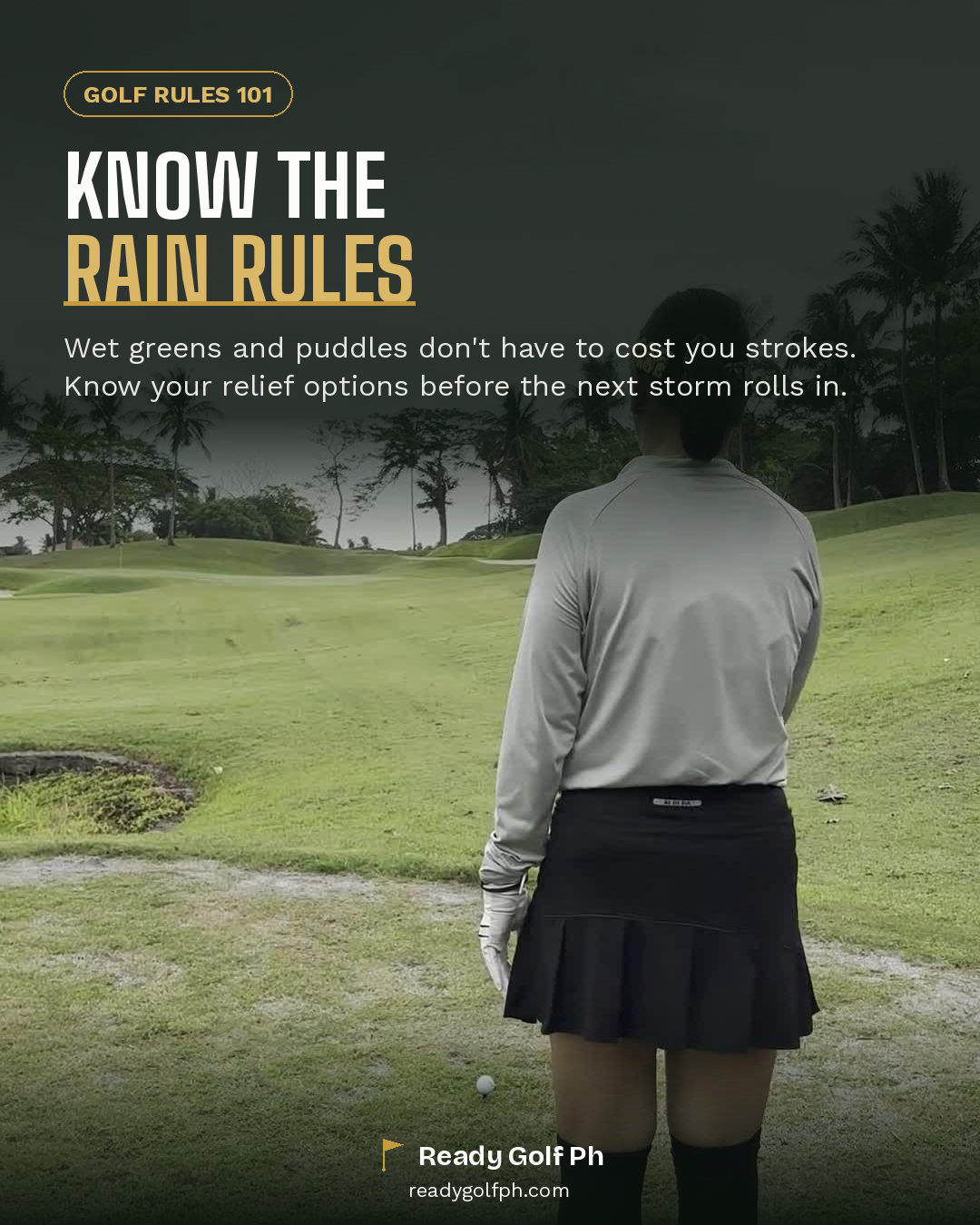
Rainy season golf comes with its own set of headaches: puddles sitting in the fairway, balls plugging into soft turf, and greens that hold water instead of draining it. Most golfers know the weather is different, but far fewer actually know what the Rules of Golf say they’re entitled to when it happens.
That gap matters. Playing a ball out of a puddle because you didn’t know you had relief, or continuing to play through a lightning warning because you weren’t sure of the signal, can cost you strokes or worse. The rules for rainy season conditions are specific, and knowing them ahead of time means you can play with confidence instead of guessing on the course.
Here are 3 rules every golfer should know before the next storm rolls in.
1. Free Relief From a Puddle (Temporary Water)
If your ball comes to rest in a puddle, officially called temporary water under the Rules of Golf, you’re entitled to free relief, as long as the ball isn’t in a penalty area. Temporary water is defined as any temporary accumulation of water on the surface of the ground, such as puddles from rain or irrigation, that isn’t part of a penalty area.
To take relief, find the nearest point of complete relief, the closest spot to where your ball lies, no nearer the hole, where you’d have no interference from the water. From there, drop your ball within one club-length of that point, no nearer the hole. This applies whether the puddle affects your ball, your stance, or your swing, so check all three before deciding you’re stuck playing it as it lies.
2. Free Relief for a Ball Plugged in Its Own Pitch-Mark
Soft, rain-soaked ground causes another common situation: a ball that plugs into the turf and comes to rest partially or fully below ground level in its own pitch-mark. This is called an embedded ball, and outside of bunkers and penalty areas, you’re entitled to free relief.
The key details matter here. The ball has to be in its own pitch-mark, not one left by another ball or divot, and part of the ball must be below the level of the ground. If both conditions are met, you can lift, clean, and drop the ball as close as possible to where it was embedded, no nearer the hole, without penalty. This rule exists specifically because soft conditions after heavy rain make plugged balls far more common, and playing one as it lies would be both unfair and often unplayable.
3. One Long Horn Means Stop Play Immediately
Rainy season often brings lightning, and golf courses have a standardized signal system for exactly this situation. One prolonged blast of the horn signals immediate danger and means players must stop play right away, mark their ball’s position, and head to shelter without completing the stroke or the hole.
This is different from a normal suspension, which is signaled by three consecutive short blasts and usually covers situations like darkness or a waterlogged, unplayable course. A normal suspension gives players the option to finish the hole they’re on before stopping. An immediate suspension does not. When you hear one long horn, stop wherever you are. Two short blasts signal that play has resumed. Knowing the difference between these signals isn’t optional information, it’s a safety matter.
Why Knowing These Rules Actually Matters
Beyond avoiding an unnecessary penalty, understanding rainy season rules changes how you approach a round when the weather turns. Instead of guessing whether you’re allowed to move your ball out of a puddle, or hesitating when you hear a horn in the distance, you can make a quick, correct decision and keep playing with confidence.
These rules also exist for good reason. Playing a ball out of standing water isn’t just unfair, it can also damage the course. Leaving a plugged ball in place ignores the reality that soft ground creates conditions no player caused and shouldn’t be penalized for. And the suspension signals exist purely for safety, since lightning is one of the few genuine hazards in golf that has nothing to do with skill.
How to Build This Into Your Game
You can’t practice rules the way you practice a swing, but you can prepare. Before playing during rainy season, take a minute to review your course’s local rules sheet, since many clubs add temporary local rules for wet conditions, such as preferred lies or lift-clean-and-place, on top of the standard Rules of Golf.
It’s also worth agreeing with your group before you tee off on how you’ll handle situations like standing water or a suspended round, so no one is scrambling to look up a rule mid-hole. A quick pre-round conversation about relief options and suspension signals takes less than a minute and prevents confusion when the weather actually turns.
FAQ
Do I automatically get relief if my ball is just sitting on wet grass?
No. Relief from temporary water only applies if there’s an actual accumulation of water, not simply wet or soft ground. The water needs to be visible before or after you take your stance.
Can I get relief for an embedded ball in a bunker?
Generally no. Embedded ball relief under the standard rules applies outside of bunkers and penalty areas. Some courses adopt local rules that extend this, so it’s worth checking your course’s posted rules.
What should I do if I hear one long horn but I’m mid-swing?
Stop as soon as it’s safe to do so. The rule is about stopping play immediately once you’re aware of the signal, not about halting mid-motion in a way that could be unsafe.
Key Takeaways
- You get free relief from temporary water (puddles), as long as your ball isn’t in a penalty area
- An embedded ball in its own pitch-mark gets free relief outside bunkers and penalty areas
- One long horn blast means stop play immediately for safety, most often for lightning
- Three short blasts signal a normal suspension, where you can usually finish the hole first
- Two short blasts signal that play has resumed
- Check your course’s local rules sheet during rainy season, since many clubs add temporary local rules
Ready Golf Ph — daily tips to help you play smarter and score better, one round at a time.