
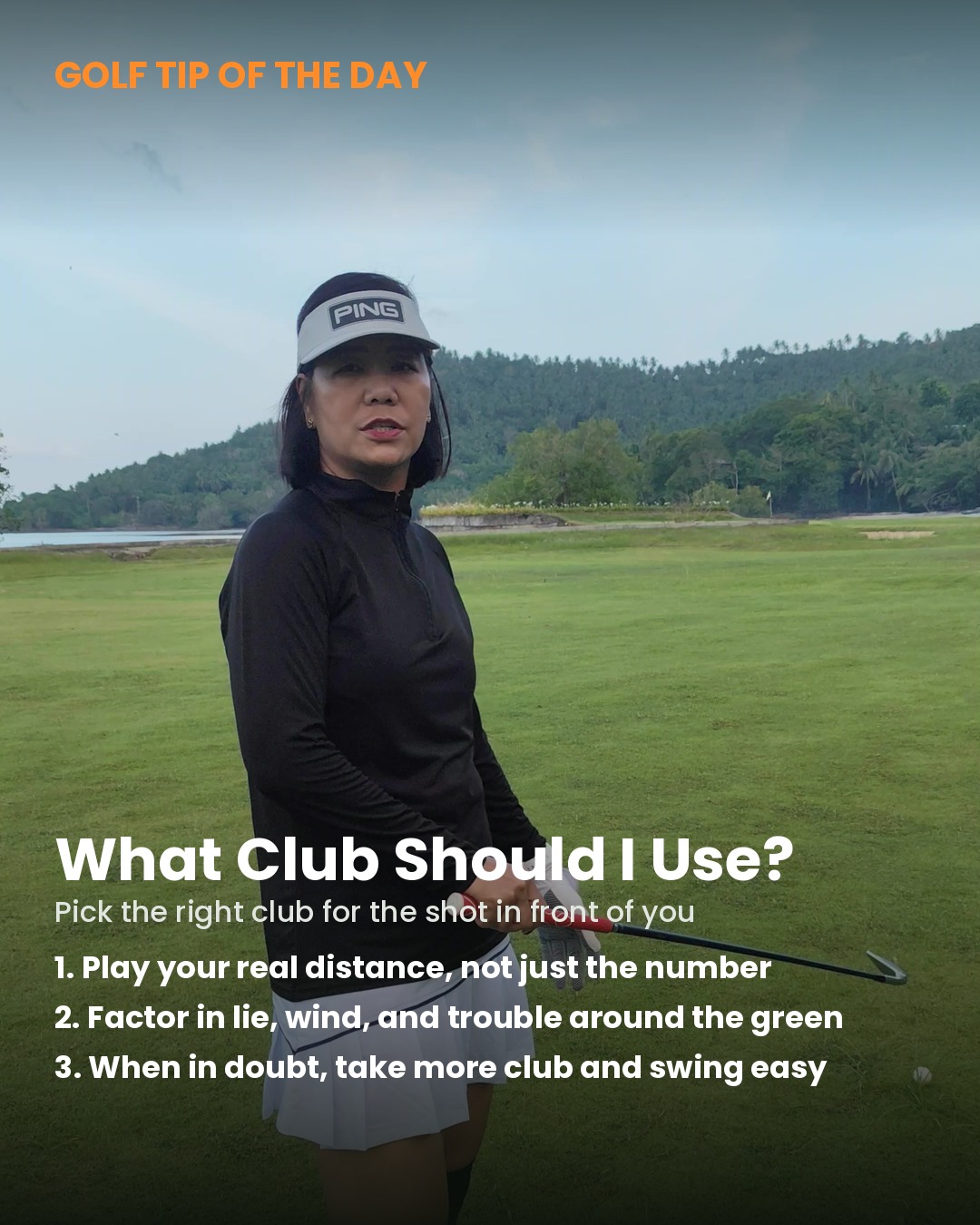
Stand behind almost any recreational golfer on the range and you’ll hear some version of the same question: “What club should I use?” It sounds like a simple thing to answer, distance to the pin, pick the matching number, but on the course it rarely plays out that cleanly. Wind, lie, trouble around the green, and a little optimism about how far you actually hit each club all conspire to make club selection one of the most common, and most avoidable, sources of bad shots.
The good news is that better club selection isn’t about owning more clubs or memorizing exact yardages down to the foot. It’s about asking a few honest questions before you pull anything from the bag, and building the habit of answering them the same way every time.
Why It Matters
A perfectly struck shot with the wrong club still ends up in the wrong place. That’s the part that trips up a lot of golfers: club selection happens before the swing even starts, so no amount of good technique can fix a decision that was wrong from the moment you gripped the club.
The most common mistake is playing to an idealized distance instead of a real one. Golfers often know, in theory, that their 7-iron goes “150 yards,” but that number usually reflects a great strike on a good day, not the average result. When the real, honest number is closer to 140, choosing the 7-iron on a 150-yard shot comes up short more often than not, and the miss gets blamed on the swing instead of the club.
Conditions change the math too. Wind into your face effectively adds distance, wind behind you takes it away, and an uphill or downhill lie shifts the number further still. Ignoring these factors and playing “the number on the card” is one of the fastest ways to leave a shot short of the green or fly it well past the pin.
There’s also a risk-management side to club selection that has nothing to do with distance. A green guarded by a hazard, a tucked pin, or a tight landing area all call for a more conservative club choice, favoring the fat, safe part of the green over a hero shot at the flag.
The Fix
Start with an honest number, not a hopeful one. If you’re not sure what your realistic average distance is with each club, a few range sessions paying attention to where shots actually land, not just your best ones, will tell you more than any spec sheet. Use that real number as your baseline for club selection on the course.
From there, adjust for what’s actually happening on the shot in front of you. Ask three quick questions before every approach: What’s my real distance to where I actually want the ball to land? What’s the wind doing, and is it helping or hurting? What’s my lie, and does it change how the ball will come out?
Trouble around the green should shift your target, not just your club. If a hazard guards the front or a pin is tucked near an edge, it’s often smarter to club up or down and aim at the center of the green rather than pressing for a number that brings the trouble into play.
When you’re genuinely unsure between two clubs, the smarter miss is almost always long. A soft, well-committed swing with more club tends to produce a more reliable strike than trying to squeeze extra distance out of a shorter one. As the saying goes, when in doubt, take one more club and make an easy swing.
Drill to Practice
On the range, try this simple exercise: instead of hitting the same club over and over, set a specific target distance and pick the club you believe fits, then hit five balls and track where they actually finish relative to that target. This builds an honest, current sense of your real distances rather than relying on outdated or optimistic numbers.
On the course, before pulling a club, get in the habit of a quick three-second checklist: real distance, wind, lie. Saying it to yourself, even silently, forces the decision to be intentional rather than automatic.
Finally, practice the “one more club, easy swing” approach on the range specifically. Many golfers have never actually felt what an easy, well-committed swing with extra club feels like, so it can feel unfamiliar the first few times. Rehearsing it away from the pressure of the course makes it far more likely you’ll actually choose it when it matters.
Common Mistakes
The most common mistake is club selection based on ego rather than evidence, choosing the club that matches a personal best instead of a realistic average. This leads to a steady stream of shots coming up just short of the target.
Another frequent mistake is ignoring the wind entirely, especially crosswinds and gusts that change between when you take your stance and when you actually swing. A quick glance at nearby trees or flags before committing to a club is a small habit that pays off repeatedly.
Some golfers also let the pin position dictate their target instead of the smart play. Attacking a tucked pin over a hazard with the “correct” number for the flag, rather than favoring the safer part of the green, turns a routine par opportunity into a bogey or worse far too often.
Finally, failing to account for lie is an easy one to overlook. A ball sitting down in the rough or on an uneven stance won’t come out the same as one on a perfect fairway lie, even with identical distance and an identical club.
FAQ
How do I find my real average distance with each club?
Track a handful of range sessions and note where shots typically finish, not just your best swings. Many rangefinders and golf apps can also help log this over time from real rounds.
Does wind really make that much difference?
Yes, more than most golfers expect. A strong wind can add or subtract a full club or more of effective distance, especially on longer shots where the ball spends more time in the air.
Should I always aim at the flag?
Not necessarily. When trouble guards the pin or the green is small, aiming for the center of the green is often the higher-percentage play, even if it means a longer putt afterward.
Is it really better to swing easy with more club than hard with less?
For most golfers, yes. An easy, balanced swing with extra club tends to produce more consistent contact and distance control than swinging hard to force a shorter club to cover the distance.
Key Takeaways
Good club selection starts before the swing, not during it. Play your real, honest distances rather than your best-case numbers, factor in wind and lie every time, and let trouble around the green shift your target rather than your ambition. When two clubs feel close, take the longer one and make an easy, committed swing. None of this requires new equipment, just a few honest questions asked consistently, shot after shot.
#ReadyGolfPH #GolfTips #ClubSelection #CourseManagement #BeginnerGolfer #GolfPhilippines