
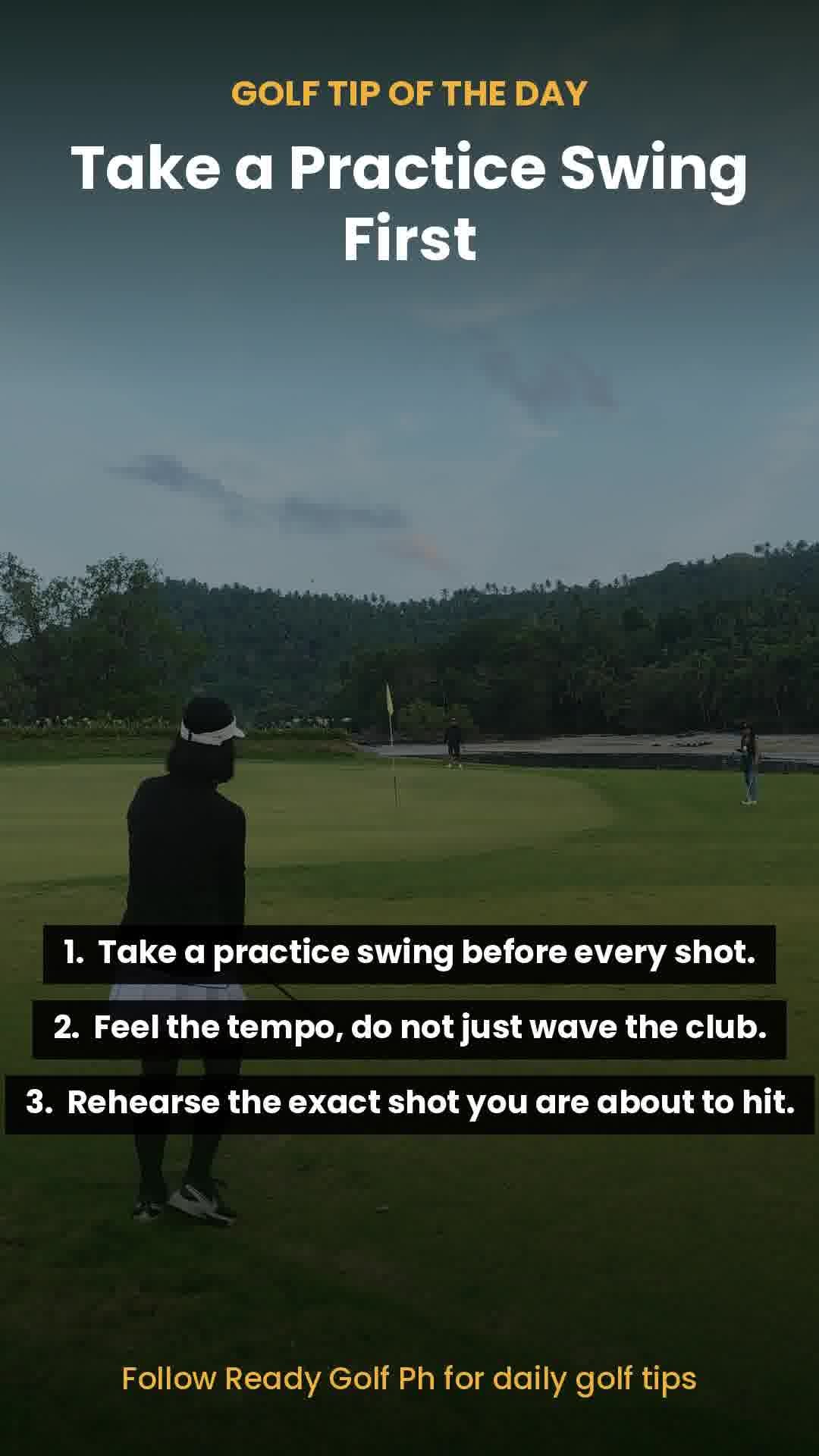
Watch any group of beginners play a round and you’ll notice something: most of them walk up to the ball, maybe waggle the club once, and swing. Watch a low-handicap player instead, and you’ll almost always see a real practice swing first, one with intention, taken close to the ball, that looks a lot like the swing they’re about to make for real. That difference is not a coincidence, and it is not just a habit for show.
A practice swing is one of the simplest, lowest-effort improvements available to any golfer, at any level, and it costs nothing but a few extra seconds. The problem is that most golfers either skip it entirely under pressure to keep pace, or they take one so casual it does not actually prepare them for anything.
Why It Matters
A golf swing is a fast, complex motion, and your body does not naturally know how hard, how fast, or how far to swing for a given shot without some kind of rehearsal. A practice swing is that rehearsal. It gives your muscles a preview of the tempo and the length of swing the shot calls for, whether that is a smooth three-quarter approach or a full, committed drive.
Skipping the practice swing means your first real swing of the shot is also your first attempt at that specific tempo and motion, with no warm-up. That is a much harder way to produce a consistent strike than taking even one quality rehearsal first.
There is also a course-reading benefit. Taking a practice swing while standing near your actual lie lets you feel things you cannot always see, how thick the rough is, how the ball is sitting, whether the turf underneath is firm or soft. That feedback can change your club selection or your swing plan before you commit to the real shot, which is valuable information a rushed approach skips entirely.
The Fix
Before every shot, not just tee shots, take one focused practice swing close to where your ball actually sits, ideally on the same type of turf and lie. This is different from a generic loosening-up waggle; the goal is to rehearse the actual swing you are about to make.
As you take the practice swing, pay attention to tempo specifically. Are you swinging back and through at a pace that feels controlled and repeatable, or rushed? Many golfers swing their practice swing beautifully and then rush the real one under the small pressure of the ball actually being there. Treat the practice swing as the standard you are trying to match, not a separate, disconnected motion.
If the shot calls for something specific, a shorter swing to take some pace off, or a fuller swing to reach the target, make sure your practice swing reflects that. A practice swing that does not match the shot you are about to hit is not doing its job. Picture the shot in your mind as you make the rehearsal swing so the two are connected.
Keep it to one, maybe two practice swings. The purpose is to feel the motion, not to fatigue yourself or slow down play. Quality over repetition is what makes this useful.
Drill to Practice
On the range, hit a small bucket of balls using this exact structure for every single shot: one focused practice swing that matches the shot you intend to hit, then step in and play it without delay. Resist the urge to skip the practice swing on shots that feel “easy,” like a short pitch or a simple iron shot, since those are often the ones where tempo issues sneak in unnoticed.
After a session or two of doing this deliberately, start paying attention to how closely your actual swing matches the tempo of your practice swing. If there is a noticeable gap, especially a rushed real swing after a smooth practice one, that is useful information about where nerves or tension are creeping into your motion.
Once this feels automatic on the range, carry it directly onto the course. The habit only pays off if it survives the pressure of an actual round, where the temptation to skip steps and keep pace is much stronger than on the practice tee.
Common Mistakes
The most common mistake is treating the practice swing as a throwaway motion, a quick waggle taken more out of habit than intention. A practice swing that does not resemble the real shot in tempo or length is not giving you any useful rehearsal.
Another mistake is taking the practice swing too far away from the actual ball, on a random patch of grass instead of a spot with a similar lie. Feel is specific to the turf and lie you are standing over, so a practice swing taken somewhere else will not tell you much about the shot in front of you.
Some golfers also over-rehearse, taking three, four, or more practice swings per shot. Beyond a point, extra practice swings stop adding useful feedback and start slowing down play, which creates its own problems for the group behind you.
Finally, a subtle but real mistake is letting the practice swing be smooth and confident while the real swing tightens up under pressure. If you notice this happening, it is worth consciously trying to carry the same relaxed tempo from the rehearsal into the actual shot, rather than treating them as two different swings.
FAQ
Should I take a practice swing on every single shot, including putts?
For full swings, pitches, and chips, yes. Many golfers also take a practice stroke before putts for the same tempo-feeling reason, though the mechanics are different enough that it is often treated as a separate habit.
Does a practice swing slow down play too much?
One focused practice swing per shot adds only a few seconds and is a normal, expected part of the pre-shot routine. It only becomes a pace-of-play issue when golfers take several practice swings per shot or combine it with other slow habits.
What if I do not have room to take a full practice swing, like in the rough or near trees?
Take the closest approximation you can, even a shortened or careful version, focused on turf feel rather than full range of motion. Some feedback is better than none, and safety always comes first if space is tight.
Can a practice swing actually change my club selection?
Yes. Feeling unexpected resistance from thick rough, or a firmer or softer lie than it looked from a distance, is exactly the kind of information a practice swing can reveal before you are committed to a club and a shot.
Key Takeaways
A practice swing is not a formality to rush through, it is a genuine rehearsal for the tempo, length, and feel of the shot you are about to hit. Take it close to your actual ball, match it to the shot in front of you, and use it to feel information about the lie you cannot always see. One focused practice swing beats several careless ones, and carrying that same tempo into your real swing is where the habit actually pays off.
#ReadyGolfPH #GolfTips #PreShotRoutine #GolfTempo #BeginnerGolfer #GolfPhilippines