
Nothing rattles a beginner faster than watching their ball roll into a bunker. Suddenly the simple pitch shot they were expecting turns into a mystery: too little swing and the ball barely climbs the lip, too much and it sails clean across the green. Most golfers walk into the sand with no real plan, and the result usually matches that lack of a plan.
Here’s the part that surprises a lot of players once they learn it: bunker shots are actually one of the more forgiving shots in golf, once you understand what the club and the sand are supposed to do together. You’re not trying to hit the ball directly. You’re using the sand itself to lift it out. That single shift in thinking is often the difference between a shot that clears the lip cleanly and one that either stays buried or flies the green.
Why It Matters
A bunker beside the green isn’t just an obstacle, it’s often the difference between saving par and writing down a double bogey. Most beginners three-putt or worse from greenside sand not because the shot is technically difficult, but because they approach it with the same swing thought they’d use on a normal chip. That mismatch is what causes the two classic misses: the “chili-dip,” where the club digs in behind the ball and it barely moves, and the skull, where the leading edge catches the ball first and sends it racing across the green.
Both misses come from the same root problem: a square clubface and a swing that doesn’t commit through impact. A square-faced club digs into sand instead of sliding through it, and a swing that decelerates out of fear leaves the club stuck exactly where you don’t want it, under the ball. Understanding this is what turns bunker shots from a source of anxiety into just another shot in the round.
The good news is that the fix isn’t about more strength or a more complicated swing. It’s about three specific adjustments, made before you ever start your backswing, that let the club and the sand do the work for you.
The Fix
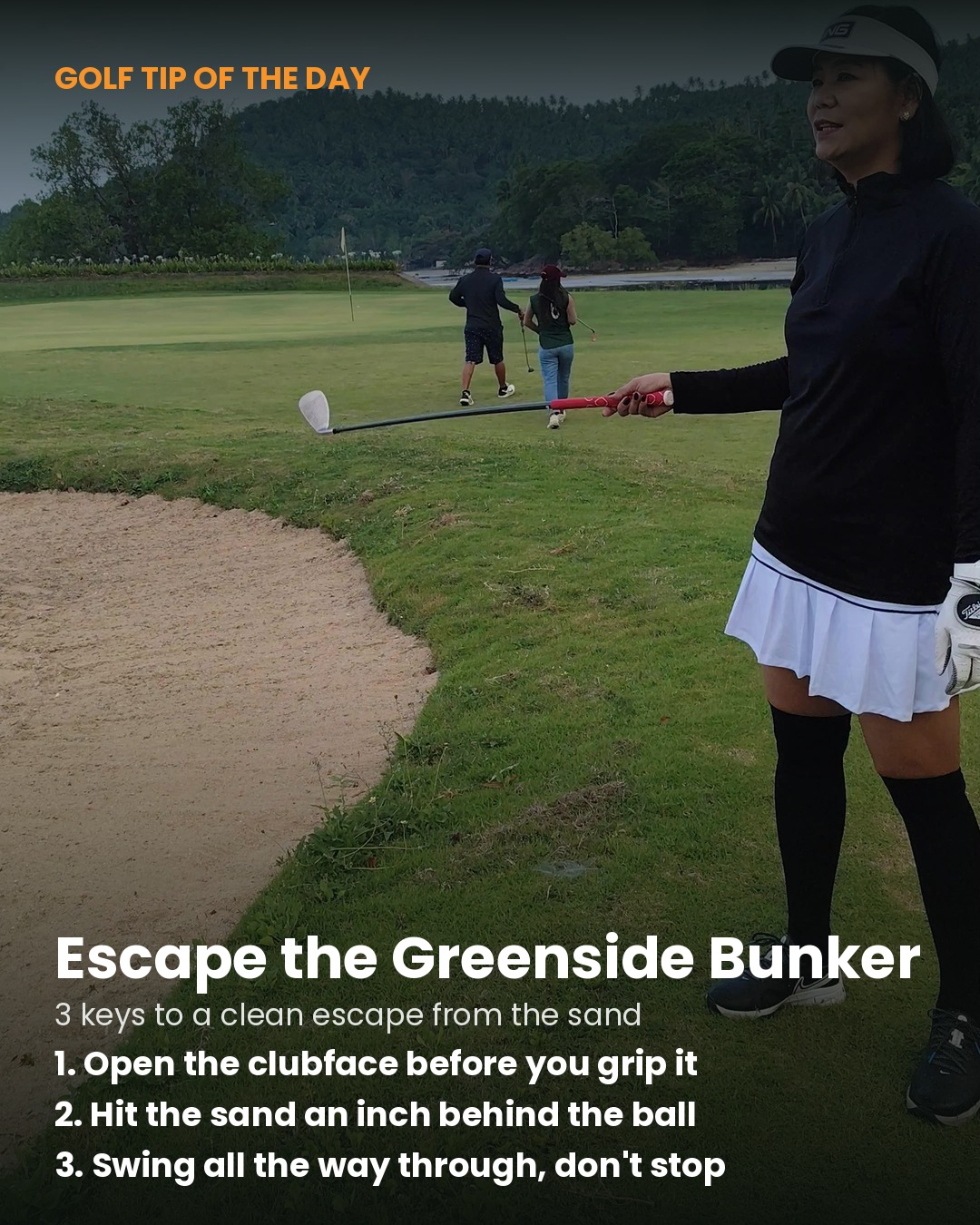
Open the clubface before you take your grip. This is the step almost every beginner skips, and it’s the most important one. Rotate the clubface open, so it points slightly right of your target (for a right-handed golfer), before you place your hands on the grip. An open face adds loft and lets the club’s bounce, the rounded part of the sole, skid through the sand instead of digging into it. If you grip the club first and then try to open the face, you’ll usually lose the adjustment by the time you swing.
Aim to enter the sand an inch or two behind the ball, not the ball itself. Unlike almost every other shot in golf, you are not trying to make clean contact with the ball. Picture a small patch of sand just behind it and aim your swing at that spot. The club slides through the sand, carrying the ball out on a cushion, rather than striking it directly. This is also why bunker shots don’t require pinpoint ball-striking, the margin for where the club enters the sand is more forgiving than most players assume.
Swing all the way through to a full finish. This is where fear usually sabotages an otherwise correct setup. Players who slow down or “help” the ball into the air almost always leave the club buried in the sand short of the ball. Commit to a full, accelerating swing from start to finish, even though it feels like it should send the ball flying, the open face and the sand absorb most of that energy, so the ball comes out soft.
Put those three pieces together, open the face, aim behind the ball, and swing fully through, and the shot starts to feel far more repeatable than it looks from outside the bunker.
Drill to Practice
Find a practice bunker and draw a line in the sand with your finger or a tee, about an inch behind where a ball would sit. Without a ball at all, practice swinging through that line, focused only on your club entering the sand at that spot and continuing through to a full finish. Doing this ball-free rehearses the feeling of committing through impact without the added pressure of watching where the ball goes.
Once that feels natural, add a ball. Set up with the face open before gripping, aim at your line behind the ball, and make the same committed swing. Hit ten balls focusing only on entry point and follow-through, not on where the ball lands. Distance control in bunkers comes later, consistency of contact comes first.
Finally, practice from both a flat lie and a slightly uneven one, since greenside bunkers rarely offer a perfectly flat stance. Getting comfortable adjusting your balance while still committing to the swing is what separates a shaky bunker player from a confident one.
Common Mistakes
The single most common mistake is gripping the club before opening the face, then trying to open the face afterward by twisting the whole clubhead at address. This usually closes the face back down without the player realizing it. Always open the face first, then place your hands on the grip.
A close second is decelerating through impact out of fear of hitting the ball too hard. Because the club is entering sand rather than striking the ball directly, a full, committed swing actually produces a softer landing than a tentative one, not a harder one. Slowing down is almost always the wrong instinct here.
Many golfers also aim directly at the ball instead of the spot behind it, turning a bunker shot into an accidental full-contact strike that skulls across the green. Picking a specific spot in the sand to aim at, rather than the ball itself, fixes this almost immediately.
Finally, some players try to scoop or lift the ball with their wrists instead of trusting the club’s bounce and loft to do that work. Adding an extra scooping motion usually leads to inconsistent contact. Let the equipment do the lifting; your job is just to deliver a committed, accelerating swing.
FAQ
Do I need a special wedge to hit bunker shots?
A sand wedge with more bounce makes it easier, but you can practice these fundamentals with any wedge in your bag. The technique matters more than the specific club, especially while you’re learning.
Why does my ball still come out low and hot sometimes?
That’s usually a sign the clubface closed back down before impact, often because it wasn’t opened enough at address or got squared up during the swing. Recheck your face angle right before you start your backswing.
How far behind the ball should I actually aim?
About one to two inches is a good starting point for a standard greenside bunker shot. Firmer sand needs a slightly smaller margin, softer or fluffier sand needs a bit more, since the club will dig in more easily.
What if my ball is buried in the sand?
A buried lie calls for a different technique, a square or even slightly closed face and a steeper swing, since you need the club to dig rather than slide. That’s a good topic for a future tip, but it’s worth knowing the two situations call for different setups.
Key Takeaways
Bunker shots feel intimidating mostly because beginners approach them like a normal chip instead of understanding what the sand is doing for them. Open the clubface before you grip it, aim your swing at a spot behind the ball rather than the ball itself, and commit fully through to a finish instead of decelerating. None of this requires extra strength or a complicated swing change, just a different way of thinking about the shot and a little practice with the sand itself.
#ReadyGolfPH #GolfTips #BunkerShot #ShortGame #BeginnerGolfer #GolfPhilippines