
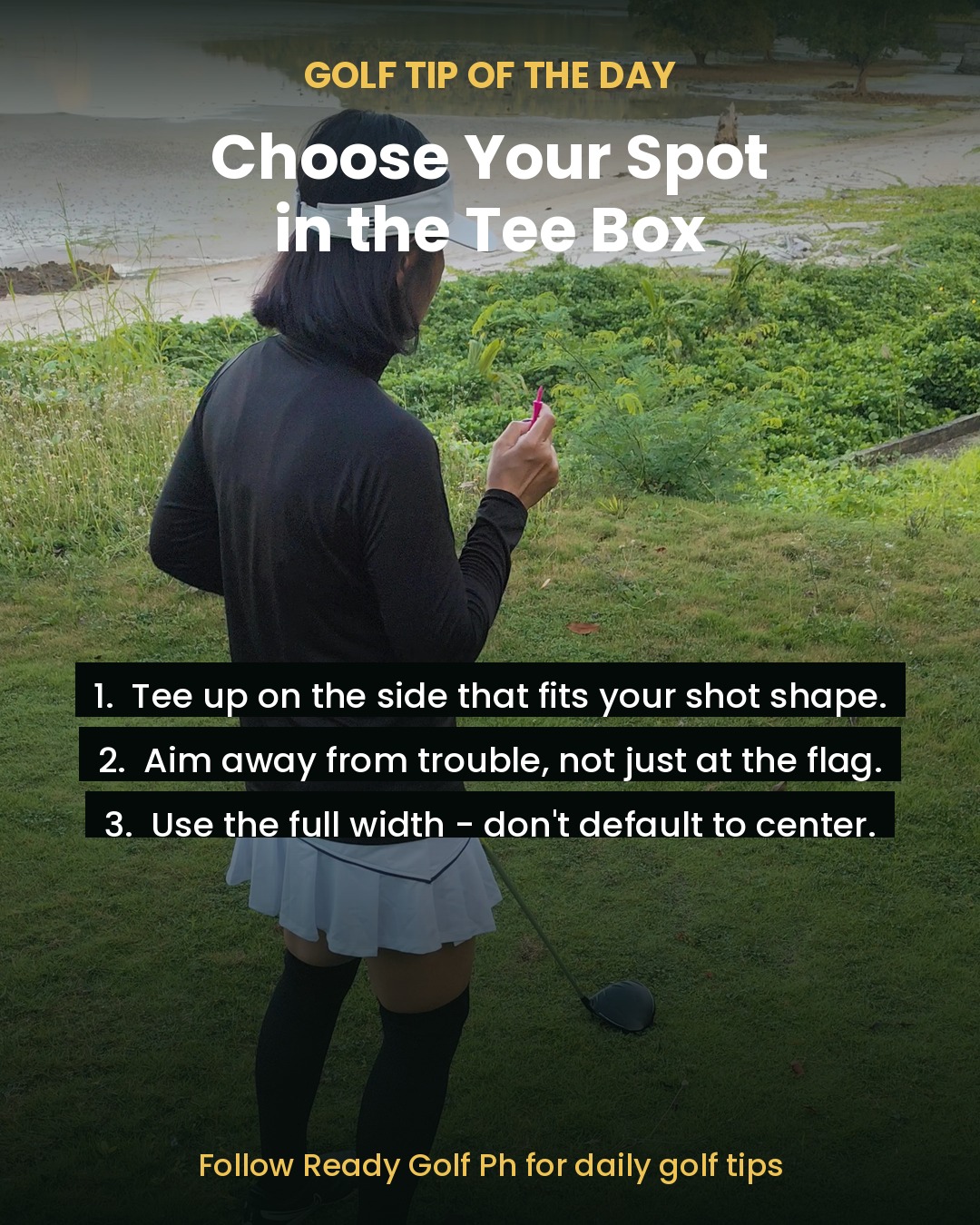
Walk up to almost any tee box and watch what most golfers do: they step to roughly the same spot every time, usually somewhere near the middle, push a tee into the ground, and get on with their pre-shot routine. It’s not a bad habit exactly, it’s just an overlooked opportunity. The tee box on most holes is several yards wide, and where you choose to stand inside it can genuinely change how the hole plays for you, without changing anything about your swing.
This is one of the simplest pieces of course management in golf, and also one of the most skipped, because it doesn’t feel like a “real” decision the way club selection or shot shape does. But the players who consistently make good use of the full tee box tend to give themselves easier second shots, more than the players standing in exactly the same spot on every hole regardless of what that hole actually asks for.
Why It Matters
Every tee box has a rectangular area you’re allowed to play from, bounded by the tee markers, and that area is almost always wider than the small patch most golfers default to. Choosing where inside that rectangle you tee up changes your angle to the fairway, your sightline to trouble, and sometimes even the effective width of the fairway you’re aiming at.
Here’s a simple example. If a hole has trouble down the right side, like a bunker, water, or out of bounds, teeing up on the right side of the tee box and aiming across the fairway toward the left opens up more usable fairway and angles your shot away from the trouble, rather than parallel to it or toward it. Tee up on the left side instead, and you’re now aiming your ball more directly at the exact trouble you’re trying to avoid, even if your intended shot shape is identical. Same club, same swing, same shot shape, meaningfully different risk.
The same logic applies to doglegs. Teeing up on the side of the tee box that matches the direction of the bend gives you a straighter, more direct look at the fairway beyond the corner. Teeing up on the opposite side can leave you aiming into the trees or rough that the dogleg is built around, even on a shot you strike well.
This kind of decision costs nothing. It doesn’t require a new club, a swing change, or extra practice time. It’s purely a matter of noticing the tee box is wider than your habit, and using that width on purpose instead of by accident.
The Fix
Before you tee up, take a few seconds to actually look at the hole in front of you, not just the flag in the distance. Notice where the trouble is, left or right, and notice which way the fairway bends, if it bends at all. Then choose your spot in the tee box based on what you see, rather than walking to wherever feels familiar.
If you have a shot shape you’re comfortable with, a draw or a fade, use your position in the tee box to work with it rather than against it. A golfer who plays a natural fade, for instance, often benefits from teeing up on the left side of the box, since the ball’s natural left-to-right shape will start toward the center or right of the fairway and curve back into it. Teeing up on the right side with the same fade can start the ball too far right from the beginning, leaving less room for the curve to work.
If trouble runs down one side of the hole, favor the tee box position that lets you aim your shot away from it. This sounds obvious once it’s pointed out, but it’s exactly the kind of decision that gets skipped when golfers are moving quickly or not thinking about the hole as a whole, just about making solid contact.
Finally, don’t ignore the small stuff, like uneven lies within the tee box itself. Some tee boxes have a subtle slope or a firmer, flatter patch on one side. If two spots otherwise look equally good strategically, there’s no reason not to pick the one that gives you the more comfortable stance.
Drill to Practice
This isn’t something you can drill on the range in the traditional sense, since it depends on reading an actual hole, but you can build the habit deliberately during any round, practice or otherwise. Before every tee shot for your next few rounds, pause for a few seconds and ask yourself two questions: which side is the trouble on, and which side of the tee box gives me the better angle away from it? Answer both before you take your stance, every time, even on holes that look completely straightforward.
A useful mental exercise off the course: the next time you watch a broadcast of professional golf, pay attention to where players position themselves in the tee box relative to the hole’s layout. You’ll start noticing it’s rarely random, and it becomes easier to apply the same thinking to your own rounds.
Common Mistakes
The most common mistake is treating the tee box as a single spot rather than an area, walking to the same general position out of habit regardless of what the hole actually calls for. Every hole is laid out differently, and treating tee box position as a fixed habit wastes one of the easiest strategic tools available.
A second mistake is choosing a tee box position based only on comfort, without considering the hole’s layout at all. Comfort matters, but it should be the tiebreaker between two strategically sound options, not the only factor in the decision.
A third mistake is aiming at the flag from wherever you happen to be standing, rather than adjusting your aim based on your tee box position. If you’ve moved to one side of the box specifically to open up an angle, make sure your alignment and target actually reflect that adjustment, rather than defaulting back to a straight line at the pin.
Finally, some golfers only think about tee box positioning on driver holes, and default back to standing in the middle on shorter par-3s or par-4s where they’re hitting an iron off the tee. The same principle applies regardless of club, since the angle to the green or fairway matters just as much on a shorter shot as it does on a full drive.
FAQ
Am I allowed to tee up anywhere in the tee box?
Yes, as long as you’re within the tee markers and no further forward than the front line they create. You can go anywhere from side to side and slightly behind the markers if needed.
Does this really make a measurable difference?
Yes, especially on holes with trouble concentrated on one side or a clear dogleg. The difference isn’t in how far or how well you strike the ball, it’s in how much usable landing area and margin for error your chosen angle gives you.
Should beginners worry about this, or focus on just making contact first?
It’s worth building the habit early, since it costs nothing and takes only a few seconds. It won’t fix inconsistent contact, but it will make the holes you do strike well easier to play from.
What if I don’t have a consistent shot shape yet?
Focus on the trouble-avoidance side of the decision instead. Even without a reliable draw or fade, choosing the tee box position that keeps your intended target furthest from hazards is still valuable.
Key Takeaways
The tee box is wider than the single spot most golfers default to, and where you choose to tee up changes your angle to the fairway, your proximity to trouble, and how well your natural shot shape fits the hole. This decision costs nothing and takes only a few seconds, but it’s skipped constantly simply because it doesn’t feel like an active choice. Look at the hole, notice where the trouble is, and use the full width of the tee box on purpose.
#ReadyGolfPH #GolfTips #CourseManagement #GolfStrategy #BeginnerGolfer #GolfPhilippines