Tag: ReadyGolf

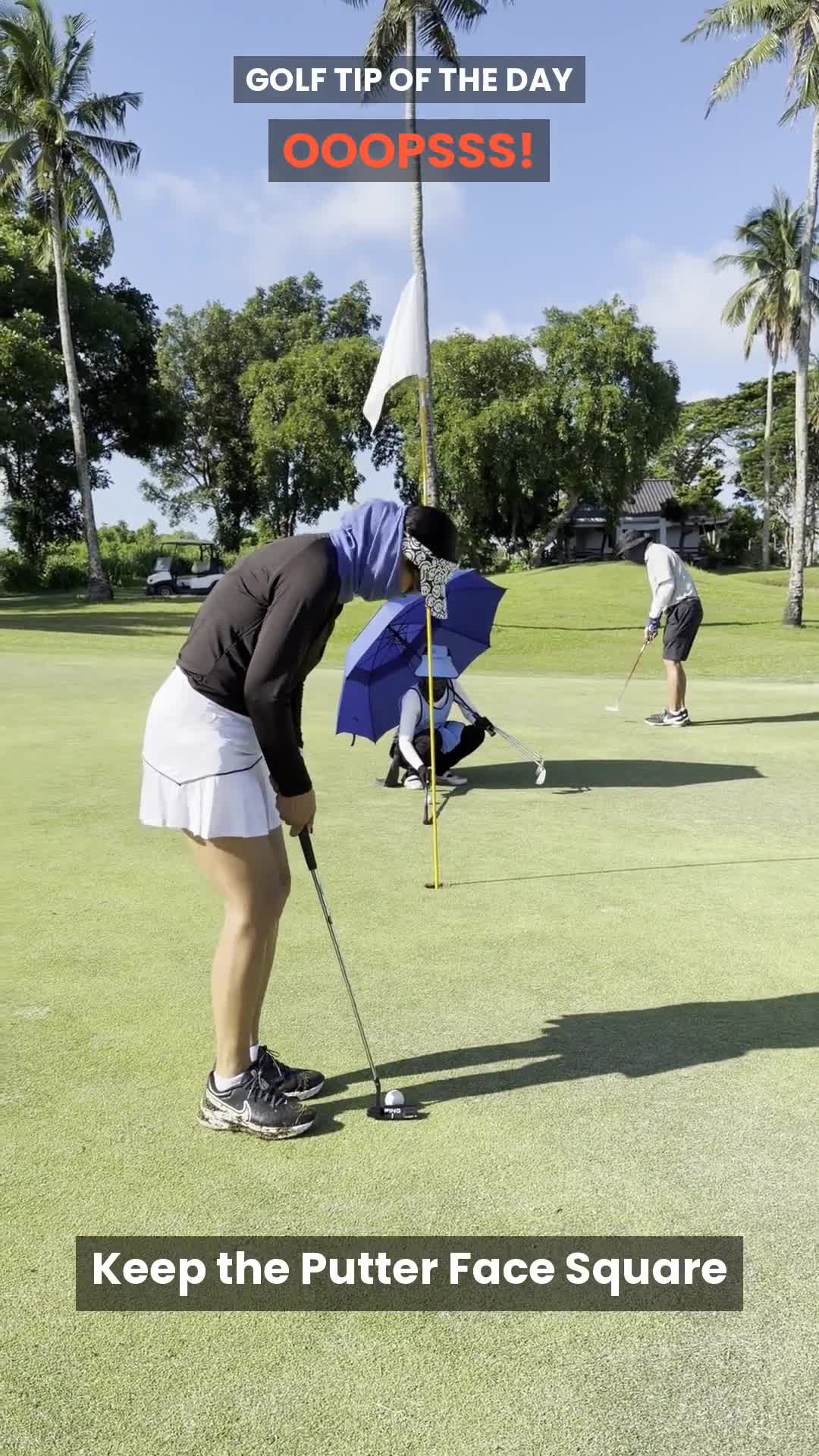
  • Keep the Putter Face Square: The Overlooked Fix for Pulled and Pushed Putts

    Keep the Putter Face Square: The Overlooked Fix for Pulled and Pushed Putts

    There’s a particular kind of frustration in golf that only putting can produce. You read the line, you take what feels like a smooth, committed stroke, and the ball still slides three feet wide of the hole. No wind, no bad bounce, no excuse. Just a putt that missed for reasons that aren’t immediately obvious.

    Nine times out of ten, the culprit isn’t the read. It’s the putter face quietly twisting open or closed somewhere between takeaway and impact, and it’s one of the most common, most fixable faults in putting that almost nobody actually checks for.

    The Putt That “Felt Fine” But Missed Anyway

    Ask most golfers why they missed a putt and the answer usually points to the green: it broke more than expected, it was faster than it looked, the read was off. Green reading absolutely matters, and it deserves attention. But a huge number of missed putts have nothing to do with the read at all. They happen because the putter face wasn’t actually square to the target line at the moment it struck the ball, even though the stroke itself felt smooth and controlled.

    This is a hard fault to self-diagnose because it doesn’t feel like a mistake while it’s happening. A stroke can look rhythmic and confident and still deliver the face a few degrees open or closed at impact, sending an otherwise well-paced putt off line before it ever reaches the part of the green where the break was supposed to take over. The ball doesn’t know the read was correct. It only responds to the face angle and path it actually received.

    Why the Putter Face Twists in the First Place

    The putter face doesn’t twist on its own. It twists because of what the hands and wrists are doing during the stroke, and understanding that connection is the whole key to fixing it.

    A putting stroke is meant to be a simple pendulum, controlled by the rocking of the shoulders, with the hands and wrists staying quiet and along for the ride. The problems start when the hands take over some of that job, which happens more often than most golfers realize, especially under pressure or on longer putts where there’s a temptation to help the ball along.

    Wristy hands introduce rotation. The moment the wrists start hinging or releasing through the stroke instead of staying still, the putter head has room to rotate independently of the shoulders. Even small amounts of wrist action can open or close the face by a few degrees, which is more than enough to send a six-foot putt off line.

    An unstable grip pressure lets the face wander. Gripping too tightly in some fingers and too loosely in others creates uneven tension that shows up as face rotation during the stroke, particularly through impact when the putter is moving fastest.

    Trying to steer the putt makes it worse, not better. Ironically, golfers who consciously try to guide the putter face toward the target with their hands often introduce more face manipulation than golfers who simply let the shoulders rock the putter back and through without interference.

    What a Square Face Actually Looks Like

    The fix isn’t a complicated mechanical overhaul. It’s a return to a simpler stroke where the big muscles do the work and the small muscles stay quiet.

    Let the shoulders, not the hands, power the stroke. Think of the putting stroke as a rocking motion through the shoulders, with the arms and hands moving as a connected, passive unit. When the shoulders control the tempo and length of the stroke, the putter face tends to stay square through impact almost automatically, without any conscious effort to “hold it square.”

    Keep the wrists quiet from takeaway through follow-through. There’s no hinge-and-release action in a good putting stroke the way there is in a full swing. The wrists should feel almost locked, moving only because the shoulders and arms are moving them, not because they’re independently flexing or rotating.

    Check that the face looks the same at both ends of the stroke. At the end of the backswing and again at the finish, the putter face should appear roughly as square as it did at address. If the face has clearly opened on the way back or closed through impact, that’s a visible sign the hands are getting involved somewhere in the stroke.

    Grip with light, even pressure in both hands. A grip that’s too tight, especially in the trail hand, tends to introduce tension that shows up as face rotation. Light, even pressure across both hands gives the putter head freedom to swing on a stable path without fighting against uneven tension.

    A Simple Way to Practice This

    This is one of the easier putting faults to actually train, because it doesn’t require new mechanics, just a return to a simpler motion and a way to get honest feedback on whether the face is staying square.

    On the practice green, set up a short, straight putt of four or five feet and place two clubs or alignment sticks just outside the toe and heel of the putter at address, wide enough for the putter to move freely between them but tight enough that an obviously twisting face would catch on one of the shafts. Make slow, deliberate strokes focusing entirely on rocking the shoulders and keeping the hands passive. If the putter head brushes a shaft, that’s immediate, honest feedback that the face opened or closed somewhere in the stroke.

    It also helps to practice with your eyes closed for a handful of putts on a flat section of green, focusing purely on the feeling of a quiet, shoulder-driven stroke. Without the visual feedback of watching the ball, it becomes easier to notice whether the hands are trying to take over.

    Why This Matters More Than It Seems

    Putting is often the most overlooked part of practice, partly because it doesn’t feel as satisfying to work on as a full swing, and partly because a missed short putt gets blamed on nerves or an unlucky read rather than a face control issue. But a huge share of strokes on the course happen on the green, and small, repeated face-angle errors compound over eighteen holes in a way that’s easy to underestimate.

    A putter face that stays square through impact turns green reading into something that actually pays off. There’s little point in reading a putt perfectly if the stroke itself is going to send the ball off that line anyway. Fixing face control first makes every other part of putting, speed control, green reading, distance judgment, actually matter the way it’s supposed to.

    Common Mistakes Golfers Make With This

    The most common mistake is assuming a missed putt is always a read problem and never checking the stroke itself. This keeps golfers chasing better green-reading skills while the actual fault, a twisting face caused by active hands, goes untouched for years. A second mistake is trying to fix face control by consciously steering the putter face toward the target, which usually adds more hand manipulation rather than removing it. The fix is quieter hands, not more deliberate ones. A third mistake is only checking this on long, dramatic putts, when short putts under three feet are often where a twisting face costs the most strokes, precisely because there’s so little margin for error at that distance.

    FAQ

    How do I know if my putter face is actually twisting, or if it’s just my read that’s off?

    Try the alignment-stick drill on a straight, flat putt. If a face-control issue exists, you’ll usually feel or see the putter head brush against a stick during the stroke even when your read and aim were correct.

    Is a wristy putting stroke always wrong?

    Not universally, some good putters do use a small amount of wrist action, but it has to be consistent and controlled. For most golfers working on face control, removing wrist action first and rebuilding from a simple, shoulder-driven stroke is the more reliable path.

    Does grip style matter for this?

    Grip style matters less than grip pressure and consistency. Whatever grip you use, even, light pressure in both hands tends to reduce unwanted face rotation more than any specific hand placement.

    Key Takeaways

    • Many missed putts are caused by the putter face twisting through impact, not by a bad read.
    • Active hands and wrists are usually the reason the face opens or closes during the stroke.
    • Let the shoulders rock the putter back and through, and keep the wrists quiet throughout.
    • Use an alignment-stick drill to get honest, physical feedback on whether the face is staying square.
    • Fixing face control first makes every other part of putting, especially green reading, actually pay off.
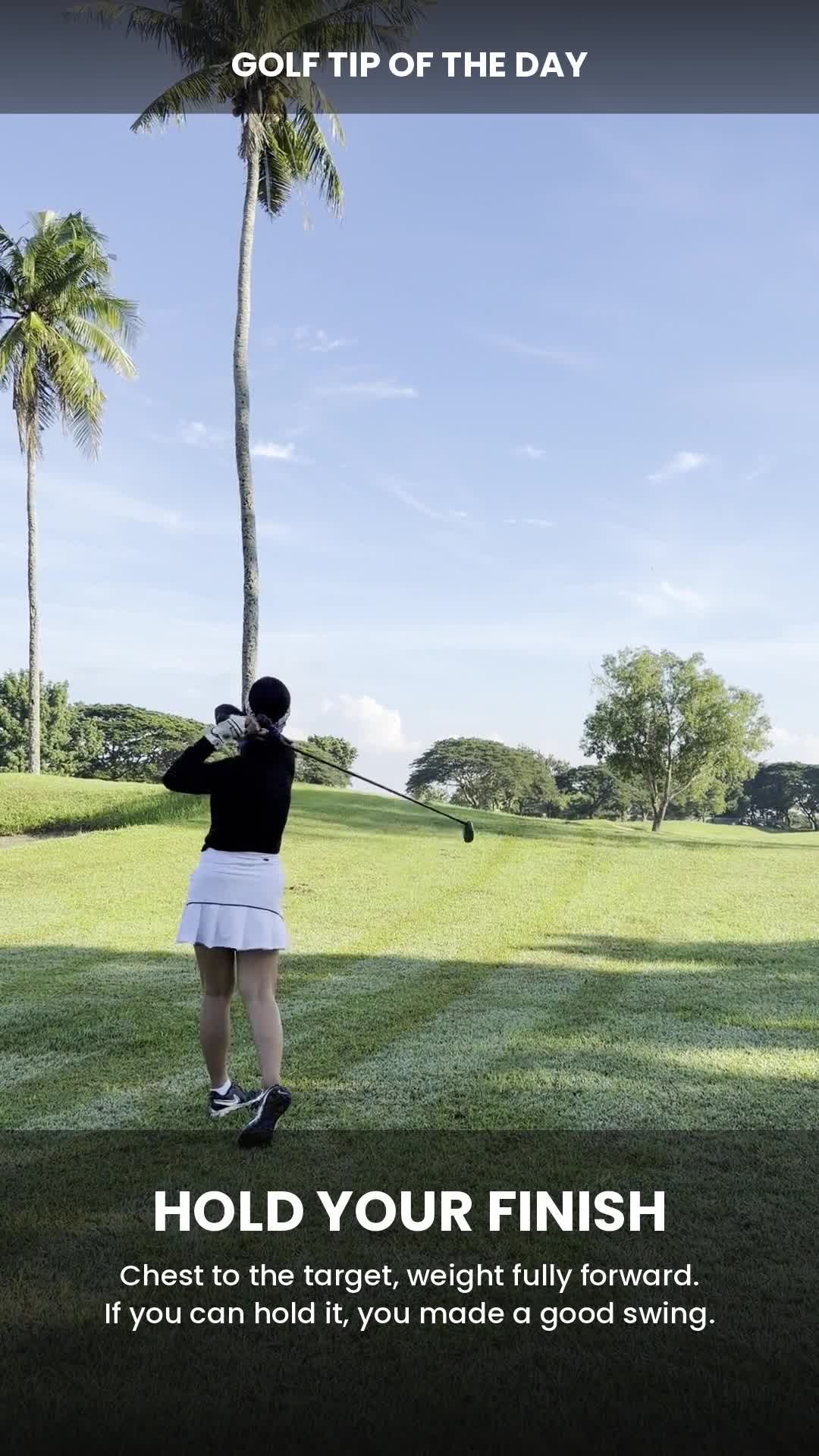
  • Hold Your Finish: The Simple Balance Check That Fixes Your Golf Swing

    Hold Your Finish: The Simple Balance Check That Fixes Your Golf Swing

    Watch any golfer with a swing worth copying and you’ll notice something they all share, and it has nothing to do with how far the ball goes. After the ball is gone, they don’t fall over, stumble forward, or yank the club back down early to catch their balance. They finish the swing, chest facing the target, weight stacked over the front foot, back heel lifted off the ground, and they just stay there. Not because it looks good on camera, but because a swing that ends in that position almost always started correctly too.

    That held finish is one of the most useful, most ignored diagnostic tools in golf. It’s free, it requires no equipment, and it works on every single swing you take, whether you’re on the range or standing over a shot that actually matters.

    Why the Finish Position Tells the Truth

    A golf swing happens too fast to consciously control every moving part. By the time the club reaches the ball, the decisions that mattered were already made, weight shift, sequencing, spine angle, well before impact. What you can control, and what you can actually feel and check, is what your body does in the half-second after the ball is struck.

    The finish position is the receipt for everything that happened before it. If your weight is fully forward, your chest has rotated all the way to face the target, and you can hold that pose without wobbling, it means the energy in your swing moved through the ball in the right direction and at the right time. If instead you find yourself falling backward, stuck on your trail foot, or needing to take a quick step to catch your balance, that’s not a finish problem. It’s a symptom of something that broke down earlier in the swing, usually a rushed transition from backswing to downswing, or weight that never fully committed to the front side.

    This is why a held finish is such a good teaching tool. It turns an invisible, split-second event into something you can actually stand in, feel, and correct.

    What a Good Finish Actually Looks Like

    There are three checkpoints worth running through every time you swing, not just on the range but on the course too, quietly, without turning every shot into a swing analysis session.

    Weight fully on the front foot. By the time the swing is finished, the vast majority of your weight, close to all of it, should have transferred onto your lead leg. If you feel weight still hanging back on your trail foot at the finish, the hips and lower body likely didn’t lead the downswing the way they needed to.

    Chest and belt buckle facing the target. A full, committed rotation through the ball means your torso keeps turning all the way until you’re looking down the fairway, not still angled away from it. A finish where the chest is still pointed off to the side is usually a sign the swing got cut short, often from tension or a subconscious effort to steer the ball rather than swing through it.

    Back heel up, back toe lightly on the ground. This is almost automatic if the first two things happen correctly, but it’s worth checking on its own. A back foot that’s still flat on the ground at the finish often means the lower body stalled instead of rotating fully through impact.

    The Fix: Make Holding the Finish a Habit, Not an Afterthought

    The good news is that this is one of the easier things in golf to actually practice, because it doesn’t require new mechanics. It requires a new habit: finishing the swing and staying there.

    On the range, after every single shot, hold your finish position for a slow three-count before you relax or look up to check ball flight. Don’t peek early. The temptation is always to immediately crane your neck to see where the ball went, but that habit is exactly what lets golfers get away with an unbalanced finish without ever noticing it. Committing to the three-count forces you to feel whether you’re actually balanced or just barely staying upright.

    If you find yourself unable to hold the pose, don’t try to fix it by forcing a better-looking finish artificially. Instead, work backward. A wobbly finish is a downstream symptom, and the actual fix usually lives earlier in the swing, in a smoother transition, a fuller hip turn, or better weight shift starting from the top of the backswing. Holding the finish won’t fix those things directly, but it will tell you, honestly and immediately, whether whatever you just changed actually worked.

    Common Mistakes Golfers Make With This

    The most common mistake is treating the finish as decoration, something that happens after the shot is already decided, rather than as information. Golfers watch the ball, not their own balance, and miss the feedback sitting right there in their own body. A second mistake is faking a good finish, muscling the body into the right-looking position after an off-balance swing, which defeats the entire purpose of using it as a diagnostic. The finish should be the natural result of the swing, not a separate pose tacked onto the end of it. A third mistake is only checking this on the range and forgetting about it entirely once real shots are on the line, which is exactly when the feedback matters most.

    FAQ

    Do I really need to hold the finish on every single swing?

    On the range, yes, it’s worth doing every time so it becomes automatic. On the course, even a mental note of whether you stayed balanced is useful, without needing a dramatic three-count on every hole.

    What if I can make a good swing but still can’t hold the finish?

    That’s usually a balance or tempo issue rather than a mechanics issue. Slowing down your tempo slightly, especially in the transition from backswing to downswing, often solves this on its own.

    Does this apply to every club, or just the driver?

    The same checkpoints apply across the bag, though the finish will naturally look a little more compact on shorter irons and wedges than on a full driver swing.

    Key Takeaways

    • A balanced, held finish is a receipt for a well-sequenced swing, not just a good-looking pose.
    • Check three things: weight fully forward, chest facing the target, back heel lifted.
    • Practice a three-count hold after every range swing before checking ball flight.
    • A wobbly finish points to an earlier fault, usually tempo or weight shift, not something to fix at the finish itself.
    • Make it a habit on the course too, not just something reserved for range sessions.
  • Take Your Medicine: Why the Smart Punch-Out Beats the Hero Shot Every Time

    Take Your Medicine: Why the Smart Punch-Out Beats the Hero Shot Every Time

    Every golfer knows the feeling. Your ball has drifted off line and come to rest somewhere it has no business being, tucked under a low canopy of branches, sitting in a stand of trees, or resting on the wrong side of a hazard entirely. You walk up, take one look at the tiny gap between two branches, and a thought creeps in: maybe I can still get there. Maybe, if the swing is just right, the ball threads the needle and the hole is saved.

    That thought is where a lot of otherwise decent rounds quietly fall apart. The smarter, less glamorous option is almost always the better one: take your medicine. Punch out safely, get the ball back in play, and protect the rest of your round instead of gambling it on a low-percentage shot.

    What “Take Your Medicine” Actually Means

    The phrase is old golf slang, and it says exactly what it means. When you’ve hit a bad shot and ended up in trouble, the smart response is to accept the setback and take the safe way out, rather than trying to erase the mistake with an even riskier follow-up shot. It’s not a glamorous phrase, and it’s not meant to be. It’s an acknowledgment that the shot before this one already cost you something, and the only real question left is how much more it’s going to cost.

    Golfers who take their medicine well tend to have something in common: they treat the recovery shot as its own separate decision, not an extension of the mistake that put them there. The tee shot that ended up under a tree is over and done. What happens next is a fresh choice, made with a clear head about what’s actually possible from that lie, not what would feel most satisfying.

    Why Golfers Reach for the Hero Shot Anyway

    It helps to understand why the miracle escape is so tempting in the first place, because the pull toward it is strong and it’s not really about strategy at all. It’s about ego and about the story we’d rather tell.

    Standing over a ball buried under branches, most golfers do a quick mental inventory: how big is the gap, how confident do I feel, could I actually pull this off. The trouble is that this inventory almost always overestimates the golfer’s own precision under pressure. A gap that looks two feet wide from address often plays much narrower once a driver-length swing, a slightly compressed stance, and adrenaline are added to the equation. The shot that “should” work on a good day rarely accounts for the fact that this isn’t a good day. You’re off balance, rushed, and playing defense before you’ve even swung.

    There’s also a scoring math problem hiding underneath the temptation. Golfers chasing the hero shot are usually thinking about the single hole in front of them, not the round as a whole. A clean escape saves one shot. A blocked branch, a shanked recovery, or a ball that ricochets even deeper into trouble can cost two, three, or more. The hero shot has a modest ceiling and a very expensive floor, and most golfers underestimate exactly how expensive that floor can get.

    The Fix: Play the Percentages, Not the Moment

    Taking your medicine isn’t about giving up. It’s about making the highest-percentage decision available from a compromised position, and it comes down to a few honest questions asked in order, every time.

    Assess the lie and the gap honestly, not hopefully. Before picking a shot, take a genuine look at what’s actually possible, not what would be the most satisfying outcome if everything broke right. Is there truly a clean window to the green, or is that gap really only clean from where you’re standing and not from the ball’s actual flight path? A low branch that looks high enough from twenty feet away often isn’t once you account for the shot’s actual trajectory.

    Identify the safest exit, not the most direct one. The safe path back to the fairway is rarely the shortest line to the pin. It might mean hitting sideways, or even slightly backward, just to get clear of trouble. That can feel like giving something away, but a clean lie in the fairway, even well short of where you’d like to be, is worth more than a repeated gamble from an even worse spot.

    Pick a club and swing built for control, not distance. Recovery shots are not the moment to reach for extra club or a fuller swing trying to make up lost ground. A shorter, three-quarter swing with more club in hand almost always produces a more reliable strike than a full swing squeezed through a tight window.

    Commit fully to the decision you’ve made. Once you’ve chosen the safe route, swing it like you mean it. A half-hearted punch-out, swung tentatively because part of you is still wishing you’d gone for the hero shot, often ends up worse than either full commitment option. Decide, then commit.

    A Simple Way to Practice This

    The instinct to take your medicine is hard to build in the moment, because every buried lie feels urgent and personal. It helps to rehearse the decision-making process away from the pressure of an actual round.

    On the range, deliberately practice low, three-quarter punch shots with a mid-iron, aiming for a modest, specific landing area rather than maximum distance. Get comfortable with what a controlled, lower-trajectory swing feels like so it isn’t a foreign move when you actually need it on the course. It’s also worth mentally rehearsing the “two options” framework before you play: for any ball that ends up in trouble, name the hero shot and the safe shot out loud, even just in your head, before choosing. Making the comparison explicit, instead of drifting straight toward the exciting option, is often enough to tip the decision toward the smarter one.

    Why This Matters More Than It Seems

    Recovery shots don’t show up on a scorecard as their own category, but they quietly decide more rounds than most golfers realize. A single poor decision in the trees can turn a bogey into a double or worse, and those extra strokes tend to happen exactly when a round is already fragile, right after a mistake, when frustration is already creeping in.

    Golfers who consistently take their medicine aren’t playing more conservatively out of fear. They’re recognizing that the round is long, that one hole rarely needs to be a hero moment, and that protecting against the big number is usually a better use of a swing than chasing a highlight. Over eighteen holes, it’s not the two or three genuinely great escapes that build a good score. It’s how rarely a single bad shot is allowed to become two or three bad shots in a row.

    Common Mistakes Golfers Make With This

    The most common mistake is treating this as a one-time decision made in a panic, rather than a habit built ahead of time. Golfers who haven’t decided in advance how they’ll handle trouble tend to make the call emotionally, in the ten seconds after walking up to a bad lie, which is exactly when judgment is least reliable. A second mistake is choosing the safe route but then still swinging aggressively, trying to sneak a little extra distance out of what was supposed to be a conservative shot. That undoes the whole point of the decision. A third mistake is beating yourself up over having to take the safe route at all, as if it’s an admission of failure. It isn’t. It’s simply the correct response to a shot that already went wrong, and treating it as anything else just adds unnecessary pressure to the next swing.

    FAQ

    Isn’t taking the safe shot just giving up on the hole?

    Not really. You already gave something up when the ball ended up in trouble. Taking your medicine is about not giving up more than necessary on top of that.

    How do I know when the hero shot is actually worth trying?

    If the gap is genuinely clear, the lie is clean, and a miss still leaves you somewhere manageable, it may be a reasonable, calculated risk. If a miss puts you in a worse spot than you’re already in, it almost never is.

    Does this only apply to shots from the trees?

    No. The same logic applies to any recovery situation, deep rough, awkward stances, balls under a cart path lip, or lies close to a hazard. The core question is always the same: what’s the safest way back into play, and can I commit to it fully?

    Key Takeaways

    • A bad lie is a fresh decision, not an extension of the shot that put you there.
    • The hero shot has a low ceiling and a very expensive floor. Most golfers underestimate how bad the miss can be.
    • Choose the safest exit, not the most direct one, and pick a club and swing built for control.
    • Commit fully once you’ve decided. A half-hearted safe shot is often worse than either full option.
    • Protecting against the big number matters more over a full round than the occasional spectacular escape.
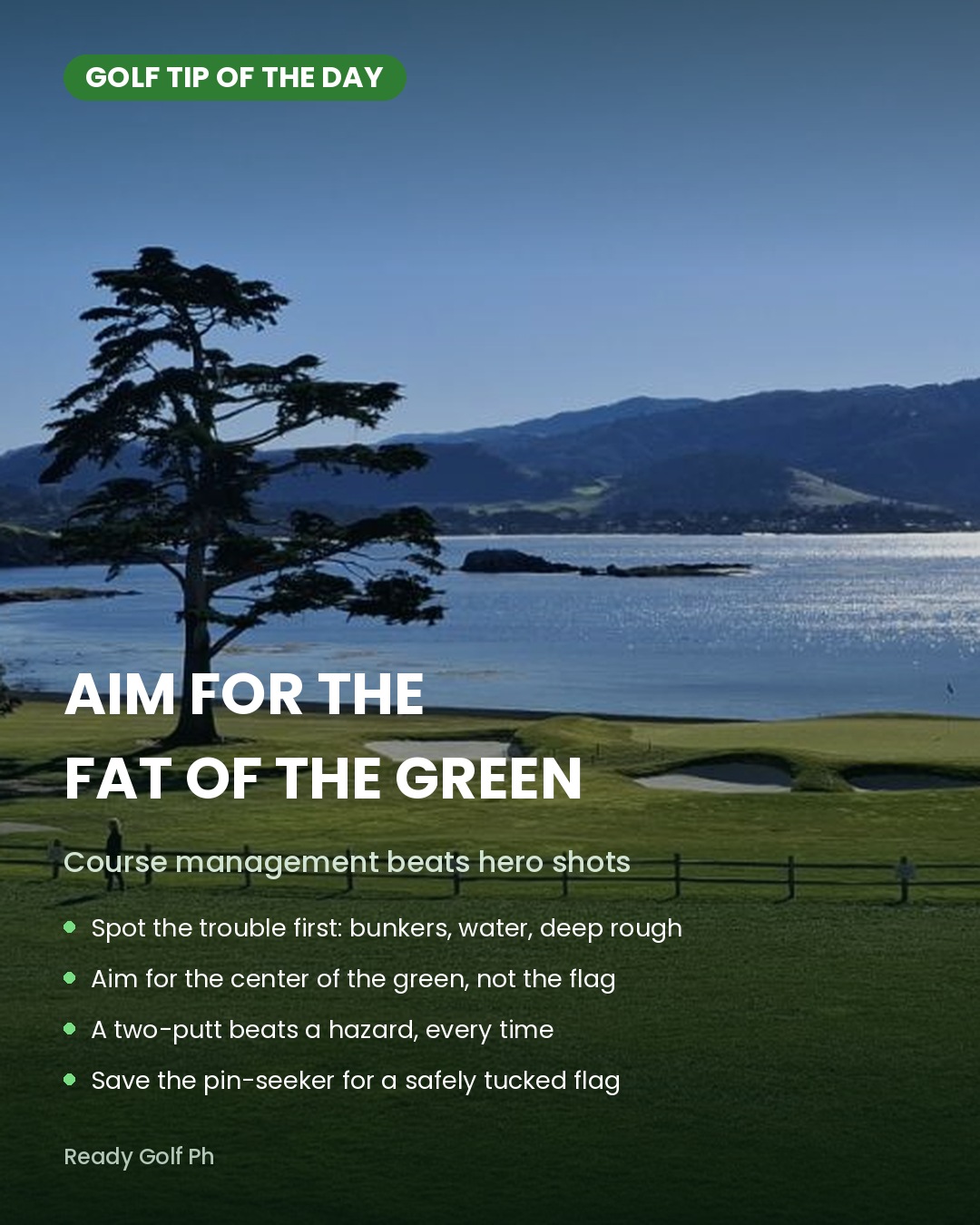
  • Aim for the Fat of the Green: The Course Management Habit That Saves Strokes

    Aim for the Fat of the Green: The Course Management Habit That Saves Strokes

    There is a particular kind of hole that shows up on almost every course worth playing: the flag tucked just behind a bunker, or perched a few paces from the water’s edge, daring you to take it on directly. It looks great in photos. It is also where a lot of good rounds quietly come apart, because the pin position is not actually the target. It just looks like one.

    Course management is the unglamorous half of golf that never makes the highlight reel, but it is often the difference between a round that holds together and one that blows up on a single hole. And one of the simplest course management habits a golfer can build is also one of the most overlooked: when trouble guards the flag, aim for the center of the green instead of the pin.

    Why the Flag Isn’t Always the Target

    It’s an easy trap to fall into. The flag is the thing you’re looking at, so it becomes the thing you aim at, almost by default. But the flag is just where the hole happens to be cut that day. The green is the actual target, and greens are usually far more forgiving than the six feet of grass immediately around the cup.

    When the pin is tucked behind a bunker or hugging a water line, the shot that finds the flag and the shot that finds the hazard often start out looking identical in the first half-second after impact. A few yards of curve, a touch of mishit, a gust of wind, and the ball that was tracking the flag is now sitting in sand or, worse, not sitting anywhere at all. The center of the green rarely punishes a small miss that harshly. Miss short, long, left, or right of center and you are usually still putting. Miss short or long of a tucked pin guarded by a hazard and you may be chipping, or worse, re-hitting.

    The Fix: Play to the Fat of the Green

    This is not a complicated adjustment, and it does not require a better swing. It requires a different decision before the swing even starts.

    Find the hazards before you find the flag. Before picking a target, take a second to actually notice what is guarding the pin. Bunkers, water, a false front, deep rough. Knowing where the trouble sits is the first step to playing away from it on purpose instead of drifting toward it by accident.

    Pick the center of the green as your default target. Unless the pin is sitting in open, unguarded territory, aim for the middle of the putting surface. It is a bigger, safer target than the flag, and it turns a risky approach into a routine one.

    Let the club do the work, not the moment. Choose enough club to comfortably reach the center without forcing a swing to squeeze extra distance out of a shot. Most balls that come up short into a hazard were hit with a club that needed a perfect strike to get there.

    Accept the longer putt as a win. A thirty-foot putt from the center of the green is a fine result. It is almost always a better outcome than a hazard, and it keeps the hole, and the round, moving in the right direction.

    A Simple Way to Practice This

    Course management habits are hard to build on the course because the moment feels high-stakes even on a casual round. Practice range sessions are a better place to install the habit before it matters. Pick an imaginary pin position tucked in a corner of the practice green, then imagine a bunker or hazard sitting just in front of it. Hit a series of approach shots aimed at the center of an imaginary green instead of the tucked pin, and pay attention to how much more freely you can swing when the target is generous instead of tight. That looser, more committed swing is usually the one that produces the better strike anyway.

    On the course, a good place to start applying this deliberately is on any approach shot into a par 4 or par 5 where you can see a hazard tight to the pin from the fairway. Make the center-of-green decision before you pull a club, not after you’re already standing over the ball second-guessing it.

    Why This Matters More Than It Seems

    Course management rarely feels dramatic in the moment. Choosing the center of the green over the flag doesn’t feel like a bold decision, it feels almost like giving something up. But scoring well over eighteen holes is less about the handful of shots that go beautifully and more about how few shots go disastrously. Big numbers come from compounding mistakes: a missed green into a hazard, followed by a penalty drop, followed by a rushed recovery shot trying to make up for it. Taking the hazard out of play on the approach removes the entire chain before it starts.

    This is also a habit that scales with how a course is set up to test golfers. Course designers put hazards next to pins specifically because they know most players will still aim at the flag anyway. Recognizing that and declining the bait is one of the quieter ways a golfer can consistently play a hole “as designed” rather than as tempted.

    Common Mistakes Golfers Make With This

    The most common mistake is only applying this thinking on approach shots into greens, when the same logic works for tee shots on holes with trouble down one side, and even for chips played toward a tucked pin. A second mistake is deciding to play safe but still selecting a club or swing meant for an aggressive shot, which undoes the whole decision. If you’re aiming center, commit to a swing built for that target, not a compromise between the two. A third mistake is treating this as giving up on scoring well. In practice, the golfers who play to the fat of the green consistently tend to card fewer big numbers than the ones who fire at every flag, which is usually the faster route to a lower score.

    FAQ

    Doesn’t aiming for the center of the green mean I’ll never make birdies?

    No. You’ll still have plenty of makeable putts from the center of most greens, and you’ll have far fewer blow-up holes. Fewer big numbers usually lowers a score more than a handful of extra birdie looks raises it.

    How do I know when it’s safe to aim at the flag instead?

    When the pin is not closely guarded by a bunker, water, or a steep slope, and you have a comfortable club in hand, going at the flag is a reasonable, lower-risk decision.

    Does this apply to short game shots too?

    Yes. Chipping or pitching to the fat of the green rather than a tightly tucked pin follows the same logic and is often the smarter play around greens guarded by bunkers.

    Key Takeaways

    • The flag is not always the real target. The green is, and it is usually far more forgiving than the ground right around the cup.
    • Spot the hazards guarding the pin before you choose a target, not after you’re already over the ball.
    • Aiming for the center of the green turns a risky approach into a routine one, without requiring a better swing.
    • A longer putt from the center of the green beats a short one from a hazard almost every time.
    • Save the aggressive, pin-seeking shot for when the flag is genuinely unguarded.