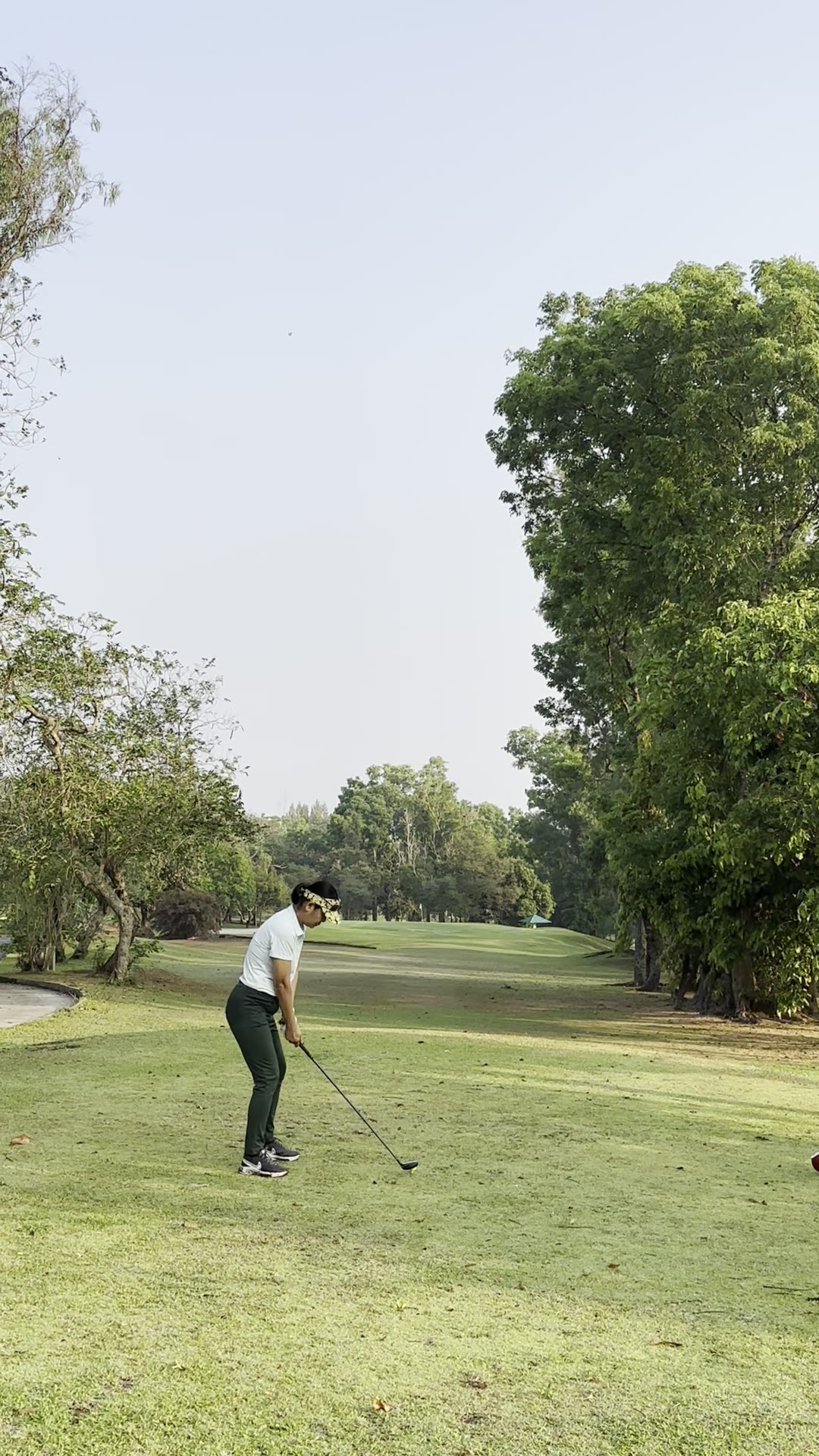
Few things in golf are more frustrating than watching a well-struck drive start down the middle of the fairway, only to curve hard right and disappear into the trees or the rough. That shot has a name every golfer knows too well: the slice. It feels like bad luck, but it is not random at all. A slice has two very specific causes, and once you understand them, the fix becomes surprisingly straightforward.
The Two Real Causes of a Slice
Every slice comes down to two swing characteristics working together: an open clubface at impact and an outside-in swing path. The clubface being open relative to your swing path is what puts left-to-right sidespin on the ball, for a right-handed golfer, and the outside-in path is what produces the initial ball direction before the spin takes over and curves it further off line.
Golfers often try to fix a slice by aiming further left to compensate, but this actually makes the outside-in path worse, not better, because it encourages an even steeper, more across-the-line motion into the ball. Understanding that the fix lives in the clubface and the path, not in where you aim, is the first step toward actually solving the problem.
The Fix: Soften Your Grip and Swing More From the Inside
Two simple adjustments address both causes at once. First, soften your grip pressure, especially in your trail hand. An overly tight grip restricts the natural rotation of the forearms and hands through impact, which keeps the clubface open longer than it should be. A softer grip allows the clubface to release and close naturally as it meets the ball.
Second, feel like you are swinging more from the inside, meaning the club approaches the ball from slightly behind your body line rather than from outside your body line cutting across. A helpful image is to imagine the clubhead approaching from behind an imaginary ball placed just inside your actual ball, then swinging out toward the target. This feeling helps neutralize the outside-in path that starts most slices moving in the wrong direction from the very beginning.
Combined, these two changes let the clubface release and close through impact while the swing path moves more from the inside, which together straighten out the ball flight and let the clubface square up naturally at the moment of contact.
A Simple Drill to Feel the Change
Place a headcover or a small water bottle about six inches outside your golf ball, positioned so that an outside-in swing path would strike it on the way down. Practice swinging without hitting the obstacle, which naturally trains a more inside path. Pair this with consciously loosening your grip pressure before each rep, and you will start to feel the difference between the old slicing motion and the corrected one.
Why Grip Pressure Matters More Than Most Golfers Realize
Grip pressure is one of the most overlooked fundamentals in golf instruction, yet it directly affects clubface rotation through impact. A grip that is too tight, often a response to nervousness or trying to “control” the shot, locks the wrists and forearms and prevents the natural release that squares the clubface. Learning to hold the club only firmly enough to maintain control, roughly a four or five on a scale of ten, is often the single biggest unlock for golfers working to fix a slice.
Common Mistakes When Trying to Fix a Slice
Aiming further left to “allow for” the slice is the most common compensation, and it typically makes the underlying swing path issue worse rather than better. Another common mistake is trying to consciously “hold off” the clubface at impact to prevent it from opening, which usually produces an even more restricted, handsy motion. The better long-term fix addresses the cause, grip pressure and swing path, rather than manipulating the clubface directly at the moment of impact.
FAQ
Why does my slice get worse with the driver than with irons?
The driver’s longer shaft and lower loft amplify both clubface angle and swing path errors, which is why slices are often most visible and most severe with the driver.
Will softening my grip cause me to lose control of the club?
No. A grip that is too tight actually reduces feel and control by restricting natural wrist and forearm movement. A relaxed but secure grip typically improves both control and clubface release.
How long does it usually take to fix a slice?
With consistent practice on grip pressure and swing path, many golfers notice real improvement within a few range sessions, though fully ingraining the change takes ongoing repetition.
Key Takeaways
- A slice is caused by an open clubface combined with an outside-in swing path, not bad luck.
- Soften your grip pressure, especially in your trail hand, to allow the clubface to release naturally.
- Feel like you are swinging more from the inside to correct the outside-in path.
- Aiming further left to compensate usually makes the underlying swing path issue worse.