Tag: GolfPH

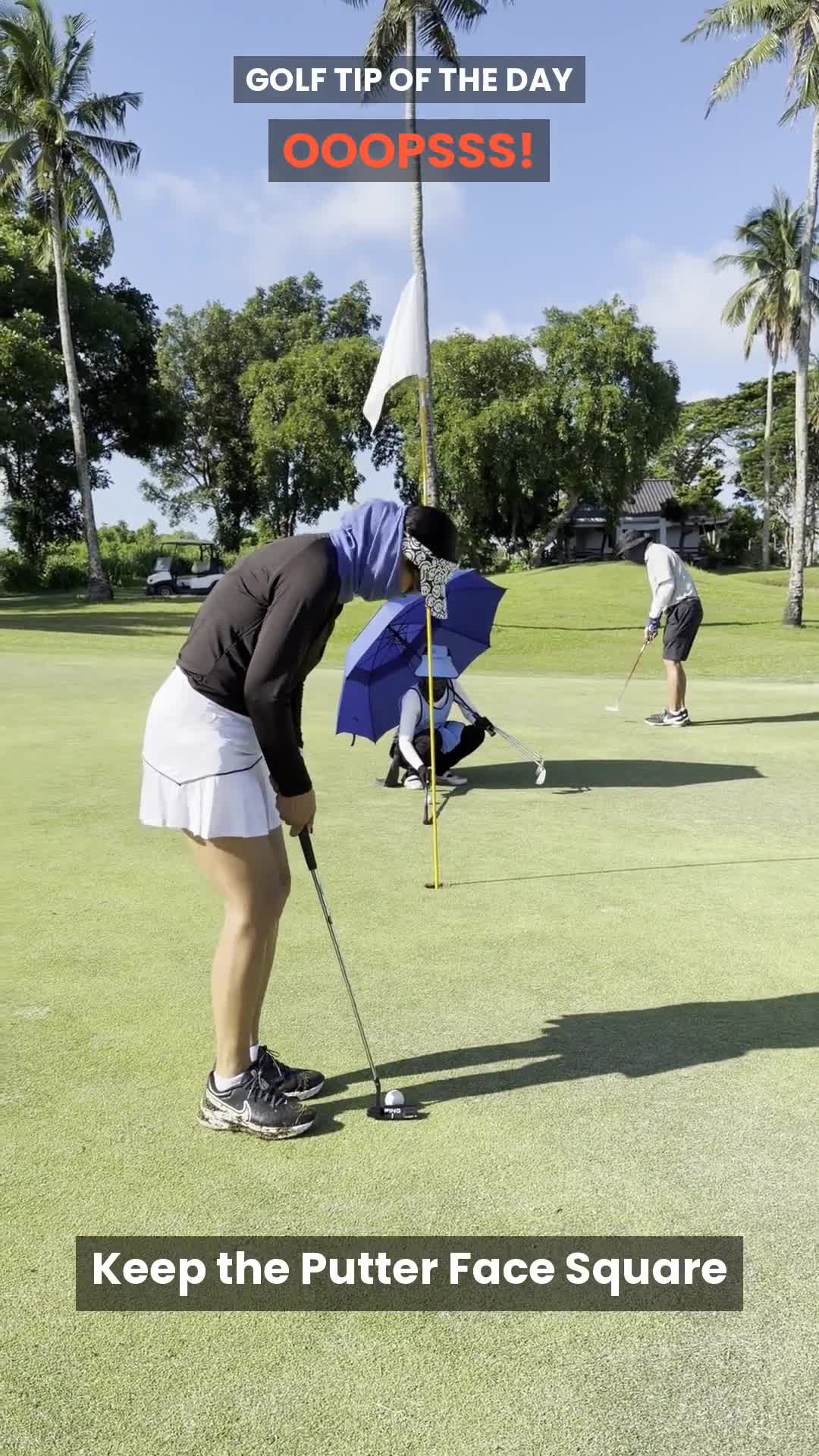
  • Keep the Putter Face Square: The Overlooked Fix for Pulled and Pushed Putts

    Keep the Putter Face Square: The Overlooked Fix for Pulled and Pushed Putts

    There’s a particular kind of frustration in golf that only putting can produce. You read the line, you take what feels like a smooth, committed stroke, and the ball still slides three feet wide of the hole. No wind, no bad bounce, no excuse. Just a putt that missed for reasons that aren’t immediately obvious.

    Nine times out of ten, the culprit isn’t the read. It’s the putter face quietly twisting open or closed somewhere between takeaway and impact, and it’s one of the most common, most fixable faults in putting that almost nobody actually checks for.

    The Putt That “Felt Fine” But Missed Anyway

    Ask most golfers why they missed a putt and the answer usually points to the green: it broke more than expected, it was faster than it looked, the read was off. Green reading absolutely matters, and it deserves attention. But a huge number of missed putts have nothing to do with the read at all. They happen because the putter face wasn’t actually square to the target line at the moment it struck the ball, even though the stroke itself felt smooth and controlled.

    This is a hard fault to self-diagnose because it doesn’t feel like a mistake while it’s happening. A stroke can look rhythmic and confident and still deliver the face a few degrees open or closed at impact, sending an otherwise well-paced putt off line before it ever reaches the part of the green where the break was supposed to take over. The ball doesn’t know the read was correct. It only responds to the face angle and path it actually received.

    Why the Putter Face Twists in the First Place

    The putter face doesn’t twist on its own. It twists because of what the hands and wrists are doing during the stroke, and understanding that connection is the whole key to fixing it.

    A putting stroke is meant to be a simple pendulum, controlled by the rocking of the shoulders, with the hands and wrists staying quiet and along for the ride. The problems start when the hands take over some of that job, which happens more often than most golfers realize, especially under pressure or on longer putts where there’s a temptation to help the ball along.

    Wristy hands introduce rotation. The moment the wrists start hinging or releasing through the stroke instead of staying still, the putter head has room to rotate independently of the shoulders. Even small amounts of wrist action can open or close the face by a few degrees, which is more than enough to send a six-foot putt off line.

    An unstable grip pressure lets the face wander. Gripping too tightly in some fingers and too loosely in others creates uneven tension that shows up as face rotation during the stroke, particularly through impact when the putter is moving fastest.

    Trying to steer the putt makes it worse, not better. Ironically, golfers who consciously try to guide the putter face toward the target with their hands often introduce more face manipulation than golfers who simply let the shoulders rock the putter back and through without interference.

    What a Square Face Actually Looks Like

    The fix isn’t a complicated mechanical overhaul. It’s a return to a simpler stroke where the big muscles do the work and the small muscles stay quiet.

    Let the shoulders, not the hands, power the stroke. Think of the putting stroke as a rocking motion through the shoulders, with the arms and hands moving as a connected, passive unit. When the shoulders control the tempo and length of the stroke, the putter face tends to stay square through impact almost automatically, without any conscious effort to “hold it square.”

    Keep the wrists quiet from takeaway through follow-through. There’s no hinge-and-release action in a good putting stroke the way there is in a full swing. The wrists should feel almost locked, moving only because the shoulders and arms are moving them, not because they’re independently flexing or rotating.

    Check that the face looks the same at both ends of the stroke. At the end of the backswing and again at the finish, the putter face should appear roughly as square as it did at address. If the face has clearly opened on the way back or closed through impact, that’s a visible sign the hands are getting involved somewhere in the stroke.

    Grip with light, even pressure in both hands. A grip that’s too tight, especially in the trail hand, tends to introduce tension that shows up as face rotation. Light, even pressure across both hands gives the putter head freedom to swing on a stable path without fighting against uneven tension.

    A Simple Way to Practice This

    This is one of the easier putting faults to actually train, because it doesn’t require new mechanics, just a return to a simpler motion and a way to get honest feedback on whether the face is staying square.

    On the practice green, set up a short, straight putt of four or five feet and place two clubs or alignment sticks just outside the toe and heel of the putter at address, wide enough for the putter to move freely between them but tight enough that an obviously twisting face would catch on one of the shafts. Make slow, deliberate strokes focusing entirely on rocking the shoulders and keeping the hands passive. If the putter head brushes a shaft, that’s immediate, honest feedback that the face opened or closed somewhere in the stroke.

    It also helps to practice with your eyes closed for a handful of putts on a flat section of green, focusing purely on the feeling of a quiet, shoulder-driven stroke. Without the visual feedback of watching the ball, it becomes easier to notice whether the hands are trying to take over.

    Why This Matters More Than It Seems

    Putting is often the most overlooked part of practice, partly because it doesn’t feel as satisfying to work on as a full swing, and partly because a missed short putt gets blamed on nerves or an unlucky read rather than a face control issue. But a huge share of strokes on the course happen on the green, and small, repeated face-angle errors compound over eighteen holes in a way that’s easy to underestimate.

    A putter face that stays square through impact turns green reading into something that actually pays off. There’s little point in reading a putt perfectly if the stroke itself is going to send the ball off that line anyway. Fixing face control first makes every other part of putting, speed control, green reading, distance judgment, actually matter the way it’s supposed to.

    Common Mistakes Golfers Make With This

    The most common mistake is assuming a missed putt is always a read problem and never checking the stroke itself. This keeps golfers chasing better green-reading skills while the actual fault, a twisting face caused by active hands, goes untouched for years. A second mistake is trying to fix face control by consciously steering the putter face toward the target, which usually adds more hand manipulation rather than removing it. The fix is quieter hands, not more deliberate ones. A third mistake is only checking this on long, dramatic putts, when short putts under three feet are often where a twisting face costs the most strokes, precisely because there’s so little margin for error at that distance.

    FAQ

    How do I know if my putter face is actually twisting, or if it’s just my read that’s off?

    Try the alignment-stick drill on a straight, flat putt. If a face-control issue exists, you’ll usually feel or see the putter head brush against a stick during the stroke even when your read and aim were correct.

    Is a wristy putting stroke always wrong?

    Not universally, some good putters do use a small amount of wrist action, but it has to be consistent and controlled. For most golfers working on face control, removing wrist action first and rebuilding from a simple, shoulder-driven stroke is the more reliable path.

    Does grip style matter for this?

    Grip style matters less than grip pressure and consistency. Whatever grip you use, even, light pressure in both hands tends to reduce unwanted face rotation more than any specific hand placement.

    Key Takeaways

    • Many missed putts are caused by the putter face twisting through impact, not by a bad read.
    • Active hands and wrists are usually the reason the face opens or closes during the stroke.
    • Let the shoulders rock the putter back and through, and keep the wrists quiet throughout.
    • Use an alignment-stick drill to get honest, physical feedback on whether the face is staying square.
    • Fixing face control first makes every other part of putting, especially green reading, actually pay off.
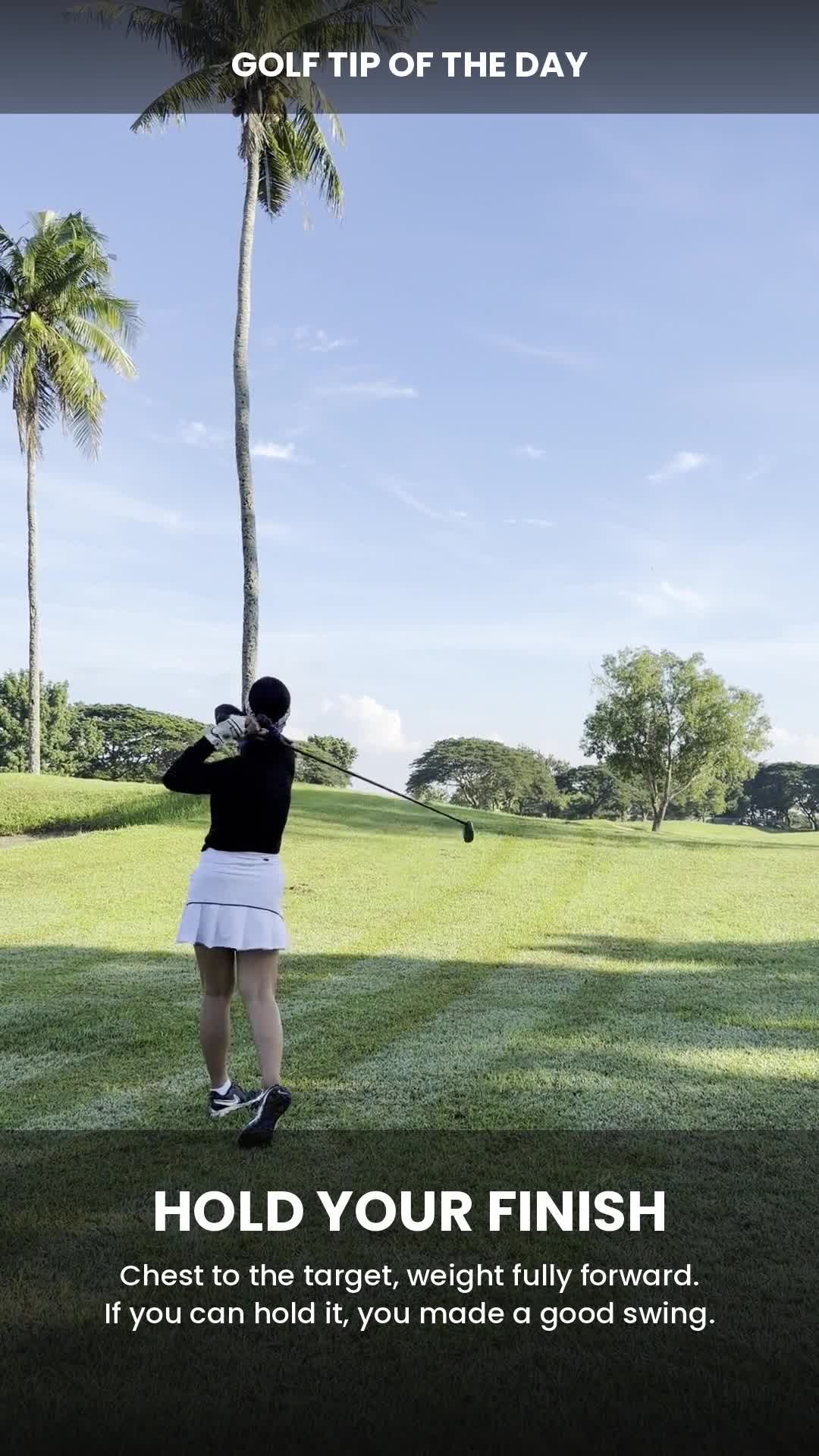
  • Hold Your Finish: The Simple Balance Check That Fixes Your Golf Swing

    Hold Your Finish: The Simple Balance Check That Fixes Your Golf Swing

    Watch any golfer with a swing worth copying and you’ll notice something they all share, and it has nothing to do with how far the ball goes. After the ball is gone, they don’t fall over, stumble forward, or yank the club back down early to catch their balance. They finish the swing, chest facing the target, weight stacked over the front foot, back heel lifted off the ground, and they just stay there. Not because it looks good on camera, but because a swing that ends in that position almost always started correctly too.

    That held finish is one of the most useful, most ignored diagnostic tools in golf. It’s free, it requires no equipment, and it works on every single swing you take, whether you’re on the range or standing over a shot that actually matters.

    Why the Finish Position Tells the Truth

    A golf swing happens too fast to consciously control every moving part. By the time the club reaches the ball, the decisions that mattered were already made, weight shift, sequencing, spine angle, well before impact. What you can control, and what you can actually feel and check, is what your body does in the half-second after the ball is struck.

    The finish position is the receipt for everything that happened before it. If your weight is fully forward, your chest has rotated all the way to face the target, and you can hold that pose without wobbling, it means the energy in your swing moved through the ball in the right direction and at the right time. If instead you find yourself falling backward, stuck on your trail foot, or needing to take a quick step to catch your balance, that’s not a finish problem. It’s a symptom of something that broke down earlier in the swing, usually a rushed transition from backswing to downswing, or weight that never fully committed to the front side.

    This is why a held finish is such a good teaching tool. It turns an invisible, split-second event into something you can actually stand in, feel, and correct.

    What a Good Finish Actually Looks Like

    There are three checkpoints worth running through every time you swing, not just on the range but on the course too, quietly, without turning every shot into a swing analysis session.

    Weight fully on the front foot. By the time the swing is finished, the vast majority of your weight, close to all of it, should have transferred onto your lead leg. If you feel weight still hanging back on your trail foot at the finish, the hips and lower body likely didn’t lead the downswing the way they needed to.

    Chest and belt buckle facing the target. A full, committed rotation through the ball means your torso keeps turning all the way until you’re looking down the fairway, not still angled away from it. A finish where the chest is still pointed off to the side is usually a sign the swing got cut short, often from tension or a subconscious effort to steer the ball rather than swing through it.

    Back heel up, back toe lightly on the ground. This is almost automatic if the first two things happen correctly, but it’s worth checking on its own. A back foot that’s still flat on the ground at the finish often means the lower body stalled instead of rotating fully through impact.

    The Fix: Make Holding the Finish a Habit, Not an Afterthought

    The good news is that this is one of the easier things in golf to actually practice, because it doesn’t require new mechanics. It requires a new habit: finishing the swing and staying there.

    On the range, after every single shot, hold your finish position for a slow three-count before you relax or look up to check ball flight. Don’t peek early. The temptation is always to immediately crane your neck to see where the ball went, but that habit is exactly what lets golfers get away with an unbalanced finish without ever noticing it. Committing to the three-count forces you to feel whether you’re actually balanced or just barely staying upright.

    If you find yourself unable to hold the pose, don’t try to fix it by forcing a better-looking finish artificially. Instead, work backward. A wobbly finish is a downstream symptom, and the actual fix usually lives earlier in the swing, in a smoother transition, a fuller hip turn, or better weight shift starting from the top of the backswing. Holding the finish won’t fix those things directly, but it will tell you, honestly and immediately, whether whatever you just changed actually worked.

    Common Mistakes Golfers Make With This

    The most common mistake is treating the finish as decoration, something that happens after the shot is already decided, rather than as information. Golfers watch the ball, not their own balance, and miss the feedback sitting right there in their own body. A second mistake is faking a good finish, muscling the body into the right-looking position after an off-balance swing, which defeats the entire purpose of using it as a diagnostic. The finish should be the natural result of the swing, not a separate pose tacked onto the end of it. A third mistake is only checking this on the range and forgetting about it entirely once real shots are on the line, which is exactly when the feedback matters most.

    FAQ

    Do I really need to hold the finish on every single swing?

    On the range, yes, it’s worth doing every time so it becomes automatic. On the course, even a mental note of whether you stayed balanced is useful, without needing a dramatic three-count on every hole.

    What if I can make a good swing but still can’t hold the finish?

    That’s usually a balance or tempo issue rather than a mechanics issue. Slowing down your tempo slightly, especially in the transition from backswing to downswing, often solves this on its own.

    Does this apply to every club, or just the driver?

    The same checkpoints apply across the bag, though the finish will naturally look a little more compact on shorter irons and wedges than on a full driver swing.

    Key Takeaways

    • A balanced, held finish is a receipt for a well-sequenced swing, not just a good-looking pose.
    • Check three things: weight fully forward, chest facing the target, back heel lifted.
    • Practice a three-count hold after every range swing before checking ball flight.
    • A wobbly finish points to an earlier fault, usually tempo or weight shift, not something to fix at the finish itself.
    • Make it a habit on the course too, not just something reserved for range sessions.
  • Take Your Medicine: Why the Smart Punch-Out Beats the Hero Shot Every Time

    Take Your Medicine: Why the Smart Punch-Out Beats the Hero Shot Every Time

    Every golfer knows the feeling. Your ball has drifted off line and come to rest somewhere it has no business being, tucked under a low canopy of branches, sitting in a stand of trees, or resting on the wrong side of a hazard entirely. You walk up, take one look at the tiny gap between two branches, and a thought creeps in: maybe I can still get there. Maybe, if the swing is just right, the ball threads the needle and the hole is saved.

    That thought is where a lot of otherwise decent rounds quietly fall apart. The smarter, less glamorous option is almost always the better one: take your medicine. Punch out safely, get the ball back in play, and protect the rest of your round instead of gambling it on a low-percentage shot.

    What “Take Your Medicine” Actually Means

    The phrase is old golf slang, and it says exactly what it means. When you’ve hit a bad shot and ended up in trouble, the smart response is to accept the setback and take the safe way out, rather than trying to erase the mistake with an even riskier follow-up shot. It’s not a glamorous phrase, and it’s not meant to be. It’s an acknowledgment that the shot before this one already cost you something, and the only real question left is how much more it’s going to cost.

    Golfers who take their medicine well tend to have something in common: they treat the recovery shot as its own separate decision, not an extension of the mistake that put them there. The tee shot that ended up under a tree is over and done. What happens next is a fresh choice, made with a clear head about what’s actually possible from that lie, not what would feel most satisfying.

    Why Golfers Reach for the Hero Shot Anyway

    It helps to understand why the miracle escape is so tempting in the first place, because the pull toward it is strong and it’s not really about strategy at all. It’s about ego and about the story we’d rather tell.

    Standing over a ball buried under branches, most golfers do a quick mental inventory: how big is the gap, how confident do I feel, could I actually pull this off. The trouble is that this inventory almost always overestimates the golfer’s own precision under pressure. A gap that looks two feet wide from address often plays much narrower once a driver-length swing, a slightly compressed stance, and adrenaline are added to the equation. The shot that “should” work on a good day rarely accounts for the fact that this isn’t a good day. You’re off balance, rushed, and playing defense before you’ve even swung.

    There’s also a scoring math problem hiding underneath the temptation. Golfers chasing the hero shot are usually thinking about the single hole in front of them, not the round as a whole. A clean escape saves one shot. A blocked branch, a shanked recovery, or a ball that ricochets even deeper into trouble can cost two, three, or more. The hero shot has a modest ceiling and a very expensive floor, and most golfers underestimate exactly how expensive that floor can get.

    The Fix: Play the Percentages, Not the Moment

    Taking your medicine isn’t about giving up. It’s about making the highest-percentage decision available from a compromised position, and it comes down to a few honest questions asked in order, every time.

    Assess the lie and the gap honestly, not hopefully. Before picking a shot, take a genuine look at what’s actually possible, not what would be the most satisfying outcome if everything broke right. Is there truly a clean window to the green, or is that gap really only clean from where you’re standing and not from the ball’s actual flight path? A low branch that looks high enough from twenty feet away often isn’t once you account for the shot’s actual trajectory.

    Identify the safest exit, not the most direct one. The safe path back to the fairway is rarely the shortest line to the pin. It might mean hitting sideways, or even slightly backward, just to get clear of trouble. That can feel like giving something away, but a clean lie in the fairway, even well short of where you’d like to be, is worth more than a repeated gamble from an even worse spot.

    Pick a club and swing built for control, not distance. Recovery shots are not the moment to reach for extra club or a fuller swing trying to make up lost ground. A shorter, three-quarter swing with more club in hand almost always produces a more reliable strike than a full swing squeezed through a tight window.

    Commit fully to the decision you’ve made. Once you’ve chosen the safe route, swing it like you mean it. A half-hearted punch-out, swung tentatively because part of you is still wishing you’d gone for the hero shot, often ends up worse than either full commitment option. Decide, then commit.

    A Simple Way to Practice This

    The instinct to take your medicine is hard to build in the moment, because every buried lie feels urgent and personal. It helps to rehearse the decision-making process away from the pressure of an actual round.

    On the range, deliberately practice low, three-quarter punch shots with a mid-iron, aiming for a modest, specific landing area rather than maximum distance. Get comfortable with what a controlled, lower-trajectory swing feels like so it isn’t a foreign move when you actually need it on the course. It’s also worth mentally rehearsing the “two options” framework before you play: for any ball that ends up in trouble, name the hero shot and the safe shot out loud, even just in your head, before choosing. Making the comparison explicit, instead of drifting straight toward the exciting option, is often enough to tip the decision toward the smarter one.

    Why This Matters More Than It Seems

    Recovery shots don’t show up on a scorecard as their own category, but they quietly decide more rounds than most golfers realize. A single poor decision in the trees can turn a bogey into a double or worse, and those extra strokes tend to happen exactly when a round is already fragile, right after a mistake, when frustration is already creeping in.

    Golfers who consistently take their medicine aren’t playing more conservatively out of fear. They’re recognizing that the round is long, that one hole rarely needs to be a hero moment, and that protecting against the big number is usually a better use of a swing than chasing a highlight. Over eighteen holes, it’s not the two or three genuinely great escapes that build a good score. It’s how rarely a single bad shot is allowed to become two or three bad shots in a row.

    Common Mistakes Golfers Make With This

    The most common mistake is treating this as a one-time decision made in a panic, rather than a habit built ahead of time. Golfers who haven’t decided in advance how they’ll handle trouble tend to make the call emotionally, in the ten seconds after walking up to a bad lie, which is exactly when judgment is least reliable. A second mistake is choosing the safe route but then still swinging aggressively, trying to sneak a little extra distance out of what was supposed to be a conservative shot. That undoes the whole point of the decision. A third mistake is beating yourself up over having to take the safe route at all, as if it’s an admission of failure. It isn’t. It’s simply the correct response to a shot that already went wrong, and treating it as anything else just adds unnecessary pressure to the next swing.

    FAQ

    Isn’t taking the safe shot just giving up on the hole?

    Not really. You already gave something up when the ball ended up in trouble. Taking your medicine is about not giving up more than necessary on top of that.

    How do I know when the hero shot is actually worth trying?

    If the gap is genuinely clear, the lie is clean, and a miss still leaves you somewhere manageable, it may be a reasonable, calculated risk. If a miss puts you in a worse spot than you’re already in, it almost never is.

    Does this only apply to shots from the trees?

    No. The same logic applies to any recovery situation, deep rough, awkward stances, balls under a cart path lip, or lies close to a hazard. The core question is always the same: what’s the safest way back into play, and can I commit to it fully?

    Key Takeaways

    • A bad lie is a fresh decision, not an extension of the shot that put you there.
    • The hero shot has a low ceiling and a very expensive floor. Most golfers underestimate how bad the miss can be.
    • Choose the safest exit, not the most direct one, and pick a club and swing built for control.
    • Commit fully once you’ve decided. A half-hearted safe shot is often worse than either full option.
    • Protecting against the big number matters more over a full round than the occasional spectacular escape.
  • Aim for the Fat of the Green: The Course Management Habit That Saves Strokes

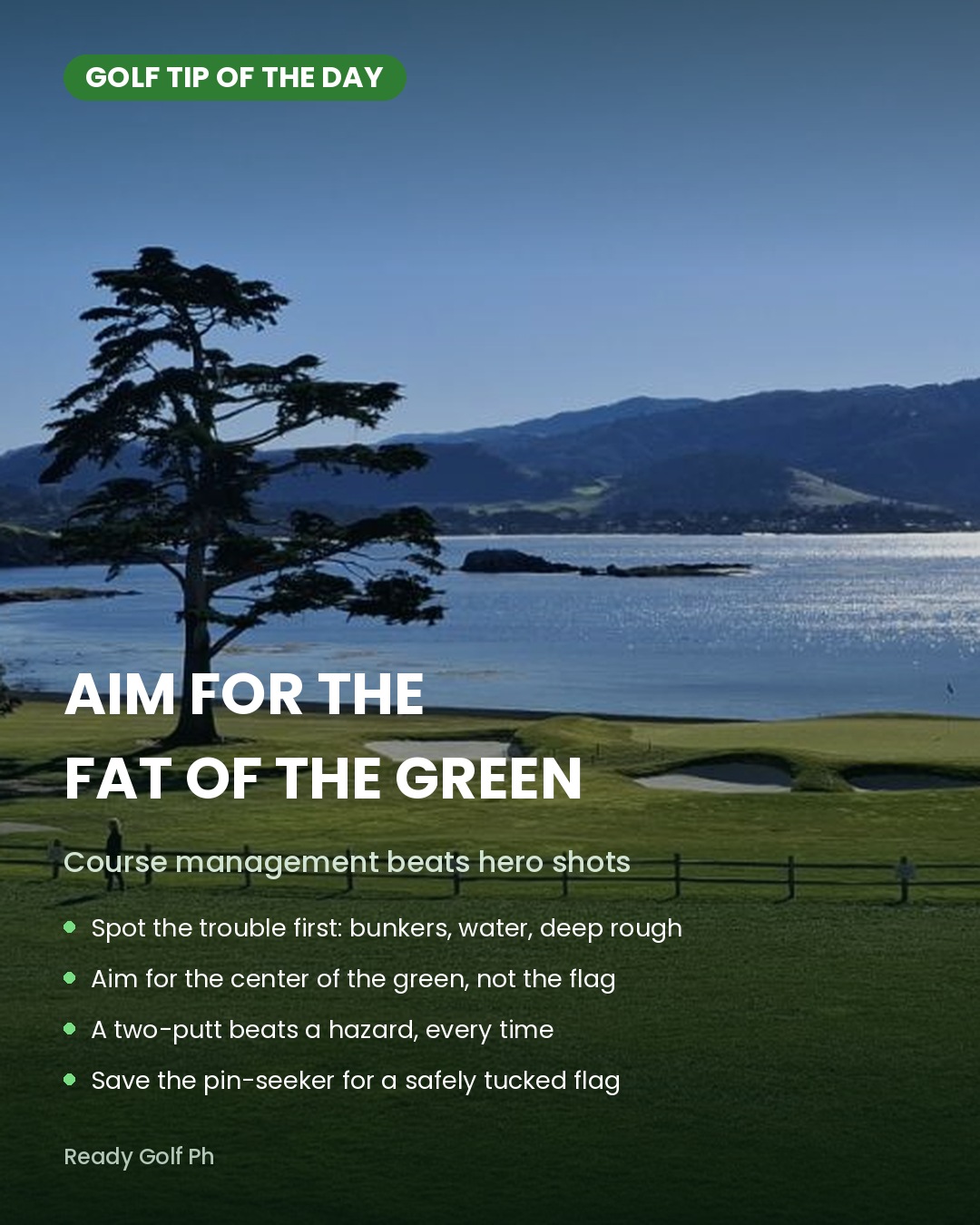
    Aim for the Fat of the Green: The Course Management Habit That Saves Strokes

    There is a particular kind of hole that shows up on almost every course worth playing: the flag tucked just behind a bunker, or perched a few paces from the water’s edge, daring you to take it on directly. It looks great in photos. It is also where a lot of good rounds quietly come apart, because the pin position is not actually the target. It just looks like one.

    Course management is the unglamorous half of golf that never makes the highlight reel, but it is often the difference between a round that holds together and one that blows up on a single hole. And one of the simplest course management habits a golfer can build is also one of the most overlooked: when trouble guards the flag, aim for the center of the green instead of the pin.

    Why the Flag Isn’t Always the Target

    It’s an easy trap to fall into. The flag is the thing you’re looking at, so it becomes the thing you aim at, almost by default. But the flag is just where the hole happens to be cut that day. The green is the actual target, and greens are usually far more forgiving than the six feet of grass immediately around the cup.

    When the pin is tucked behind a bunker or hugging a water line, the shot that finds the flag and the shot that finds the hazard often start out looking identical in the first half-second after impact. A few yards of curve, a touch of mishit, a gust of wind, and the ball that was tracking the flag is now sitting in sand or, worse, not sitting anywhere at all. The center of the green rarely punishes a small miss that harshly. Miss short, long, left, or right of center and you are usually still putting. Miss short or long of a tucked pin guarded by a hazard and you may be chipping, or worse, re-hitting.

    The Fix: Play to the Fat of the Green

    This is not a complicated adjustment, and it does not require a better swing. It requires a different decision before the swing even starts.

    Find the hazards before you find the flag. Before picking a target, take a second to actually notice what is guarding the pin. Bunkers, water, a false front, deep rough. Knowing where the trouble sits is the first step to playing away from it on purpose instead of drifting toward it by accident.

    Pick the center of the green as your default target. Unless the pin is sitting in open, unguarded territory, aim for the middle of the putting surface. It is a bigger, safer target than the flag, and it turns a risky approach into a routine one.

    Let the club do the work, not the moment. Choose enough club to comfortably reach the center without forcing a swing to squeeze extra distance out of a shot. Most balls that come up short into a hazard were hit with a club that needed a perfect strike to get there.

    Accept the longer putt as a win. A thirty-foot putt from the center of the green is a fine result. It is almost always a better outcome than a hazard, and it keeps the hole, and the round, moving in the right direction.

    A Simple Way to Practice This

    Course management habits are hard to build on the course because the moment feels high-stakes even on a casual round. Practice range sessions are a better place to install the habit before it matters. Pick an imaginary pin position tucked in a corner of the practice green, then imagine a bunker or hazard sitting just in front of it. Hit a series of approach shots aimed at the center of an imaginary green instead of the tucked pin, and pay attention to how much more freely you can swing when the target is generous instead of tight. That looser, more committed swing is usually the one that produces the better strike anyway.

    On the course, a good place to start applying this deliberately is on any approach shot into a par 4 or par 5 where you can see a hazard tight to the pin from the fairway. Make the center-of-green decision before you pull a club, not after you’re already standing over the ball second-guessing it.

    Why This Matters More Than It Seems

    Course management rarely feels dramatic in the moment. Choosing the center of the green over the flag doesn’t feel like a bold decision, it feels almost like giving something up. But scoring well over eighteen holes is less about the handful of shots that go beautifully and more about how few shots go disastrously. Big numbers come from compounding mistakes: a missed green into a hazard, followed by a penalty drop, followed by a rushed recovery shot trying to make up for it. Taking the hazard out of play on the approach removes the entire chain before it starts.

    This is also a habit that scales with how a course is set up to test golfers. Course designers put hazards next to pins specifically because they know most players will still aim at the flag anyway. Recognizing that and declining the bait is one of the quieter ways a golfer can consistently play a hole “as designed” rather than as tempted.

    Common Mistakes Golfers Make With This

    The most common mistake is only applying this thinking on approach shots into greens, when the same logic works for tee shots on holes with trouble down one side, and even for chips played toward a tucked pin. A second mistake is deciding to play safe but still selecting a club or swing meant for an aggressive shot, which undoes the whole decision. If you’re aiming center, commit to a swing built for that target, not a compromise between the two. A third mistake is treating this as giving up on scoring well. In practice, the golfers who play to the fat of the green consistently tend to card fewer big numbers than the ones who fire at every flag, which is usually the faster route to a lower score.

    FAQ

    Doesn’t aiming for the center of the green mean I’ll never make birdies?

    No. You’ll still have plenty of makeable putts from the center of most greens, and you’ll have far fewer blow-up holes. Fewer big numbers usually lowers a score more than a handful of extra birdie looks raises it.

    How do I know when it’s safe to aim at the flag instead?

    When the pin is not closely guarded by a bunker, water, or a steep slope, and you have a comfortable club in hand, going at the flag is a reasonable, lower-risk decision.

    Does this apply to short game shots too?

    Yes. Chipping or pitching to the fat of the green rather than a tightly tucked pin follows the same logic and is often the smarter play around greens guarded by bunkers.

    Key Takeaways

    • The flag is not always the real target. The green is, and it is usually far more forgiving than the ground right around the cup.
    • Spot the hazards guarding the pin before you choose a target, not after you’re already over the ball.
    • Aiming for the center of the green turns a risky approach into a routine one, without requiring a better swing.
    • A longer putt from the center of the green beats a short one from a hazard almost every time.
    • Save the aggressive, pin-seeking shot for when the flag is genuinely unguarded.
  • Visualize Your Shot Before You Swing: The Mental Habit That Sharpens Every Round

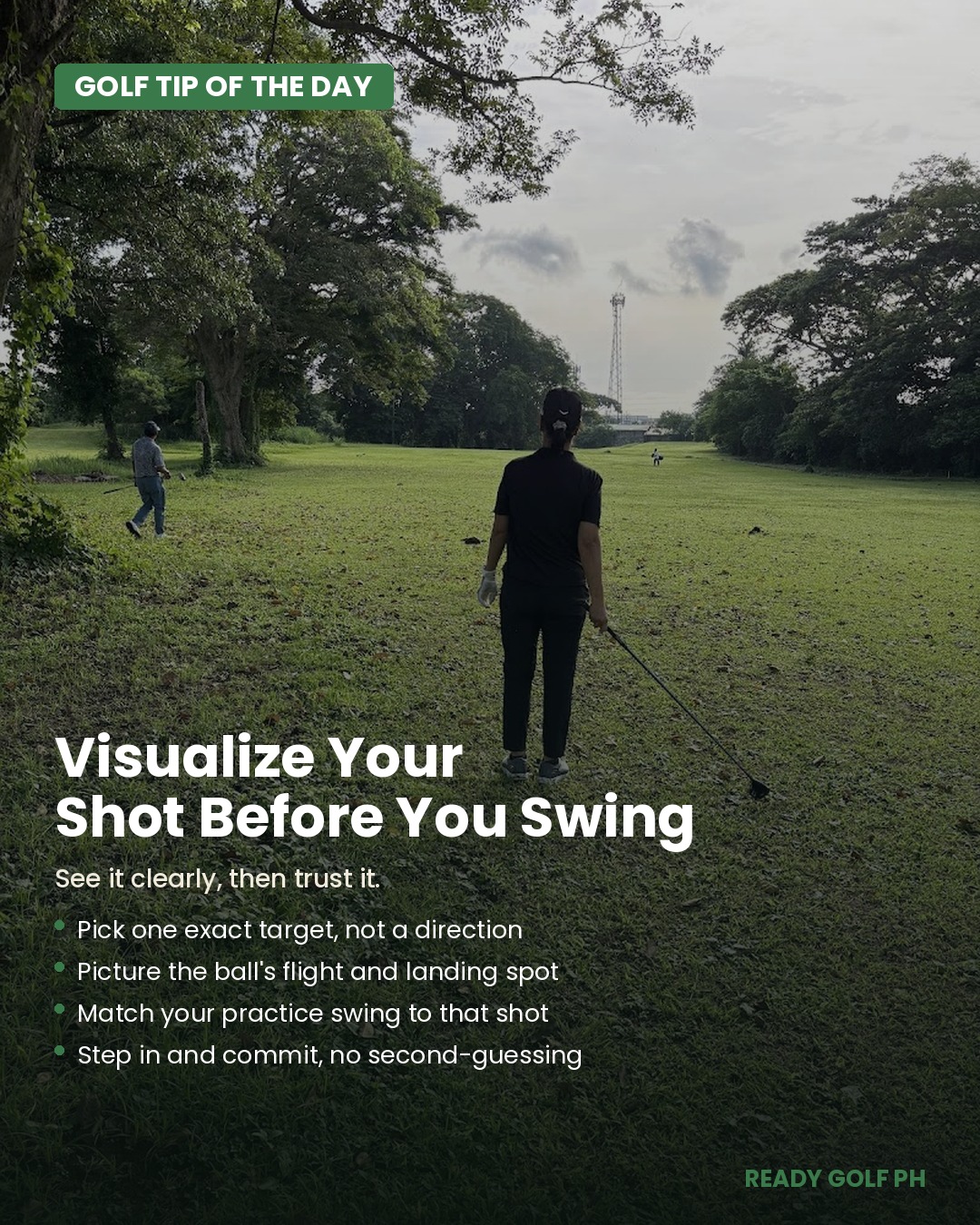
    Visualize Your Shot Before You Swing: The Mental Habit That Sharpens Every Round

    Watch a group of weekend golfers from a distance and you can usually tell who is about to hit well before the club ever moves. Some players walk up, glance at the general area they’re aiming for, and swing. Others pause, even if only for two or three seconds, and you can almost see them picture something before they settle in. That pause is not superstition and it is not a stalling tactic. It is one of the simplest, most repeatable habits in golf, and it costs nothing except a few seconds of attention you were probably not using well anyway.

    Visualizing your shot means forming a clear, specific picture of what you want to happen before you ever take the club back: the exact target, the shape of the flight, and where the ball comes to rest. It sounds almost too simple to matter. In practice, it is one of the few mental habits that measurably tightens a golfer’s misses, because a vague intention produces a vague swing, and a specific picture gives your body something precise to organize itself around.

    Why a Vague Target Produces a Vague Shot

    Most amateur golfers aim at things that are far too big. “That side of the fairway.” “Somewhere near the green.” “Away from the water.” These are not targets, they are zones, and a zone gives your swing nothing specific to commit to. When your mind is holding a fuzzy intention, your body tends to make a fuzzy motion to match it, and the miss that results is often bigger and less predictable than it needs to be.

    Compare that to a golfer who picks a single point, a particular leaf on a tree at the edge of the fairway, the left edge of a bunker, a specific spot on the green ten feet past the flag, and holds that one point in mind through the whole shot. Even when that shot misses, it tends to miss by less, because there was something precise to miss from. The target does not guarantee a good result, but it consistently narrows the range of bad ones, which over eighteen holes adds up to noticeably fewer big numbers on the card.

    The Fix: See It, Then Trust It

    The process is short enough that it will never slow down your pace of play, which matters if you’re also trying to play ready golf and keep your group moving. It breaks down into four small steps that take a matter of seconds once they become habit.

    Pick one exact target, not a direction. Before you do anything else, choose a single specific point, not a side of the fairway or a general area of the green. The more specific, the better your mind has something concrete to lock onto.

    Picture the ball’s flight and landing spot. See the shot happen before you hit it: the trajectory it takes off the club, whether it draws or fades slightly, and where exactly it lands and rolls out to. This does not need to be a vivid, cinematic mental movie. Even a rough, quick image is far more useful than no image at all.

    Match your practice swing to that shot. Your practice swing should feel like a rehearsal of the specific shot you just pictured, not a generic loosen-up motion. If you saw a smooth, controlled swing in your head, your practice swing should feel smooth and controlled too, not rushed or tentative.

    Step in and commit, no second-guessing. Once you’ve seen the shot and rehearsed it, step up to the ball and go. This is the step golfers skip most often. They visualize a shot, then stand over the ball and start negotiating with themselves about club choice or swing thoughts, which erases most of the benefit of the visualization in the first place. Once you’ve pictured it, the job left is simply to let that picture happen.

    A Simple Drill to Build the Habit

    Visualization is easy to understand and surprisingly easy to forget under pressure, so it helps to build it deliberately rather than hoping it shows up on its own. On the driving range, before every third or fourth ball, stop and actually name your target out loud or in your head, something specific like “the yellow flag, twenty yards left of it.” Picture the flight for a second or two, then hit. Compare how that shot feels and where it goes against the balls you hit without doing this. Most golfers notice the difference within a single bucket.

    On the course, a low-pressure way to build the habit is to apply it only on tee shots at first, since there is more time and less immediate pressure than on approach shots or shots around the green. Once picking a precise target and picturing the shot becomes automatic off the tee, it naturally starts showing up on approach shots, chips, and even putts, where “seeing the line” is really the same skill applied to a shorter, slower shot.

    Why It Matters Beyond Just Aim

    The value of visualization goes a little deeper than simply picking a better target. It also quiets the parts of your mind that tend to interfere with a good swing. When you are actively picturing a specific, positive outcome, there is less mental room left over for the doubts and mechanical thoughts that tend to creep in over the ball, the ones about keeping your head down, not looking up early, or remembering five different swing thoughts at once. A clear picture of the shot you want tends to crowd out the noise about the shot you’re afraid of.

    This is part of why golf gets described as a game played twice, once in the mind and once for real. The swing itself happens in a second or two and is largely reactive by that point; most of the actual decision-making and shot-shaping happens in the moments right before it, whether a golfer realizes that or not. Golfers who are deliberate about that mental rehearsal tend to give their body clearer instructions, and a body with clear instructions generally performs them more consistently than one working from a vague sense of “just don’t hit it right.”

    Common Mistakes Golfers Make With Visualization

    The most common mistake is picking a target that is too general, an entire section of fairway rather than one specific point within it, which weakens the whole exercise before it starts. A second is visualizing the shot and then standing over the ball too long afterward, giving second thoughts enough time to creep back in and undo the clarity that was just built. A third is only using visualization on tee shots, when the same habit applied to putts and chips, picturing the ball rolling into the hole or landing on a specific spot before it lands there, tends to pay off just as much, if not more, given how much of a round is spent inside a hundred yards.

    FAQ

    Do I need to see a perfectly detailed mental picture for this to work?

    No. Even a rough, quick image of the target and the general shot shape is far more useful than swinging with no picture at all. This does not need to be an elaborate visualization exercise.

    How long should I take to visualize before each shot?

    A few seconds is enough. The goal is a clear, brief picture, not a long pause that slows down your group or gives doubt time to creep back in.

    Does this work for putting too?

    Yes, and for many golfers it matters even more there. Picturing the exact line and the ball falling into the hole before you putt applies the same principle to the shortest, most detail-sensitive part of the game.

    Key Takeaways

    • A vague target produces a vague swing; picking one exact point instead of a general area tightens your misses.
    • Visualizing the ball’s flight and landing spot before you swing gives your body something specific to organize itself around.
    • Your practice swing should rehearse the exact shot you pictured, not act as a generic warm-up motion.
    • Commit once you’ve visualized the shot. Standing over the ball too long afterward invites second-guessing that undoes the benefit.
    • The habit applies beyond tee shots. Chips and putts benefit from the same clear, specific picture before you play them.
  • Play Ready Golf: The Pace-of-Play Habits That Keep Everyone Happy

    Play Ready Golf: The Pace-of-Play Habits That Keep Everyone Happy

    Every golfer has played behind a group that turned a four-hour round into a five-and-a-half-hour one. Nobody in that group meant any harm. They just never learned the small habits that keep a round moving, and by the time the frustration builds up in the groups behind them, it is too late to fix it mid-round. “Ready golf” is the fix, and it is a lot simpler than most players assume. It does not mean rushing your swing or skipping your routine. It means being prepared to play the moment it is your turn, instead of starting your preparation only after everyone is already watching and waiting.

    What Ready Golf Actually Means

    The term gets misunderstood a lot. Some golfers hear “ready golf” and picture rushed swings, skipped routines, or a free-for-all where etiquette goes out the window. That is not it at all. Ready golf simply means playing out of the strict “honors” order, where the player farthest from the hole always hits first, and instead playing whenever you are ready and it is safe to do so. If your ball is sitting closer to the green but you are still sixty yards out searching for a comfortable stance while your partner is already teed up and set, there is no reason to make them wait for you to catch up to a technically “correct” order.

    The bigger, more overlooked half of ready golf, though, has nothing to do with hitting order. It is about using the time before your shot productively instead of only starting to think about the shot once it is officially your turn. That shift alone, done by every player in a group, can shave twenty to thirty minutes off a round without anyone swinging a single club faster than they normally would.

    Why Pace of Play Matters More Than Most Golfers Realize

    A slow round does not just annoy the group playing behind you, though that is real too. It changes the way you play. Long, dead gaps between shots let nerves creep in, let a bad hole fester in your head for an extra ten minutes before you get a chance to hit again, and generally drain the enjoyment out of what should be a relaxed few hours outside. Golf courses build their tee sheets around an expected pace, and when one group falls behind, it has a ripple effect on every group behind them for the rest of the day, turning a course-wide problem into something that shows up in reviews, in members’ patience, and eventually in whether people want to book that group again.

    None of this requires playing worse golf or feeling rushed. It requires being deliberate about the parts of a round that have nothing to do with your actual swing: walking, club selection, and search time.

    Be Ready Before It’s Your Turn

    The single biggest pace-of-play habit is simple: use the time while others are hitting to get yourself ready, not to start getting ready. While you are walking to your ball, start thinking about the yardage, the wind, and the shot shape you want. By the time you arrive, you should already have a rough idea of the club, so pulling it and confirming the number takes seconds instead of a full minute of deliberation. If you are wearing a glove, it should already be on. If you are choosing between two clubs, make that decision while walking, not while your entire group stands around watching you flip between a 7-iron and an 8-iron.

    This same principle applies on the tee. Whoever is up next should be pulling their club, taking a look at the hole, and mentally rehearsing their shot while the current player is finishing theirs, not starting that process only after the previous ball has landed. A group where every player does this moves noticeably faster than a group where each shot is treated as its own isolated event with a full reset in between.

    One Practice Swing Is Plenty

    Practice swings feel harmless in the moment, but they add up fast across eighteen holes and four players. Two practice swings per player per shot, multiplied out across roughly seventy shots in an average round for four golfers, adds up to a genuinely significant chunk of time, most of which has little measurable effect on the actual shot that follows. One relaxed practice swing to check your tempo and setup is enough for the vast majority of golfers. If you find yourself taking three or four before nearly every shot, that habit is very likely costing your group more time than any other single factor in your pace of play.

    This is not about eliminating practice swings altogether. It is about noticing when the habit has crept from “helpful routine” into “stalling,” and trimming it back to what actually helps you hit the shot.

    Searching for a Lost Ball? Wave the Group Behind You Through

    Few things slow down an entire course faster than one group spending eight or ten minutes combing the rough for a single ball while the group behind sits idle on the tee. The fix here is not to skip the search, since nobody wants to just abandon a ball without a fair look. The fix is to recognize quickly when a search is taking a while and wave the group behind through before it becomes a real delay, rather than after they have already been standing around for several minutes.

    Most local rules and general etiquette suggest a search shouldn’t run past a few minutes before you consider dropping and moving on anyway. Treat that same window as your cue to invite the group behind to play through if you’re still looking. It costs you almost nothing, it is one of the most appreciated gestures in golf, and it turns a moment that could create real frustration into a small act of course courtesy that people remember and return.

    Walk With Purpose Between Shots

    The gaps between shots are where most of a slow round’s time actually disappears, not the swings themselves. Walking briskly but comfortably from shot to shot, rather than strolling and chatting at a leisurely pace with your golf bag in tow, makes a bigger difference to overall pace than almost anything else in your game. This does not mean turning a relaxed round into a race. It means noticing when your group has drifted into a slower rhythm than the course actually needs, and picking the pace back up without anyone feeling like the fun got sacrificed for the sake of speed.

    Carts help with this, but even walking groups can move efficiently by parking bags on the side of the green closest to the next tee, so nobody has to backtrack to retrieve clubs after putting out.

    Ready Golf Is a Group Habit, Not a Solo One

    The honest truth about pace of play is that it is very hard for one disciplined player to fix a slow group on their own. If three players in a foursome are being deliberate about staying ready while one player treats every shot as a leisurely, unhurried event, the group will still play slowly, because the whole group moves at the pace of its slowest link. The good news is that these habits are contagious in the other direction too. One or two players who consistently stay ready, walk with purpose, and keep their practice swings in check tend to gently pull the rest of the group into the same rhythm over a few holes, especially when nobody has to say a word about it.

    That is really the spirit behind “ready golf” as a name and as a philosophy: showing up prepared, respecting the people you are playing with, and treating the course as something you share with everyone else out there that day, not just the group in front of or behind you.

    Common Mistakes Golfers Make With Pace of Play

    The most common mistake is confusing ready golf with rushed golf, which leads some players to overcorrect by skipping pre-shot routines entirely and playing worse as a result. The actual goal is preparation, not speed for its own sake. A second common mistake is waiting until you are already standing over the ball to start thinking about club selection and shot shape, instead of using the walk to your ball for that decision-making. A third is letting a ball search run long without checking behind you, which turns a minor delay into a real bottleneck for everyone on the course that day.

    FAQ

    Does playing ready golf mean I have to rush my shots?

    No. Ready golf is about using time before your shot efficiently, not about swinging faster or skipping your normal routine once you’re actually over the ball.

    Is it rude to play out of the standard honors order?

    Not in casual or recreational rounds. Ready golf, playing whenever you’re safely able to rather than strictly by who’s farthest from the hole, is widely accepted etiquette specifically because it keeps rounds moving.

    How long should I search for a lost ball before waving others through?

    A few minutes is a reasonable guideline. If your search is running longer than that and a group is waiting behind you, invite them to play through.

    Key Takeaways

    • Ready golf means being prepared to play the moment it’s safely your turn, not hitting in a strict honors order or rushing your swing.
    • Using the walk to your ball to think about yardage and club selection saves real time without changing how you actually play the shot.
    • One relaxed practice swing is enough for most golfers; extra practice swings add up fast across a full round.
    • Waving a group through during a long ball search is one of the most appreciated, low-cost courtesies in golf.
    • Pace of play is a group habit — a couple of ready, purposeful players can pull an entire foursome into a better rhythm.
  • Get a Second Set of Eyes on Your Swing: Why Coaching Beats Guessing

    Get a Second Set of Eyes on Your Swing: Why Coaching Beats Guessing

    Every golfer has had this moment: you hit a shot that felt perfect, only to watch it slice into the trees, or you three-putt a green you were sure you read correctly. The gap between what a swing feels like and what it actually looks like is one of the strangest things about this game, and it is also one of the main reasons golfers plateau. You cannot fix a flaw you cannot feel. That is exactly the gap a coach, a playing partner, or even your own phone camera is built to close.

    The Blind Spot Every Golfer Has

    Golf is unusual among sports in how little useful feedback your body gives you in the moment. A basketball player can see the ball miss the rim. A tennis player watches the ball sail past the line. But a golf swing happens in under two seconds, most of it outside your own field of vision, and your brain fills in the gaps with what it expects to feel rather than what actually happened. This is why a golfer can swear their weight stayed forward through impact while video shows the exact opposite, or feel like they made a full turn on the backswing when they barely rotated past parallel.

    This is not a beginner problem. It happens at every level, from first-timers to scratch players, because it is not a knowledge problem, it is a feedback problem. You are trying to fix something you cannot accurately observe about yourself. That is precisely the situation a second set of eyes is designed to solve.

    Why a Coach Sees What You Cannot

    A golf coach’s real value is not that they know more swing theory than you could look up yourself. Plenty of solid instruction is freely available. What a coach actually provides is an outside vantage point on your specific swing, in real time, with the experience to know which flaw is actually causing your miss versus which one is just a symptom.

    Take a golfer who consistently pushes the ball right. They might assume their grip is the problem and spend weeks adjusting it, when the real cause is that their hips are sliding laterally instead of rotating, something they cannot feel from the inside but a coach spots within a few swings. Without that outside perspective, it is easy to spend months chasing the wrong fix, getting frustrated, and concluding that golf just is not a game you are good at, when the actual issue was a fifteen-minute conversation away from being identified.

    A single lesson does not need to turn into a standing weekly commitment to be worth it. Many golfers get real, lasting value out of one focused session per season, ideally scheduled right when a specific problem shows up rather than as a vague tune-up. Walking in with a clear question, such as “why do my irons come out low and thin,” gets you far more useful feedback than a general “watch me hit some balls” session.

    Your Playing Partners Are an Underused Resource

    Not every round needs to end with a trip to the pro shop to book a lesson. The people you already play with are a free, constant source of the same kind of outside perspective, if you use them intentionally. Most golfers focus entirely on their own game during a round and rarely watch their playing partners closely enough to say anything useful, but a simple agreement before you tee off can change that. Ask a buddy to watch your setup and your takeaway on a few holes, and offer to do the same for them.

    This works because setup and alignment errors are some of the easiest flaws to spot from the outside and some of the hardest to feel from the inside. A closed clubface at address, a ball position that has crept too far back in your stance, shoulders that are subtly aimed right of the target, these are all things a friend standing a few feet away can see clearly in a single glance, while you have no way of checking them yourself mid-round without a mirror. Trading this kind of feedback costs nothing and turns a casual round into a genuinely useful practice session.

    Your Phone Is a Coaching Tool You Already Own

    If a lesson is not in the budget this month and your playing partners are focused on their own game, there is a third option available to every golfer with a smartphone: record your own swing. Video is uniquely valuable because it removes the guesswork entirely. You are no longer trying to reconcile what a swing felt like against what a coach or friend says they saw. You simply watch it.

    Prop your phone against a golf bag or a bench, angle it so your full swing is in frame from a face-on or down-the-line view, and record a handful of swings during a practice session or even on the range before a round. You do not need swing analysis software or slow-motion breakdowns to get value from this. Simply watching your own swing back a few times, comparing it honestly to what it felt like as you hit the shot, will surface things you had no idea were happening: a bent lead arm, a head that dips at impact, a backswing that stops well short of where it feels like it does.

    The habit matters more than the technology. A golfer who records swings every few range sessions and actually reviews them will improve their self-awareness faster than a golfer who owns expensive launch monitor data but never looks at it critically.

    Building Feedback Into Your Regular Game

    The common thread across a coach, a playing partner, and a phone camera is that all three interrupt the guessing that otherwise dominates how golfers try to improve. Left alone, most golfers make a change, hit a few good shots, assume the change worked, and move on, without ever confirming that what they did matches what they intended to do. Outside feedback, in whatever form is available on a given day, breaks that cycle.

    This does not require an overhaul of how you approach the game. It requires treating feedback as a regular ingredient rather than an occasional emergency measure reserved for when your game falls apart. Book that one seasonal lesson before frustration builds, not after. Ask a buddy to watch your setup on a normal Saturday round, not just when you are struggling. Record a few range swings the next time you are already there with your phone in your pocket. None of these require extra time carved out of your week, just a small shift in how you use the golf you are already playing.

    Common Mistakes Golfers Make With Feedback

    The most common mistake is waiting until a swing completely falls apart before seeking any outside perspective, which turns a quick fix into a much longer rebuilding process. A related mistake is only ever practicing and playing alone, which feels efficient but removes the one resource, another person’s eyes, that catches the flaws you are structurally unable to see yourself. Finally, many golfers who do record their swing on video watch it once, feel discouraged by the gap between feeling and reality, and never do it again, when the real value comes from making it a repeated habit rather than a one-time reality check.

    FAQ

    How often should I actually get a lesson if I play recreationally?

    Even one well-timed lesson per season, focused on a specific issue rather than a general checkup, delivers real value for most recreational golfers.

    What should I ask a playing partner to watch for if they are not a golf expert?

    Stick to simple, visible things: does your clubface look square at address, does your ball position look consistent, does your head or upper body sway noticeably during the swing. You do not need a technical expert to catch these.

    Is filming my swing on a phone actually useful without professional software?

    Yes. Simply watching your own swing back, without any analysis tools, is often enough to catch flaws you could not feel, especially if you compare it honestly to what the swing felt like in the moment.

    Key Takeaways

    • Golf gives you almost no reliable in-the-moment feedback about what your swing actually looks like, which is why self-diagnosis so often misses the real problem.
    • A coach’s biggest value is an outside, experienced vantage point that separates the real cause of a miss from its symptoms, not simply more swing theory.
    • Playing partners are a free, underused source of setup and alignment feedback if you agree to watch each other intentionally.
    • Recording your own swing on a phone removes the guesswork between how a shot felt and what actually happened.
    • Feedback works best as a regular habit, not an emergency measure reserved for when your game has already fallen apart.
  • Read the Green Before You Putt: A Simple Routine for Truer Lines

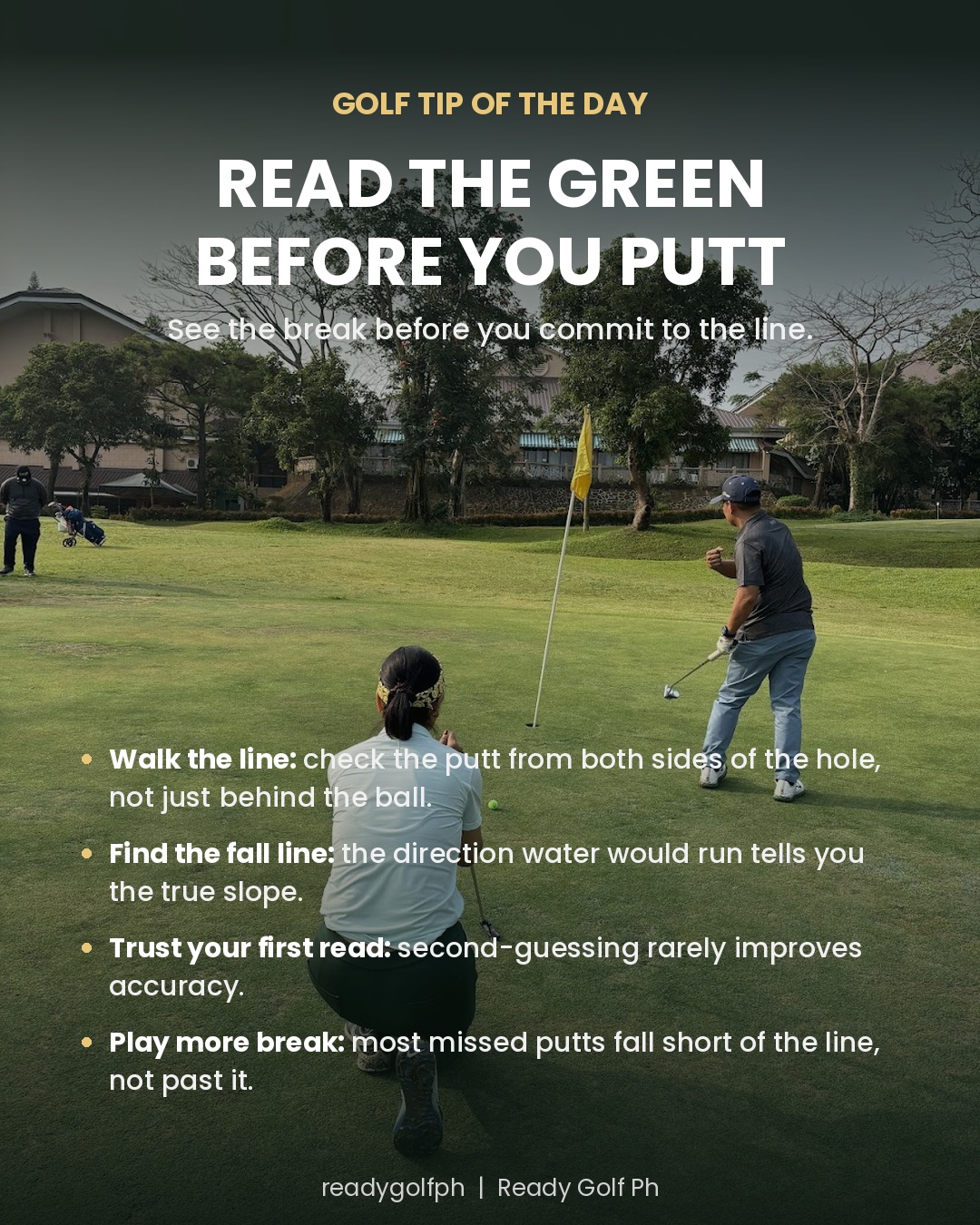
    Read the Green Before You Putt: A Simple Routine for Truer Lines

    Most golfers think of green reading as a talent some players are simply born with, a mysterious feel that either you have or you don’t. In reality, reading a green well is closer to a checklist than a gift. A handful of repeatable habits, done in the same order before every putt, will produce a truer read far more often than instinct alone, no matter how many years you have been playing.

    Why the Same Putt Looks Different From Different Angles

    A green rarely looks the same from two different spots. Slope that is invisible from directly behind the ball can become obvious from the low side of the hole, and a putt that looks straight from one angle can reveal a clear break from another. This is the single biggest reason golfers misread putts: they form their read from only one vantage point, usually just behind the ball, and never confirm it from anywhere else.

    Walking the line and checking the putt from multiple angles is not a slow, tour-pro affectation. It is the most direct way to catch a slope your first glance missed, and it takes only a few extra seconds per putt.

    The Four Habits of a Reliable Green Read

    Walk the line. Before you settle into your putting stance, walk from the ball to the hole, and if possible, check the putt from the low side as well as from behind the ball. Slope reveals itself differently depending on where you are standing, and the low side in particular tends to expose break that is nearly invisible from directly behind the ball.

    Find the fall line. Imagine water poured onto the green: the direction it would naturally run is the true slope, independent of how the grass looks or how the light is hitting it. Finding this fall line, even roughly, gives you a far more reliable sense of break than staring at the grass texture alone.

    Trust your first read. The first impression you form when you look at a putt is usually built from your best, most instinctive judgment of the slope. Standing over the ball rethinking that read again and again tends to introduce doubt rather than accuracy, and doubt is what produces tentative, uncommitted strokes.

    Play more break, not less. Across almost all skill levels, missed putts are far more likely to finish short of the intended line than to have over-curved past it. This means the safer adjustment, when in doubt, is almost always to play a little more break rather than a little less.

    Why Confirming From Multiple Angles Matters So Much

    The reason experienced green readers walk around the hole is not ritual, it is information. Standing only behind the ball gives you one slice of the slope data available to you. Adding a look from the low side, and sometimes from behind the hole as well, gives your brain multiple independent estimates of the break to reconcile, which produces a far more reliable final read than any single vantage point could on its own.

    This habit becomes especially valuable on subtle, low-breaking putts, the ones that look flat from behind the ball but reveal a clear left-to-right or right-to-left lean once viewed from the side. These subtle breaks are exactly the putts that get missed most often by golfers who only ever look from one angle.

    A Simple Green-Reading Routine

    As you approach the green, take a moment to read the overall slope of the putting surface itself, not just your individual putt, since greens usually slope toward a general low point that affects every putt on them. Walk to a spot beside the hole, ideally on the low side, and look back toward your ball to check for break invisible from your starting position. Settle on your read, take one confirming glance from directly behind the ball, and commit. Avoid the habit of re-reading the putt for a third or fourth time once you are already in your stance, since this rarely improves accuracy and often introduces hesitation instead.

    Common Green-Reading Mistakes

    The most common mistake is reading a putt exclusively from behind the ball and skipping the low-side look entirely, which misses exactly the kind of subtle break that causes the most missed putts. Another common mistake is under-committing to a read that already looks like it has real break, playing less curve than the read suggests out of caution. Since missed putts skew short of the true line far more often than past it, that instinct to play it safe with less break usually works against you rather than for you.

    FAQ

    Do I need to walk around every single putt, even short ones?

    Short, clearly straight putts do not need a full walk-around, but any putt with visible slope benefits from at least a quick look from the low side.

    What if my reads from different angles disagree with each other?

    Trust the view from the low side most heavily, since slope is usually clearest from there, and use it to confirm or adjust your original read from behind the ball.

    Why do missed putts tend to fall short of the line rather than past it?

    Golfers instinctively under-read break more often than they over-read it, largely out of caution, which is exactly why deliberately playing a touch more break tends to improve results.

    Key Takeaways

    • Green reading is a repeatable routine, not an innate talent.
    • Walk the line and check the putt from the low side, not just from behind the ball.
    • Find the fall line by imagining which way water would run across the green.
    • Trust your first read instead of second-guessing yourself once you are already set up.
    • When in doubt, play more break rather than less, since most misses fall short of the true line.
  • Commit to Your Target: The Iron Shot Habit That Fixes Mishits

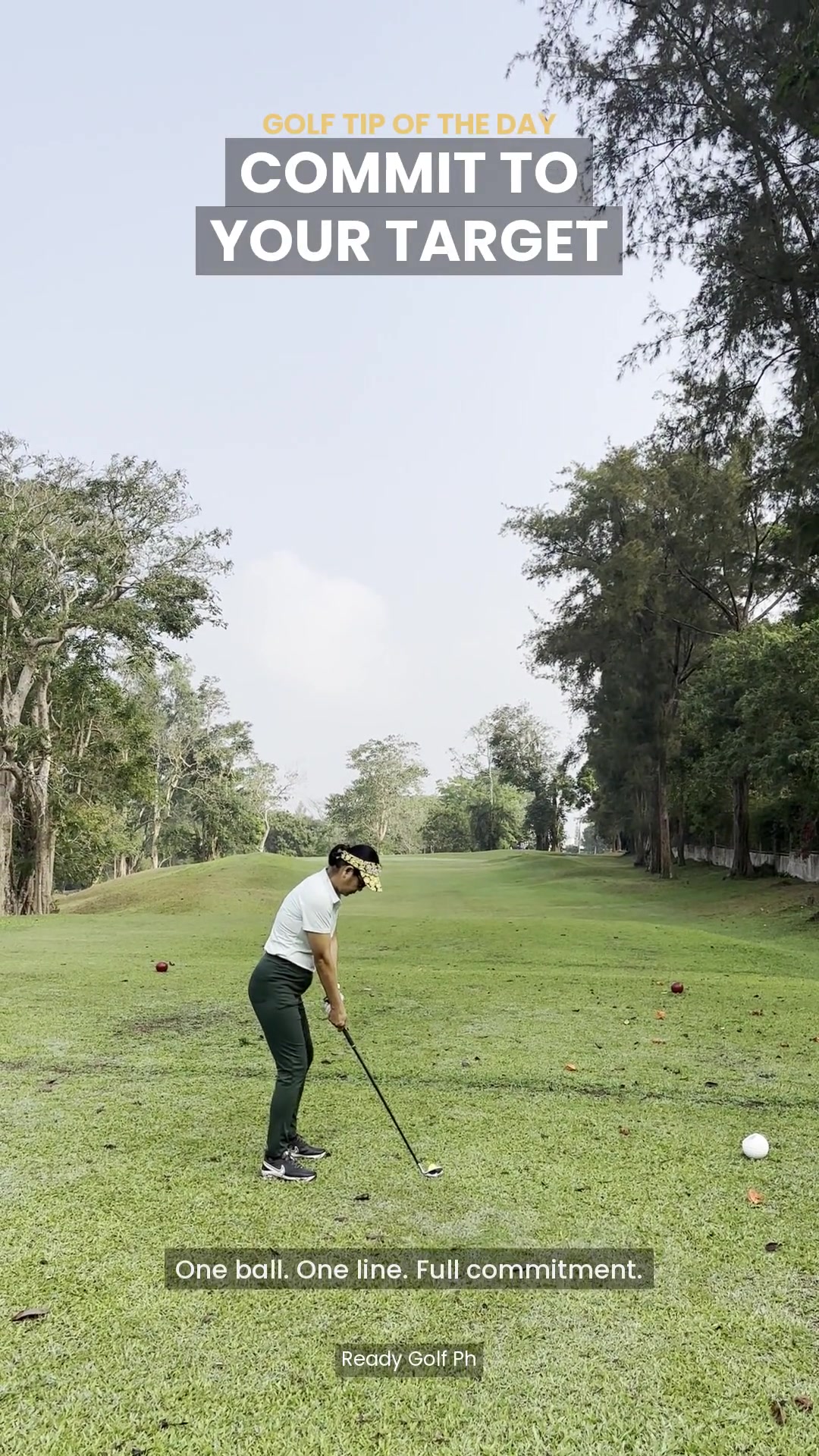
    Commit to Your Target: The Iron Shot Habit That Fixes Mishits

    Watch enough golfers hit iron shots and a pattern starts to show up that has nothing to do with swing mechanics. The ball gets struck thin, or fat, or pushed weirdly off line, and the golfer assumes it is a technical flaw, something to fix on the range with a new grip or a new takeaway. Often the real problem happened before the club ever moved: the golfer never fully decided where the ball was going in the first place. Commitment to a target, not swing perfection, is one of the most underrated skills in iron play.

    Why Indecision Shows Up as a Bad Swing

    A golf swing is fast. From takeaway to impact is under two seconds, which leaves no time to change your mind partway through. If you stand over the ball with a vague idea of “somewhere on the green” instead of a specific point, your body has nothing precise to organize around. Muscles fire late, the club face squares up inconsistently, and the miss shows up as a technical-looking fault even though the real cause was a target that was never actually locked in.

    This is why two golfers with nearly identical swings can produce very different results under pressure. The golfer who has trained themselves to pick one target and commit to it will strike the ball more solidly, even with an imperfect technique, than the golfer with a prettier swing but a wandering, half-formed intention.

    What “Committing” Actually Means

    Committing to a target does not mean staring harder at the green. It means narrowing your intention down to one specific point before you ever take the club back; a particular flag position, a sprinkler head short of the pin, a discoloration in the grass, or a tree on the horizon that lines up with your intended line. The more specific the target, the easier it is for your swing to organize around it.

    Once that target is chosen, commitment means you do not renegotiate mid-swing. You do not start the takeaway aiming at the flag and then subconsciously steer toward a bailout area halfway down. Golfers who chronically decelerate into impact, or who feel their hands “give up” through the ball, are very often fighting a target they never fully committed to rather than a mechanical swing flaw.

    The One-Ball, One-Line Routine

    A simple way to build this habit is to treat every single shot, even on the range, as a one-ball, one-line commitment. Before you set up, stand behind the ball and pick your specific target. Take one practice swing with that target and that target only in mind. Step in, align your body to that one line, and swing without pausing to reconsider. If your mind wanders back to mechanics or doubt while you are already over the ball, it is better to step away and restart the routine than to swing on a half-formed decision.

    This routine matters just as much in practice as it does on the course. It is easy to rake ball after ball off a mat with no target in mind at all, which trains exactly the wrong habit. Every rep on the range is an opportunity to either reinforce vague, uncommitted swings or to reinforce sharp, target-locked ones, and only one of those habits will actually show up when it counts on the course.

    Signs You Are Not Fully Committing

    A few patterns tend to show up in golfers who are swinging without full commitment. The ball consistently finishes short of target with a soft, tentative strike, even when the swing looks fluid on video. There is a pause or hitch right before or during the downswing, as the body senses unresolved indecision. Or the miss pattern changes shot to shot with no consistency at all, unlike a genuine mechanical flaw, which tends to produce the same kind of miss over and over.

    If your misses feel random rather than repeatable, that randomness itself is often the clue. A real technical fault, like a swing path issue or poor weight transfer, tends to produce a consistent shape of miss. Commitment problems tend to produce scattered, unpredictable ones, because a different half-decision happens on every single shot.

    How This Shows Up Under Pressure

    Commitment becomes even more important the moment there is something to lose: a tight pin, a hazard down the target side, a shot that matters for the scorecard. Under pressure, the natural instinct is to hedge, aiming at a safer, vaguer area instead of a precise target, in the hope that vagueness feels like safety. In practice, the opposite is true. A precise target, fully committed to, produces a far more reliable strike than a vague, safety-first intention, even when the vague intention feels more cautious.

    The golfers who play their best under pressure are rarely the ones with the most technically perfect swings. They are the ones who have trained themselves to pick a precise target and swing at it without hesitation, shot after shot, regardless of the situation.

    Building the Habit Away From the Course

    This is a trainable skill, not a fixed personality trait. Start by making target selection an explicit, verbalized step in your pre-shot routine, not something you assume you are already doing. Say the target out loud, or at least name it specifically in your head, before every single shot on the range. Notice on which shots your mind starts to wander toward the swing itself, or toward doubt, once you are already set up, and treat that as a cue to step away and restart rather than swing anyway.

    Over time, this turns target commitment into a habit that survives contact with real pressure, rather than something that only works when the shot does not matter.

    Common Mistakes With Target Commitment

    The most common mistake is picking a target that is too vague to actually organize a swing around, such as “the green” or “that side of the fairway,” rather than one precise point. A vague target gives your body nothing specific to aim at, which reintroduces the same indecision you are trying to remove. Another common mistake is picking a good, specific target and then abandoning it mid-routine, letting a stray thought about mechanics or doubt creep in right as you are about to swing.

    FAQ

    Does committing to a target fix a genuinely bad swing?

    It will not fix a real technical flaw on its own, but it removes a huge, invisible source of mishits that often gets misdiagnosed as a mechanical problem in the first place.

    Should I pick a new target for every single shot, even on the range?

    Yes. Practicing without a specific target trains the exact habit you are trying to break, so every rep should have one clear, specific point in mind.

    What if I commit to a target and still miss?

    A committed miss still gives you useful, honest feedback about your swing. An uncommitted miss tells you almost nothing, because you cannot tell whether the miss came from mechanics or from hesitation.

    Key Takeaways

    • Many mishits that look like swing flaws are actually the result of never fully committing to a specific target.
    • Choose one precise point, not a general area, before every shot.
    • Once you commit to a target, do not renegotiate mid-swing.
    • Practice this habit on the range, not just on the course, since every uncommitted range rep reinforces the wrong pattern.
    • Under pressure, a precise, committed target beats a vague, “safe” one almost every time.
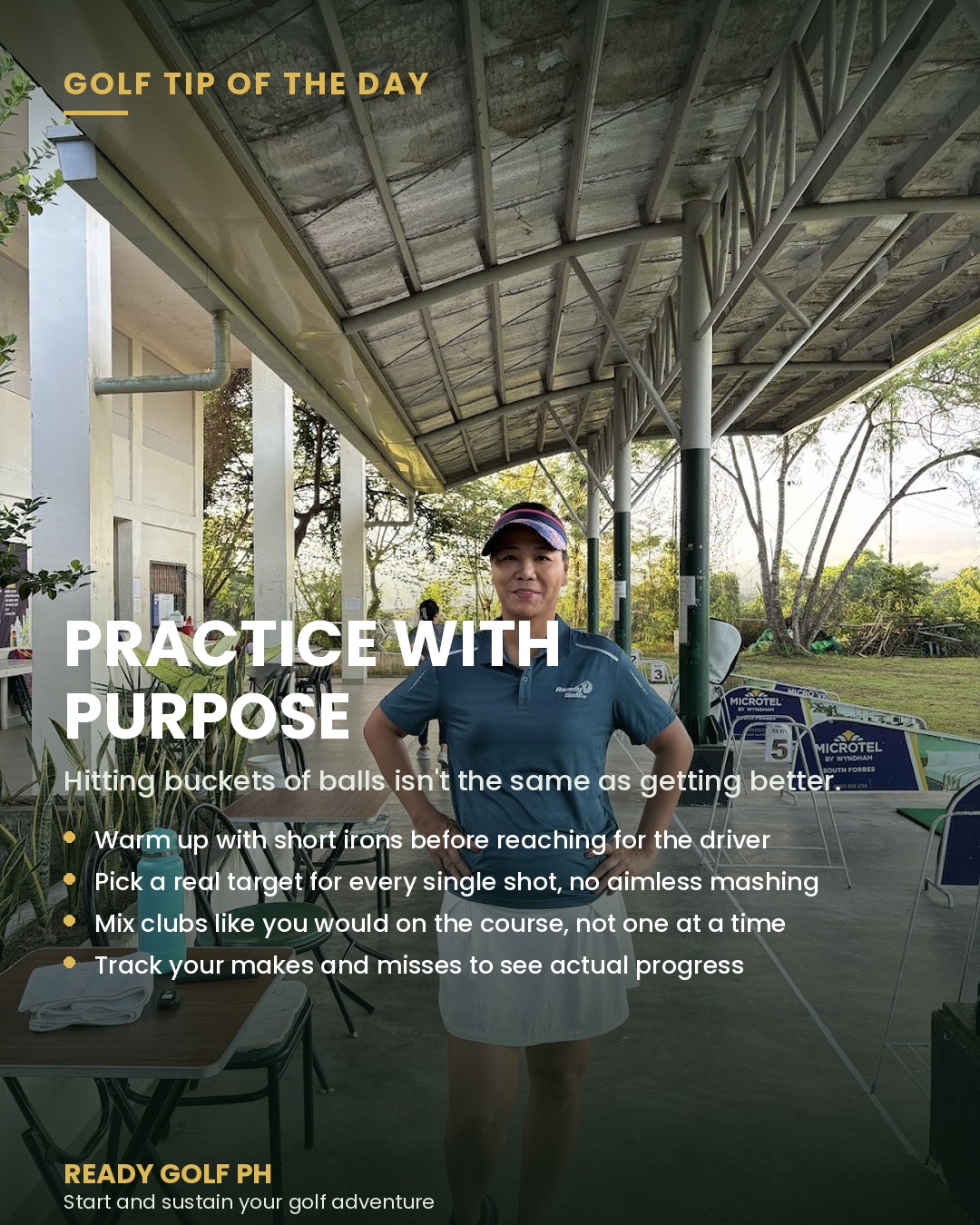
  • Practice With Purpose: How to Get More Out of Every Range Session

    Practice With Purpose: How to Get More Out of Every Range Session

    Walk onto almost any driving range and you will see the same scene repeated: golfers pulling ball after ball from a bucket, hitting the same club over and over with no particular target in mind. It feels productive because you are swinging a club and making contact, but this kind of practice rarely translates into lower scores on the course. Practicing with purpose, not just hitting balls, is what actually moves your game forward.

    Why Aimless Practice Doesn’t Transfer to the Course

    On the course, you never hit the same club from the same lie at the same target twice in a row. Yet most range sessions do exactly that: bucket after bucket of the same club, often without a specific target, grooved from a perfectly flat mat. This builds a swing that works well on the range but often breaks down on the course, where variety and decision-making are constant. Practice that doesn’t resemble real playing conditions produces a skill that doesn’t transfer to real playing conditions.

    Four Ways to Practice With Purpose

    Warm up with short irons. Starting your session with wedges and short irons activates your tempo and feel before you move to longer clubs, mirroring the natural progression of a pre-round warm-up. It also reduces the temptation to swing too hard right out of the gate, which is a common source of poor early-session contact.

    Pick a real target for every shot. Never hit a ball without a specific target in mind, whether that is a flag, a yardage marker, or a section of the range. This single habit turns every rep into a decision-making exercise, not just a swing repetition, and builds the target-focused mindset you actually need on the course.

    Mix clubs like you would on the course. Instead of hitting twenty balls in a row with the same club, rotate through your bag the way you would during an actual round, a driver, then a mid-iron, then a wedge, then back to a different iron. This forces your setup and swing feel to reset for each new club, which is a far more realistic simulation of real play.

    Track makes and misses. Keep simple count of how many shots finish close to your target versus how many miss, and in which direction. This turns a vague sense of “practice went well” into real data about your tendencies, which tells you what to actually work on rather than guessing.

    Why Tracking Matters More Than Volume

    Hitting more balls is not the same as improving. A focused session of fifty shots, each with a target and a tracked outcome, will improve your game more than an unfocused bucket of one hundred fifty balls hit at no target in particular. Tracking gives you real feedback, which is the actual engine of improvement, whether that is discovering a consistent miss to one side or noticing that your short irons are far more reliable than your long irons.

    A Simple Structure for Your Next Range Session

    Spend the first ten minutes on wedges and short irons, picking a specific target for every shot. Move into a mixed-club section for the next twenty minutes, rotating through different clubs and targets as you would during a round, tracking your makes and misses as you go. Finish with a few minutes on your longest club, again with a specific target, ending the session the same way you would start a round: focused and intentional.

    Common Mistakes at the Range

    The most common mistake is treating the range as a place to only hit your favorite or best club, avoiding the clubs that feel less comfortable. Improvement usually comes fastest from deliberately practicing the shots you are weakest at, not the ones that already feel good. Another common mistake is rushing through shots without any pause between them, which skips the target-picking and routine-building that makes practice actually purposeful.

    FAQ

    How long should a purposeful range session take?

    Thirty to forty-five minutes of focused, targeted practice is typically more valuable than an hour or more of unfocused ball-hitting.

    Should I always practice with a full bag rotation?

    Not always, but mixing clubs regularly, rather than exclusively grooving one club at a time, better simulates real course conditions and decision-making.

    Is tracking makes and misses really necessary?

    It is one of the most valuable habits you can build, since it turns practice into real feedback about your tendencies rather than a vague feeling of having “hit a lot of balls.”

    Key Takeaways

    • Warm up with short irons before moving to longer clubs, mirroring a real pre-round routine.
    • Pick a specific target for every single shot, not just when it feels important.
    • Mix clubs throughout your session instead of hitting the same club repeatedly.
    • Track your makes and misses to turn practice into real, actionable feedback.